Japanese Food for Kids : 6
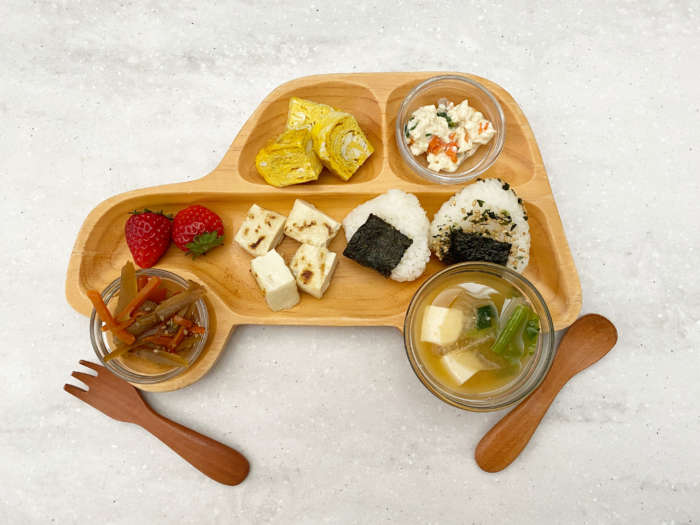
Menu:
– Miso soup with tofu, daikon and spinach [Recipe]
– Onigiri [Recipe]
– Tofu steak [Recipe]
– Tofu salad with carrot, spinach, konnyaku and shiitake mushroom [Recipe]
– Stir-fry burdock and carrot [Recipe]
– Japanese omelette [Recipe]
– Strawberry
Behind the scenes:
This menu is inspired by a traditional Japanese breakfast. It includes miso soup and rice, served in the form of onigiri (rice balls) to make it easier for children to eat. The side dishes are tamagoyaki (Japanese rolled omelet), tofu steak, and a tofu salad made by blending tofu into a paste and mixing it with boiled vegetables. For dietary fiber intake, kinpira made with burdock root and carrots was prepared. For dessert, strawberries—children’s favorite—were chosen to provide a good source of vitamins.
Note : This recipe was first submitted on April 6, 2021, and resubmitted on May 1, 2025, to reflect additional information.
Tokyo Guide : The Art of the RAMEN Bowl (Exhibition)
Do you love ramen? Ever wanted to dive deeper into its world? If yes, this exhibition is for you! Currently on display at 21_21 DESIGN SIGHT in Roppongi, “The Art of the RAMEN Bowl” showcases the beauty and diversity of ramen bowls.

“21_21 DESIGN SIGHT” is a cultural facility located in Tokyo Midtown, Roppongi, dedicated to exploring the possibilities of design. Opened in 2007, the building was designed by architect Tadao Ando and features a distinctive roof structure that incorporates natural light, harmonizing beautifully with the surrounding greenery.

Ramen, alongside sushi, is one of the most beloved Japanese dishes around the world. This exhibition shines a spotlight on the ramen bowl—donburi—and explores and analyzes it from a design perspective, creating an atmosphere that can be enjoyed by people of all ages.
Read More
Japanese Food for Kids : 5
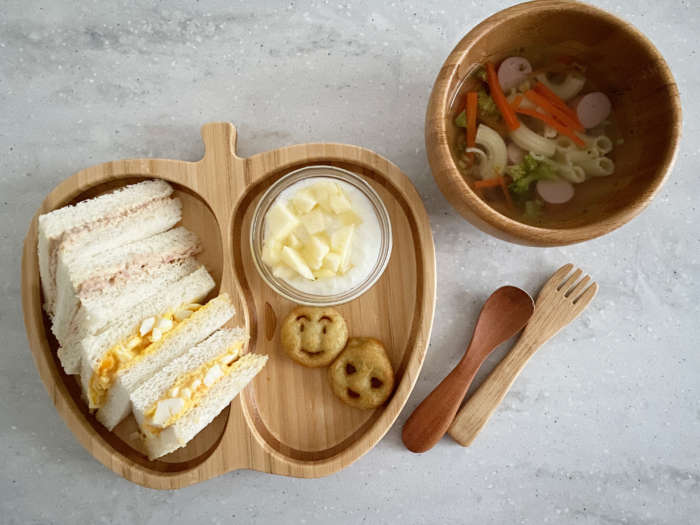
Menu:
– Tuna sandwich [Recipe]
– Japanese egg sandwich [Recipe]
– Veggie soup with onion, broccoli, carrot and sausage [Recipe]
– Anpanman-shape fried potato
– Yogurt with apple
Behind the scenes:
This meal is something I made when my daughter was still little (around 2 years old?). I made tuna mayo and egg salad sandwiches as the main dish so she could eat with her hands. On the side, I added Anpanman-shaped French fries, which she loved at the time. Since I felt the meal needed more vegetables, I included a pasta soup with finely chopped broccoli, carrots, and sausage. For dessert, I topped it off with diced apples to help her get some vitamins!
Note : This recipe was first submitted on February 16, 2021, and resubmitted on April 24, 2025, to reflect additional information.
Japanese Home Meals : 4

Menu:
– Miso soup with wakame, fried tofu, silken tofu and eggplant [Recipe]
– Japanese rice with homemade furikake [Recipe]
– Grilled cod fish with butter and soy sauce [Recipe]
– Goma-ae with broccoli [Recipe]
– Natto
Paired tea:
– YUCa’s Tea : Chiran Cha
Recipe : Grilled cod fish with butter and soy sauce

When you feel like eating fish but don’t know how to cook it, this is an easy recipe for you! You can try Teriyaki sauce that I introduced in my previous recipe, but this sauce is much easier. Yes, it’s just butter and soy sauce. This is one of the easiest, most simple and yummy sauces that I recommend.
Read More
Japanese Food for Kids : 4
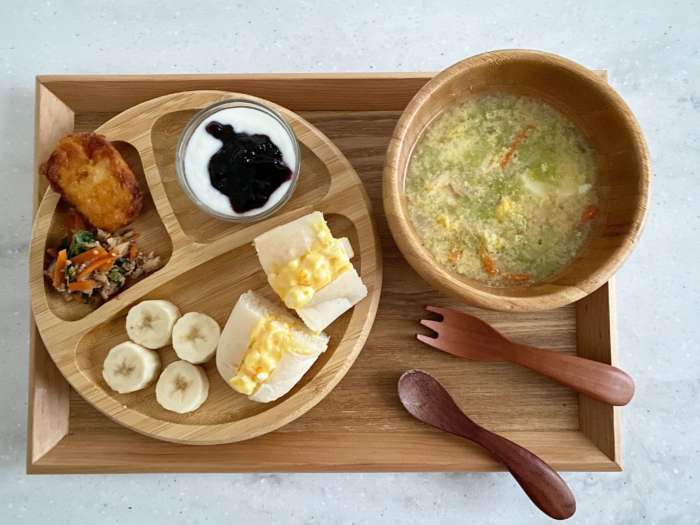
Menu:
– Tamago sandwich [Recipe]
– Karaage fried chicken [Recipe]
– Japanese egg drop soup [Recipe]
– Tuna salad with spinach and carrot
– Banana
– Yogurt with blueberry
Behind the scenes:
This time, I created a menu focused on protein. The main dish is a sandwich filled with plenty of eggs, commonly known as a tamago sandwich. Since I thought the main dish alone might not be filling enough, I added a banana on the side. For the soup, I made a Japanese-style egg drop soup by adding beaten eggs to a vegetable-based broth.
The main protein dish is karaage—bite-sized pieces of chicken thigh, deep-fried to perfection. As a side dish, I included a tuna salad, which is another great source of protein from fish. For dessert, I chose yogurt topped with blueberry jam to provide some vitamins as well. Enjoy the meal!
Note : This recipe was first submitted on January 5, 2021, and resubmitted on April 17, 2025, to reflect additional information.
Japanese Home Meals : 3

Menu:
– Miso soup with silken tofu, rapeseed flower and eggplant [Recipe]
– Japanese rice with BarleyMax barley [Recipe]
– Chikuzen-ni (Simmered chicken and vegetables) [Recipe]
– Harusame salad (Glass noodle salad) [Recipe]
– Cucumber and bean sprout salad with yukari (dried red shiso)
Paired tea:
– YUCa’s Tea : Chiran Cha
Recipe : Chikuzen-ni

Chikuzen-ni (筑前煮) is a traditional Japanese simmered dish that originated in Fukuoka Prefecture, formerly known as Chikuzen Province. Chikuzen-ni is made by simmering chicken and root vegetables—mainly burdock root, lotus root, carrot, shiitake mushrooms, and konnyaku—in a sweet and savory broth seasoned with soy sauce, mirin, sake, and sugar. The dish is known for its well-absorbed flavor and gentle, comforting taste that pairs perfectly with rice.
Read More
Japanese Food for Kids : 3
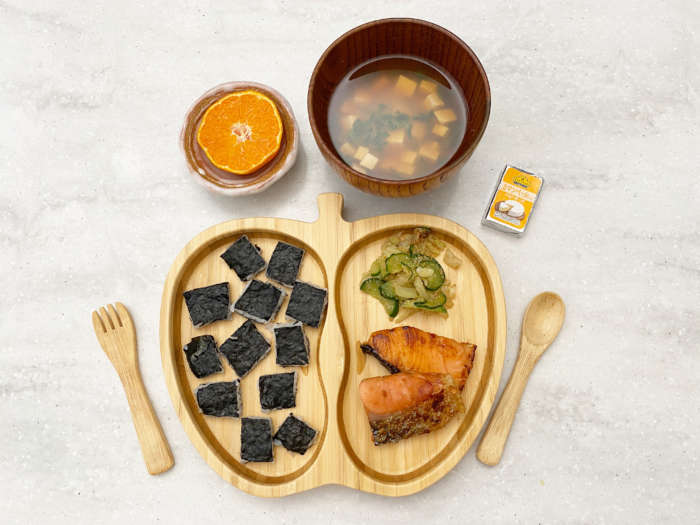
Menu:
– Rice and nori chips [Recipe]
– Teriyaki salmon [Recipe]
– Sesame salad with cabbage and cucumber [Recipe]
– Miso soup with tofu and komatsuna [Recipe]
– Cheese
– Orange
Behind the scenes:
This time as well, I created a menu themed around a traditional Japanese breakfast. For the soup, I chose miso soup packed with leafy greens and protein. The rice dish is a chip-style rice ball, made by sandwiching rice between sheets of nori and cutting it into bite-sized pieces so it’s easier for children to eat. For the main dish, I prepared the classic grilled salmon. As a side dish, I included a salad with vegetables that children often tend to avoid, dressed in a sesame sauce to make them more appealing. Additionally, I included processed cheese to help with calcium intake, and for dessert, an orange to provide a boost of vitamins.
Note : This recipe was first submitted on December 14, 2020, and resubmitted on April 10, 2025, to reflect additional information.
Candy Apple
A candy apple is a sweet treat made by coating an apple with a layer of sugar or syrup. In Japan, it is a classic festival snack, often seen at food stalls during traditional events and fairs.

Characteristics of Candy Apples
1.Crunchy Candy Coating
When the sugar hardens, it creates a crispy texture, contrasting beautifully with the apple’s natural crunch.
2.Sweet and Tangy Apple Flavor
The sweetness of the candy coating balances perfectly with the apple’s natural tartness, offering a refreshing aftertaste.
3.Glossy and Eye-Catching Appearance
The shiny, red coating gives candy apples a vibrant and attractive look. Recently, variations with colorful coatings or decorative patterns have also emerged.
Read More