Latest Posts
Dashi (Japanese Soup Broth) だし
Dashi (だし) is the most important soup/broth to create the authentic Japanese palate. Umami-rich ingredients like kelp (Kombu), Bonito flakes, and dried sardines are all key ingredients of dashi.
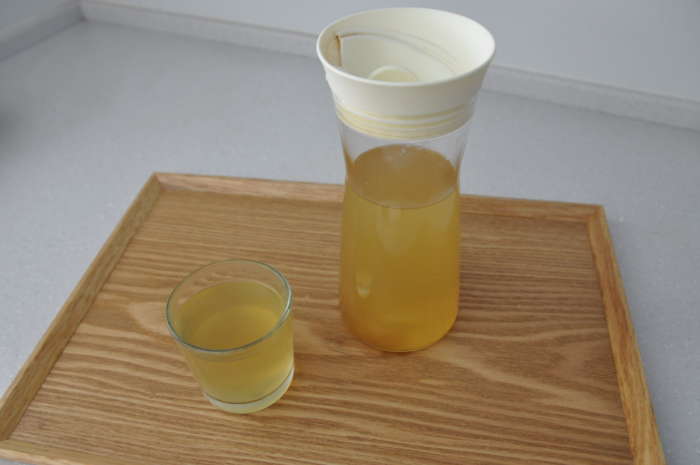
The most basic dashi, Ichiman (number-one) dashi is made from kelp and bonito flakes. In parts of Japan, Niboshi (dried sardines) are used instead of bonito flakes. Fried shiitake mushrooms and scallop ligaments can also be used in dash, as can the head and bones of sea bream (tai no are dashi).
Vegetarian dash can be made from kelp, along with dried shiitake mushrooms or other dried vegetables such as gourd (kanpyo), daikon (kiriboshi daikon), or soybeans (daizu).
The main ingredients of Dashi
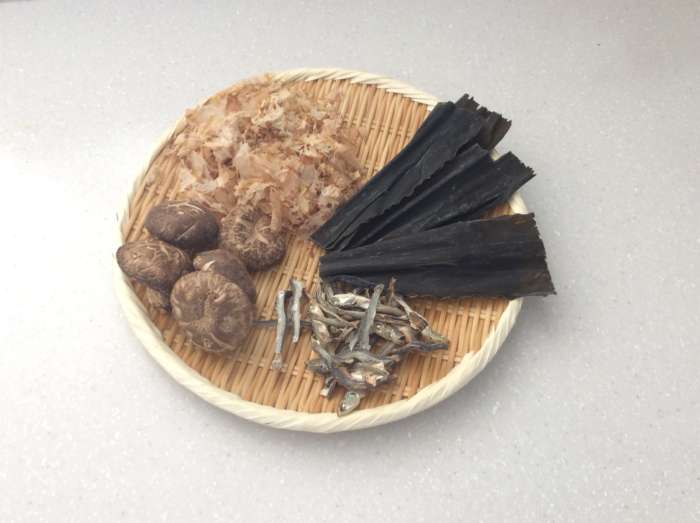
1. Kelp (Kombu 昆布) : The cold, mineral-rich waters surrounding Hokkaido provide 99.5% of the country’s kombu. Most kombu is sold in long strips. But it is also available in shavings (tor0ro or boor) to add to soup or sprinkle over the rice. Kombu can also be wrapped around was fish in a process called kobujime, which changes the fish’s texture and adds umami.
There are more than forty types of child and farmed kombu. The name of a specific variety of kombu often reflects where it was harvested. These are the five most popular:
Rishiri kombu (利尻昆布) : Harvested near Rishiri Island, this is an aromatic kombu that makes a clear broth, popular with chefs in Kyoto. It is considered a high-quality kombu and is often used in top restaurants.
Rausu Kombu (羅臼昆布) : This thick kombu has a stickiness to it, and a deep. Rich flavor that is slightly sweet. Also a high-quality kombu, it is the kombu that is used to make other shaved kombu products such as tororo and oboro.
Ma Kombu (真昆布) : Thick and rich in umami, slightly sweet, with an elegant flavor, this is also considered a top kombu.
Hidaka Kombu (日高昆布) : From the Hidaka region, this kombu is a popular variety used by busy home cooks because it quickly imparts its flavor when simmered in water. It is also reasonably priced and can be used as an ingredients for fish cake stew (oden), sea vegetables and seafood simmered in soy (Tsukudani) and other kombu dishes.
Naga Komnbu (長昆布) : A very long kombu (more than ten meters long), naga kombu is also used in dishes such as oden and Tsukudani. It is found only in the wild – not farmed- and is reasonably priced.
2. Bonito flakes (Katsuobuashi かつお節) : Dried and shaved bonito flakes, a key ingredients in dash, brings a smoky richness to the broth. It can be made from a variety of fish including yellowfin tuna, mackerel, and anchovies – each, of course, with its own flavor profile.
To make katsuobushi, the bonito is simmered and its bones are removed after which it is dried and smoked. Sometimes a mold that promotes fermentation is added to the bonito, other fish are processed in a similar fashion.
There are two major types of Katsuobushi:
Arabushi (荒節) : Light in flavor, this dried and smoked katsuobushi is the most popular type, especially in the Kyoto and Osaka region.
Karebushi (枯節) : A mold that promotes fermentation and imparts a stronger umami flavor is added to arabushi, resulting in this type of Katsuobushi, popular in the Tokyo region.
Different ways to shave fish flakes:
Atsu kezuri (厚削り) : Thick-cut shavings that make an intense dash, used in dishes that are simmered for a long time.
Hanakatsuo (花かつお) : Thinly shaved flakes used for making dash quickly
Hana kezuri (花削り) : Very thin shavings also used to make instant dashi
Ito kezuri (糸削り) : Thin strands often used as a garnish for tofu or vegetables
3. Dried Sardine (Niboshi 煮干し) : Small fish that are simmered in salty water and sun-feed before being used to make dash. Niboshi can be made from a variety of fish.
Popular types of Niboshi:
Katakuchi iwashi (片口鰯) : The most popular type of niboshi, made with anchovies; commonly used for making dash.
Ma iwashi (真鰯) : Made with pilchard, popular for soba or udon.
Urume iwashi (潤目鰯) : Low in fat, and odorless, this Iiboshi made with round herring makes a clear-colored dash popular in the Kyoto and Osaka region.
Tobiuo (飛魚) : Dashi made with the flying dish is slightly sweet and popular in the Nagasaki region.
Ma aji (真鯵) : Niboshi made with jack mackerel; results in a delicate and sweet dashi.
Tai (鯛) : Sea bream Iiboshi makes a delicate, elegant dash; found in dishes served at a Kaisei restaurant rather than at a neighborhood noodle shop.
4. Dried Shiitake (乾燥しいたけ) : It gives an earthy aroma, reminiscent of the forest floor, to dashi. It is particularly useful in vegetarian Shojin ryori .
Storage:
Those dried ingredients are available to keep in a dark and cool place for 6 months to 1 year.
Popular recipes that has Dashi:
– Miso soup with tofu and wakame
– Veggie Miso Soup
– Tonjiru
– Nasu Dengaku
– Daikon Dengaku Miso
and more…!
Memo :
1. Are you looking for Japanese kitchenwares and cooking tools etc? Visit YJC store on Amazon!
2. Would you like to cook many more recipes? Download Free recipe app from here! “Recipe by YJC”
* Reference of this article : Food Sake Tokyo (The Terroir Guides)
Japanese Food Words
Useful Words:
Amai : Sweet
Amakuchi : Sweet for beverages
Gochisosama (-deshita) : It was a feast (at the end of a meal)
Hashi : Chopsticks
Itadakimasu : Thank you for the food! (at the beginning of a meal)
Kanpai : Cheers (before drinking)
Karai : Hot or spicy
Karakuchi : Dry for beverages
Nama : Raw
Nigai : Bitter
Oishii : Delicious
Okawari : Refill
Osusume : Recommendation
Shoppai : Salty
Suppai : Sour
Evocative words:
Atsu atsu : Steaming hot, almost too hot to eat , like a hot pot
Fuwa fuwa : Fluffy, like a marshmallow
Gabu gabu : Drinking wholeheartedly
Hoka hoka : Hot, at just the right temperature, like a bowl of rice
Hoku hoku: Steamy, like baked potatoes
Jyu jyu : Juicy food being grilled
Kori kori : Crunchy, like a pickled daikon radish
Koto koto : Sound of a bubbling pot
Mochi mochi : Chewy, like mochi (rice taffy)
Neba Neba : Slimy and Sticky, like natto (fermented soybeans) or Tororo (grated yam)
Nuru nuru : Slimy and slippery, like a okra
Paku paku : Eating wholeheartedly
Pari pari : Thin and crispy, like a potato or nori seaweed chips
Piri piri : Something that is spicy, like too much wasabi or curry
Puri puri : Resistant, like fresh shrimp
Puru puru : Wiggly, like pudding or jelly
Saku saku : Delicate and crispy, like tempura
Shari shari : Sound of ice being shaved
Shiko shiko : Chewy, like a abalone or udon
Shuwa shuwa : Fizzy, like a sparkling water
Ton ton : The sound of a knife rhythmically hitting the cutting board
Toro toro : Melts in your mouth, like fatty tuna
Tsubu tsubu : Chunky bits, like the pulp in freshly squeezed orange juice
Tsuru tsuru : The sound of slurping noodles
* Reference of this article : Food Sake Tokyo (The Terroir Guides)
Onigiri (Rice balls) おにぎり
It is no exaggeration to say that rice balls are a national dish of Japan. There are various types of rice balls, from simple ones that are simply sprinkled with salt, to those that contain various fillings, and those that are made from grilled rice. Onigiri is evolving day by day and is not only the main character of bento, but also an easy-to-eat snack.
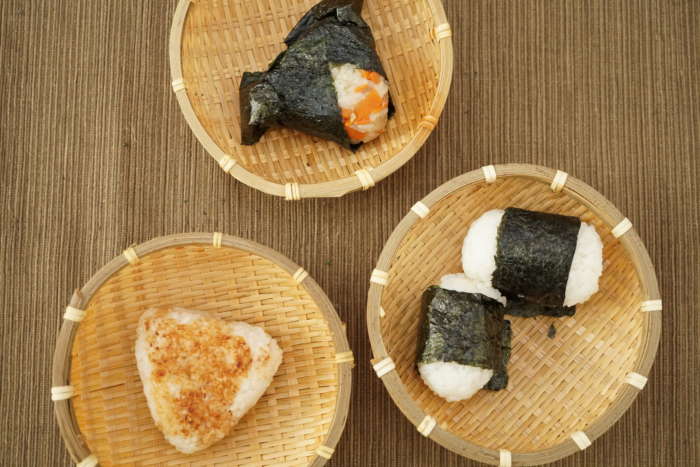
Onigiri is made by adding ingredients to cooked Japanese rice and molding it into a triangle, round shape, or bale shape.
My family also loves rice balls. In particular, simple salted rice balls that are simply sprinkled with salt and wrapped with seaweed are popular. At my home, rice balls appear not only for breakfast and lunch, but also when we have finished eating dinner and want to eat something a little more. So as we go on a picnic, we often bring rice balls with various fillings rather sandwiches.
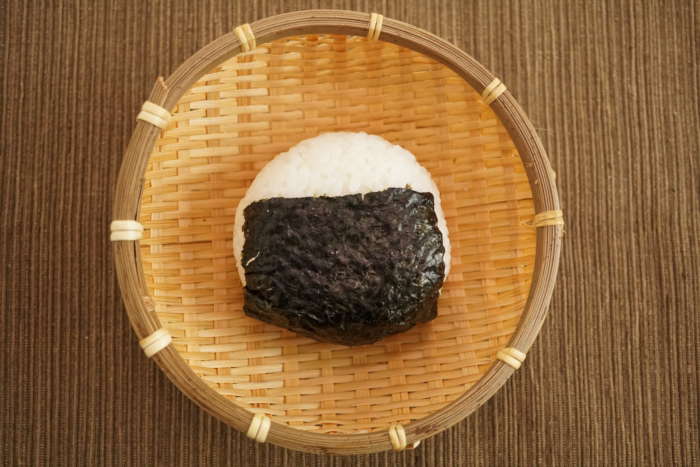
What is the difference with Onigiri and Sushi?
One of the key differences between onigiri and sushi is that onigiri is made with plain steamed japonica rice, while sushi is made of steamed japonica rice seasoned with vinegar, salt, and sugar.
On the contrary, what sushi and rice balls have in common is that they are dishes designed to preserve rice for a long time.
Rice vinegar is used for sushi. For onigiri, salt is sprinkled around rice balls, and antibacterial and preservative ingredients such as pickled plums and various pickles are often used.

Where you can buy Onigiri?
In general, you can buy rice balls at convenience stores and supermarkets in Japan. At convenience stores, not only standard ingredients but also unique rice balls made with seasonal ingredients are available. Although there are still few, there are rice ball specialty stores from individual stores to chains.
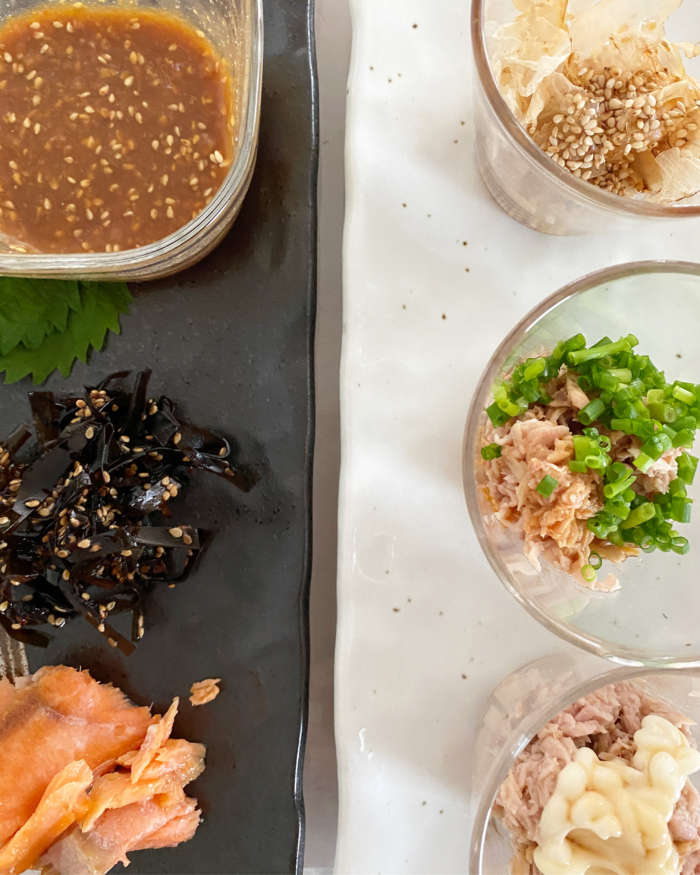
Traditional onigiri fillings
– Umeboshi (Pickled plum、梅干し)
– Sake (Grilled salmon、焼鮭)
– Kombu (Simmered kelp、昆布の佃煮)
– Tuna Mayo (Tuna mayonnaise、ツナマヨ)
– Mentaiko (Mentaiko、明太子)
– Cha-han (Fried rice、チャーハン)
– Yaki-onigiri (Grilled onigiri、焼きおにぎり)
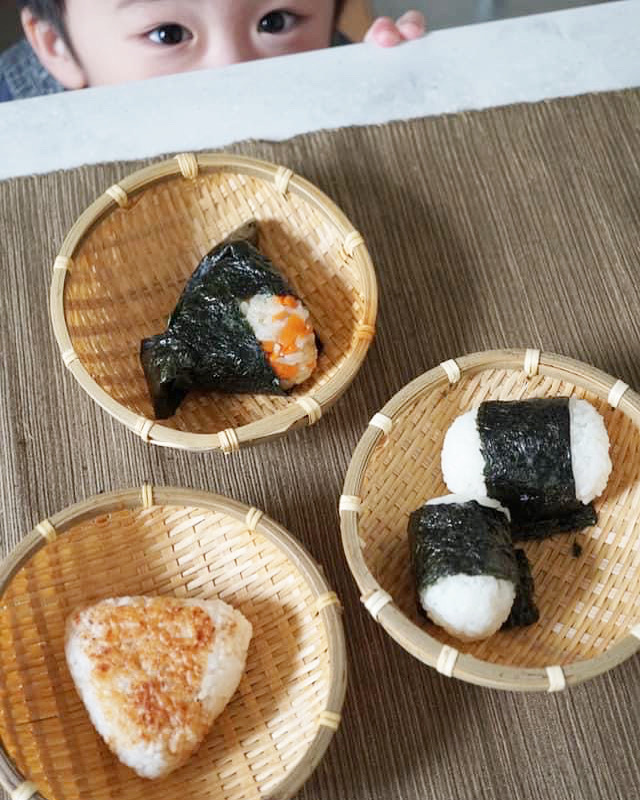
Let’s make various Onigiri!
– Okaka Onigiri [Recipe]
– Okaka Cheese Onigiri [Recipe]
– Salmon Onigiri [Recipe]
– Spicy Salmon Onigiri [Recipe]
– Tuna Mayo Onigiri [Recipe]
– Spicy Tuna Onigiri [Recipe]
– Kombu Onigiri [Recipe]
– Fried Rice Onigiri [Recipe]
– Grilled Onigiri Vol.1 [Recipe]
– Grilled Onigiri Vol.2 [Recipe]
– Red Bean Rice Onigiri [Recipe]
– Takikomi Gohan Onigiri [Recipe]
– Green Pea Onigiri [Recipe]
– Pork Miso Onigiri [Recipe]
– Nikumaki (Meat wrapped) Onigiri [Recipe]
– Dry Curry Onigiri [Recipe]
– Ume (Pickled Plum) Onigiri [Recipe]
Editor’s Note: This post was originally published on November 18, 2020.
Tsukemono (Japanese Pickles) 漬物
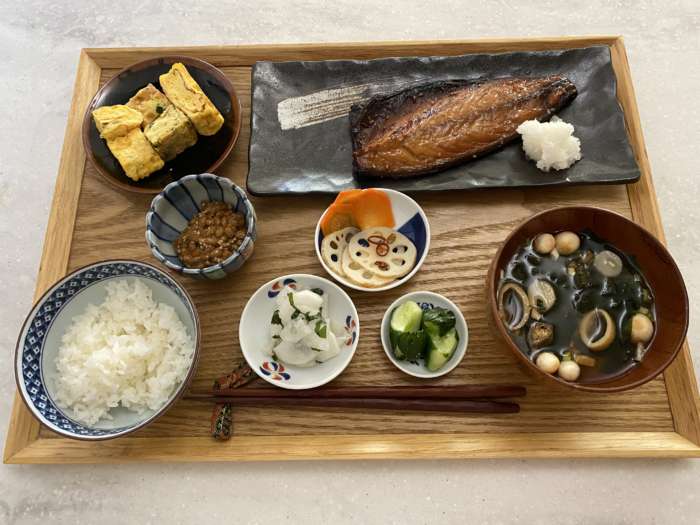
Japanese pickles are normally served with rice and miso soup. There is also a wide variety of Japanese pickles, from salt-only pickles to pickles using rice vinegar and sugar, and pickles using rice brans or rice koji. Japanese pickles play an important role in Japanese meals. Please see the world of Japanese pickles.
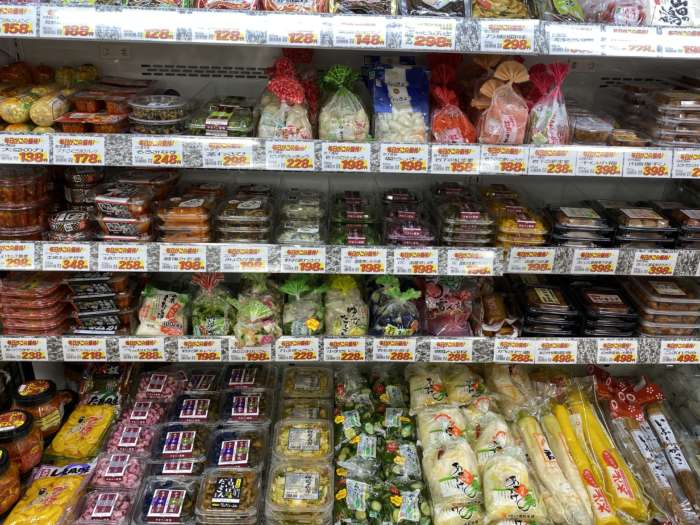
What is the characteristic of Japanese pickles ?
Tsukemono (Japanese Pickles, 漬物) – are preserved vegetables that are pickled in salt (or salt water), soy sauce, vinegar mixed with sugar, miso, sake lees, rice bran or rice koji. They are variously called Tsukemono, Kou no mono, or Shinko can be salty, sour, tart, piquant, or sweet.
Pickling time ranges from a few minutes to a few hours to a few years, and some pickles are fermented in the process. They also vary widely in texture: cucumber pickles are crispy, eggplant pickles are soft and may squeak in your teeth. Takuan, the popular yellow pickle made from dried daikon, is sweet and crunchy.
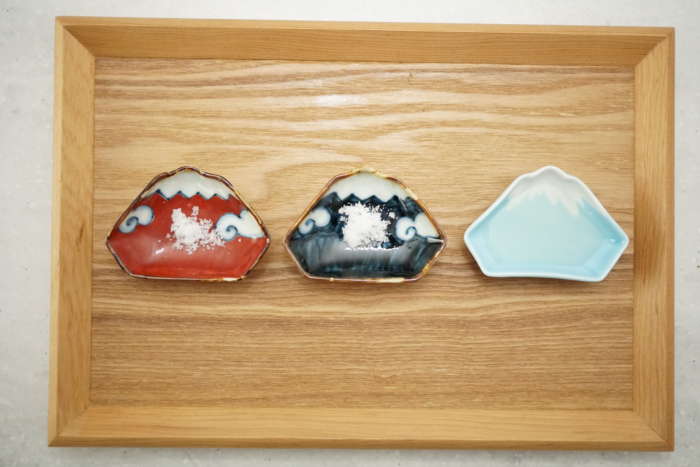
From the thin-sliced pickled ginger at the sushi counter to kaiseki meals that traditionally end with them, pickles are present in some form at most Japanese meals. Benishoga, or bright red pickkled ginger, is a popular accompaniment to fried noodles with vegetables called yakisoba. Curry is often served with sweet, red pickles made from seven different vegetables called fukujinzuke.
Some of the most distinctive pickled items are called Naraduke which originated in Nara, in the kansai region. These melon gourds, and other vegetables are pickled in sake kasu (sake lees) for as long as three years. Many of the melons and gourds arwe long, thin varieties, and after pickling, are presented in a spiral that resembles a sausage and covered in a brown slurry.
Another distinctive type of pickle, nukazuke, uses nuka (rice bran) as the fermenting agent. In the market the nuka looks like wet sand and covers whole pickled vegetables such as cucumbers, carrots, or daikon radishes. Before eating, the bran is rinsed off and the vegetables are cut up into bite-size pieces. The resulting aroma and flavor are quite different from pickles made with salt or vinegar. In Tokyo, local pickle bettarazuke: daikon pickled in rice koji slurry is popular.
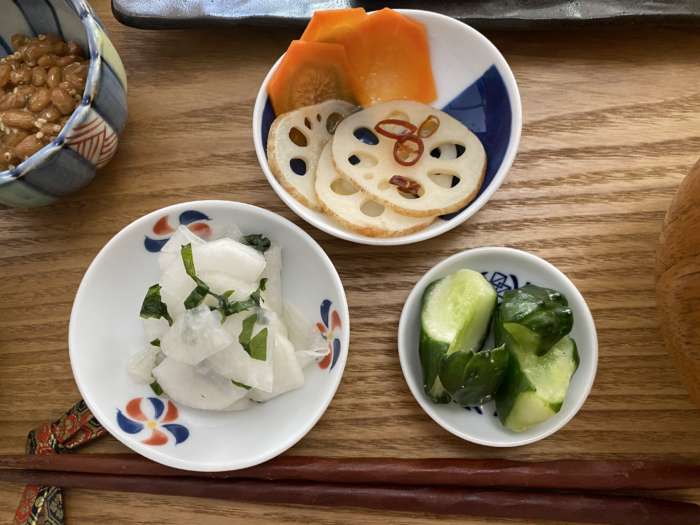
In Japan, it is usually served with various Japanese dishes, including Japanese breakfast, soba or udon noodles and donburi dishes. Pickles play an important role in balancing the whole dish, even though it is a small dish. For example, pickles have the effect of refreshing the mouth. For this reason, pickles are called konomono (Kou no mono, 香の物) or “fragrant things” or “fragrant foods” at long-established Japanese restaurants.
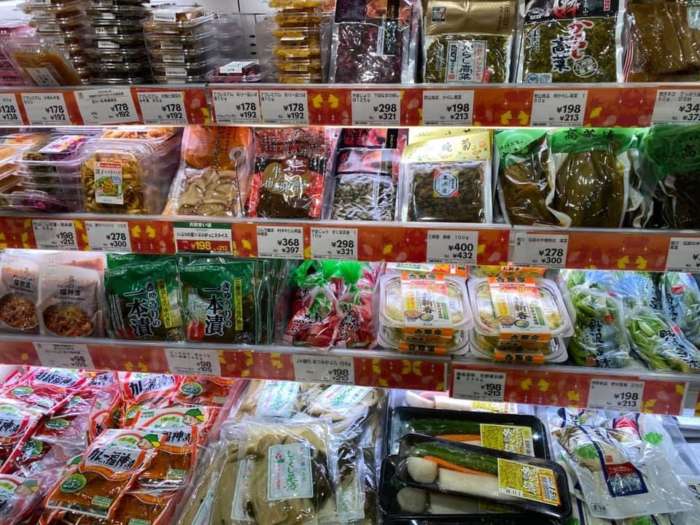
Best 3 Healthy Benefits
1. Vitamins
2. Antioxidant
3. probiotics = digestive system healthy
Top 10 Popular Japanese pickles
1. Shio-zuke (salted pickles, 塩漬け)
2. Umeboshi (Pickled plum, 梅干し)
3. Takuan (Pickled daikon, たくあん)
4. Shibazuke (Pickled in salt and red shiso leaves, しば漬け)
5. Asazuke (Lightly pickled vegetables, 浅漬け)
6. Nukazuke (Pickled vegetables in rice bran, 糠漬け)
7. Kasuzuke (Pickledvegetables in rice koji/mold, 粕漬け)
8. Shinshoga (Pickled ginger, 新生姜)
9. Rakkyo (Pickled Chinese onion, らっきょう)
10. Benishoga (Pickled and colored ginger, 紅生姜)
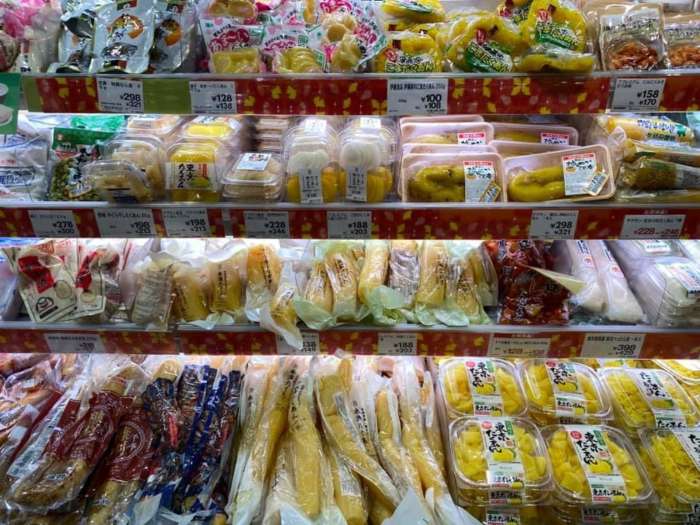
What are the popular vegetables for Japanese pickles?
– Cucumber(きゅうり)
– Daikon radish(だいこん)
– Eggplant(なす)
– Carrot(にんじん)
– Chinese cabbage(はくさい)
– Turnip(かぶ)
– Lotus root(れんこん)
– Chinese onioin(らっきょう)
Watch How To Make Tsukemono
Recipe : Japanese Pickles
You might also like…
1. Cucumber and shiso pickles
2. How to cook Japanese rice with using pot
3. How to cook Japanese rice with using rice cooker
4. Miso soup
5. Veggie miso soup
Editor’s Note: This post was originally published on November 4th, 2020.
Tamagoyaki (Japanese Omelette/Egg Roll) 玉子焼き
Tamagoyaki (玉子焼き) is normally sweet and is popular not only as a side dish for lunch boxes and Japanese breakfast. Recently, it is used as a filling of sandwich.
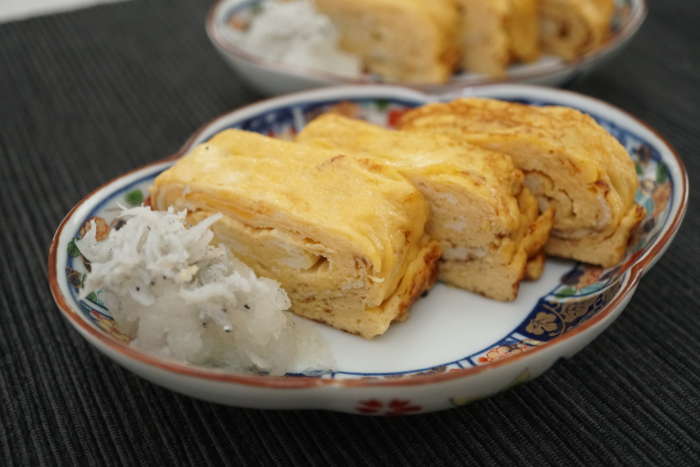
Tamagoyaki (玉子焼き) is a sweetened egg rolled omelette that has golden yellow color and unique shape. Yes, it’s like a pillow (before cutting!)
Tamagoyaki has both sweet and savory taste and is loved by young to the old here in Japan.
You might have tasted this Japanese style egg roll as a side dish in a bento box or as one of the appetizer of Japanese breakfast or atop of sushi.
Nowadays, you can see Tamagoyaki in a sandwich.
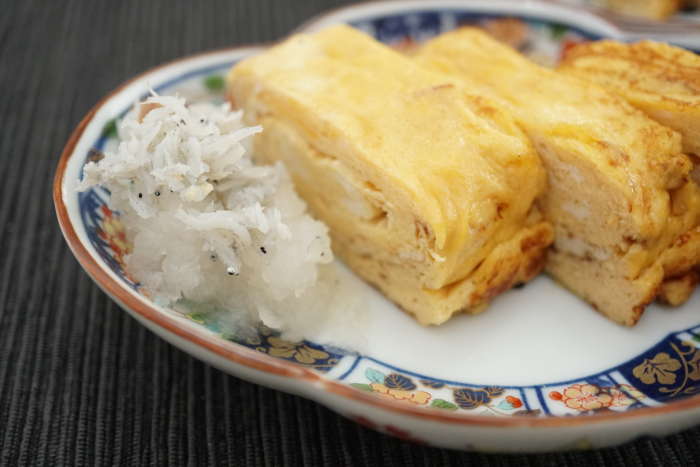
Tamagoyaki is rolled thin omelettes so that it has several layers. It looks easy and simple to make Tamagoyaki but making Tamagoyaki for the first time might be a littble bit tricky.
But no worries! You might need to practice a few times and you will soon be a Tamagoyaki master! (Please try some of my Tamagoyaki recipes!)
What is difference of Tamago (玉子) and Tamago (卵)?
Birds that are used for food (cooked) are called 玉子. Biological meaning such as fish and insects or that are eaten raw from birds are called 卵.
People also confuse about the names of Tamagoyaki(卵焼き), Atsuyaki Tamago(厚焼き玉子), and Dashimaki Tamago(だし巻き玉子).
– Tamagoyaki : Japanese omelette/Egg roll in general.
– Atsuyaki Tamago : thick egg roll with firm and dense texture
– Dashimaki Tamago : egg roll with dashi in it. It has much more refined, juicy, silky, and flavorful.
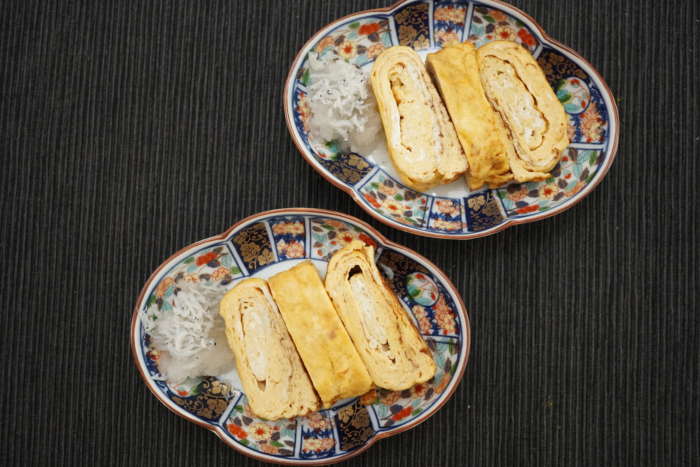
Arrangement
What is great about making Tamagoyaki at home is that you can create your own Japanese omelette. You can add various ingredients such as Shirasu (small fish), Nori seaweed, Sakura-ebi (dried small shrimps), green pepper or other veggies, salmon flakes and ground meat etc.
About Japanese omelette pan
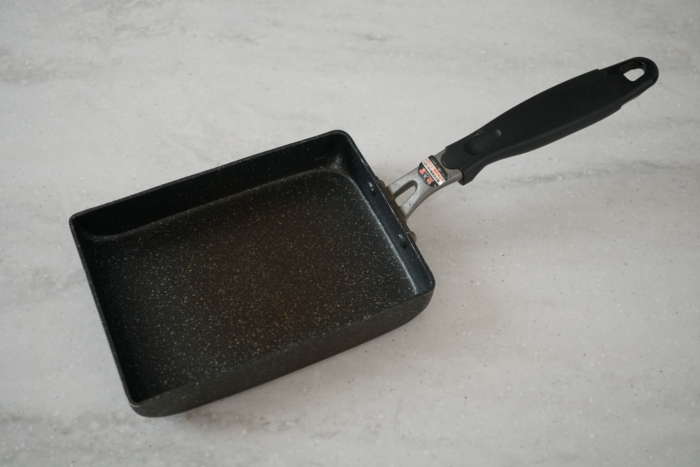
In Japan, there is a special pan designed for making this egg roll. It’s also curious that rectangular shape pan is common in Kansai (West Japan) and square shape pan is common in Kanto (East Japan).
How to make Tamagoyaki?
Recipe : Tamagoyaki (with Omelette Pan & Round Pan)
Recipe : Tamagoyaki (Japanese Omelette/Egg Roll)
You might also like…
1. Tamagoyaki (Japanese Omelette/Egg Roll) with Mayonnaise
2. Tamago Sando
3. Seasoned Egg
Editor’s Note: This post was originally published on August 4th, 2013. The post has been updated in October 27, 2020 with more information for the dish and with new images.
Anmitsu (Japanese-style parfait) あんみつ
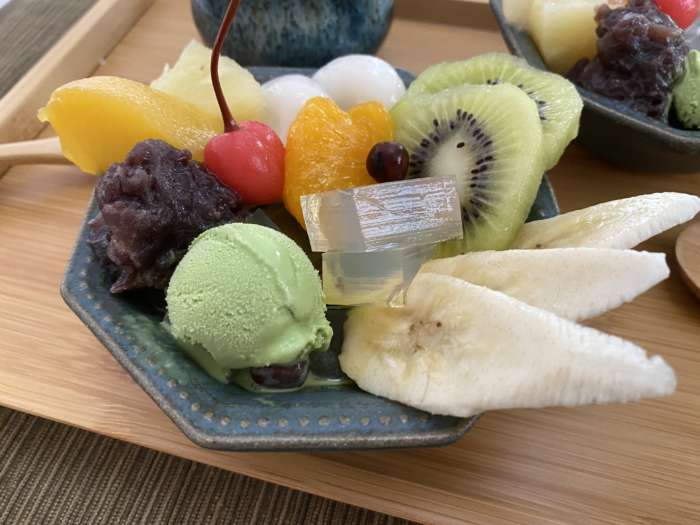
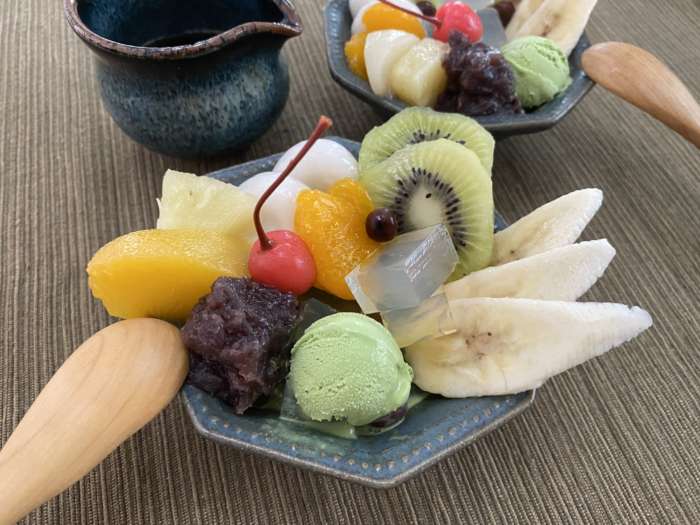
Why don’t you make this Japanese version of parfait called Anmitsu? It’s a Japanese confectionery that uses plenty of agar agar jelly, mochi (rice cakes), various fruits, red bean paste, green tea ice cream and a drizzle of brown sugar syrup as a final touch.
What is Anmitsu ?
Anmitsu (あんみつ) is considered as a summer dessert but we can buy it all year around here in Japan. This Japanese style parfait is made of small cubes of agar agar jelly, red bean paste called anko, mochi, various fruits, ice cream (either vanilla or matcha flavor) and boiled red beans. It’s usually served with brown sugar syrup called Kuromitsu that you pour over the Anmitsu before enjoying this sweets.
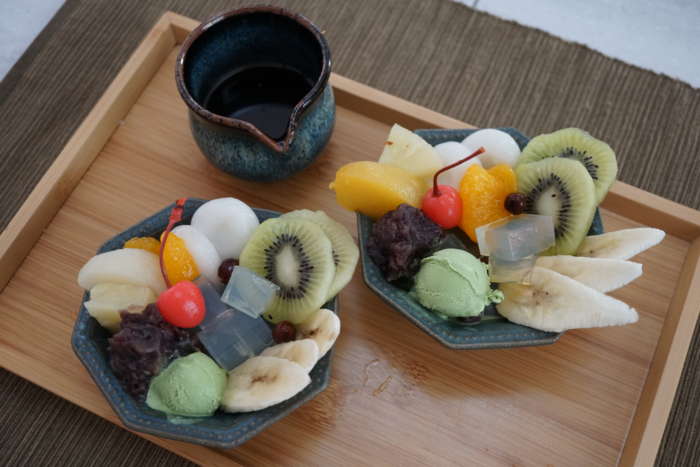
What exactly in the Anmitsu
Agar agar jelly (Kanten, 寒天) :
Agar agar jelly is a transparent color jelly made from tengusa, a Red Sea alga. It has no calories and no taste; and takes on the flavor of whatever it is mixed with; it solidifies at room temperature, making it simple to work with.
Red bean paste (Anko, あんこ) :
Sweet bean paste often made from Azuki beans, which is an essential ingredient in Japanese sweets. Red bean paste is either smooth (Koshian) or chunky/grainy (Tsubuan). It’s key ingredients of Anmistu because its name comes from the abbreviation of Anko.
*It can be a perfect sweets for vegetarians and vegans.
Rice cake (Mochi, もち) :
A taffy made from sticky rice that has been steamed and pounded. It’s easy to use glutinous rice flour to make mochi. There are two kinds of rice flour; Dango-ko (or Joshinko) and Shiratama-ko. Dango-ko is made from non-sticky rice.
*In my recipe, I normally use Shiratama-ko, which doesn’t require a steaming process.
Ice cream (アイスクリーム) :
Another important topping of Anmitsu for summer. Normally, either vanilla or Matcha ice cream. Somehow no sherbets for Anmitsu.
*I didn’t use vanilla ice cream this time because to avoid conflict in color from Mochi.
Brown sugar syrup (Kuromitsu, 黒みつ) :
This is another key ingredients of Anmitsu because its name comes from the abbreviation of Kuromitsu. It’s called brown sugar syrup but is almost black in color.
Red bean peas (Aka Endomame, 赤エンドウマメ) :
A few boiled peas are normally topped with Anmitsu. Even in Japan, it’s hard to find those specific peas at the local supermarket. *I used the those peas from a canned Mitsumame.
A variety of fruits (Kudamono, くだもの) :
You can use any fresh fruits or canned fruits to create your Anmitsu.
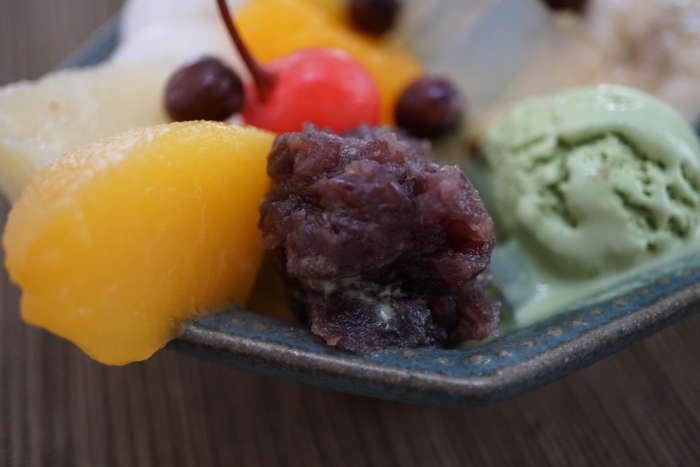
Anmitsu is a traditional Japanese sweet. Anmitsu may be avoided by young Japanese people since there are various imported sweets everywhere. However, my family and I love Japanese sweets in general so we eat Anmitsu all year around. I always eat ice cream first, but please enjoy in any order you like.
The sweetness and sourness are perfectly harmonized thanks to the brown sugar syrup. Ice cream and Mochi are always perfect match.
You may be able to find canned Anmitsu at your local supermarkets, but please try handmade Anmitsu. It’s always the BEST!
Anmitsu variation
Many variation exist in Anmitsu. It started as mitsumame (みつ豆) for children in Edo period. Nowadays, you can see various fruits in the mitsumame at Japanese cafes or canned mitsumame product. But here are the basic understanding for the world of Anmitsu.
– Mitsumame : Agar agar jelly + Brown sugar syrup (Kuromitsu) + Boiled peas (Endomame)
– Fruit Mitsumame : Mitsumame + Fruits
– Cream Mitsumame : Mitsumame + Ice cream
– Anmitsu : Mitsumame + Red bean paste (anko)
– Cream Anmitsu : Mitsumame + Red bean paste (anko) + Ice cream
– Shiratama Anmitsu : Mitsumame + Red bean paste (anko) + Mochi (Shiratama dango)
– Shiratama Cream Anmitsu : Mitsumame + Red bean paste (anko) + Mochi (Shiratama dango) + Ice cream
– Fruits Shiratama Cream Anmitsu : Mitsumame + Red bean paste (anko) + Mochi (Shiratama dango) + Ice cream + Fruits *This is my recipe!
Watch How To Make Anmitsu
Recipe : Anmitsu
You might also like…
1. Matcha ice cream
2. Dango | Rice dumplings
3. Anko | Red Bean Paste
4. Matcha cream daifuku
5. Zunda Mochi
Editor’s Note: This post was originally published on October 21st, 2020.
Okosama Lunch (Special Kids Meal) お子様ランチ
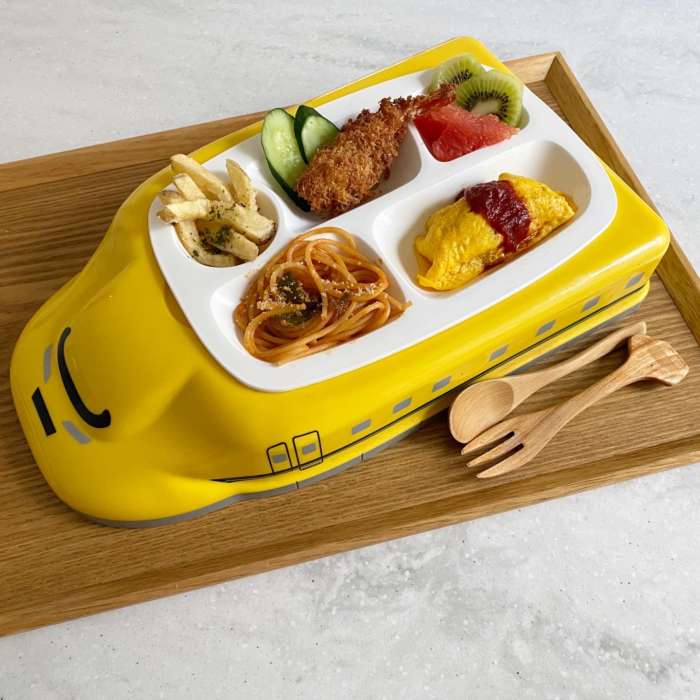
In Japan, there is a kids meal called Okosama lunch. In this kids meal, there are several Yoshoku (Western influenced Japanese food) dishes such as curry rice , hamburg/hamburger , Napolitan, fried shrimp and omelette aside with salad, fruits and sweets! Everything that kids love are decorated in one plate! Some restaurant even gives toys and stationeries, too!!!
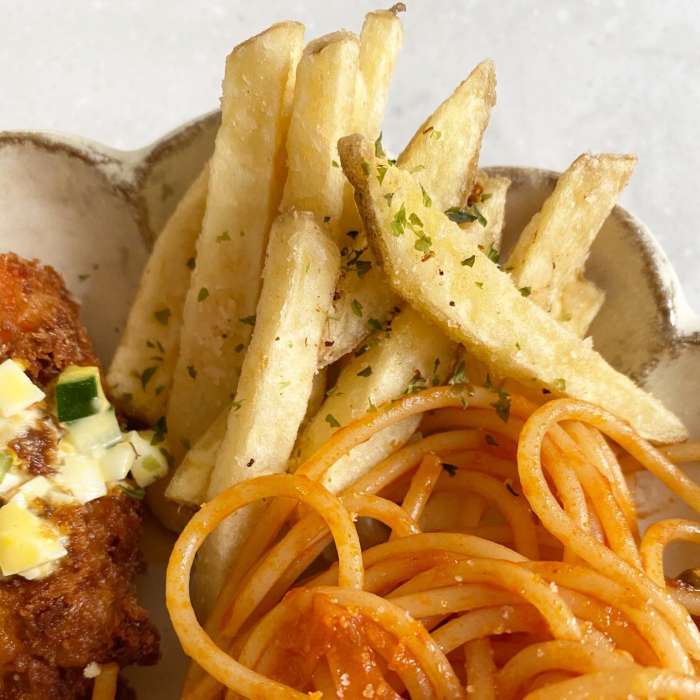
Fried potato(フライドポテト)
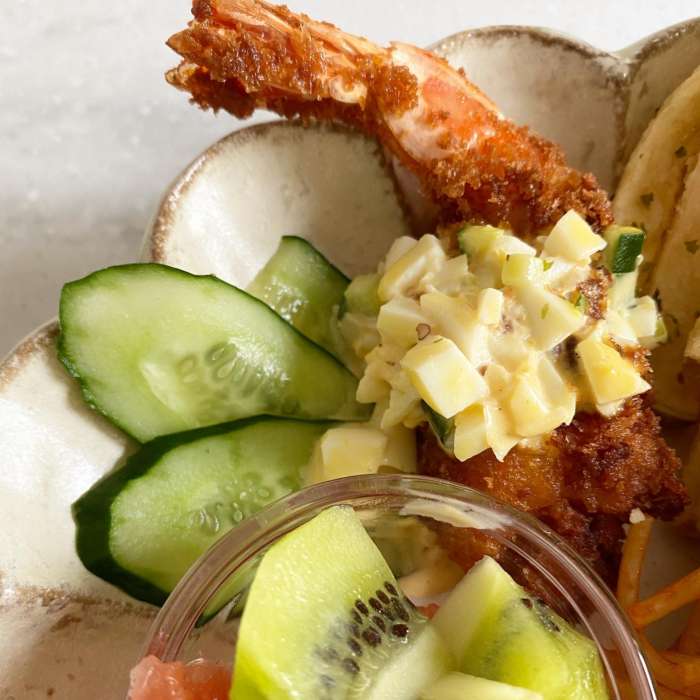
Ebi-Furai(エビフライ)[Recipe]
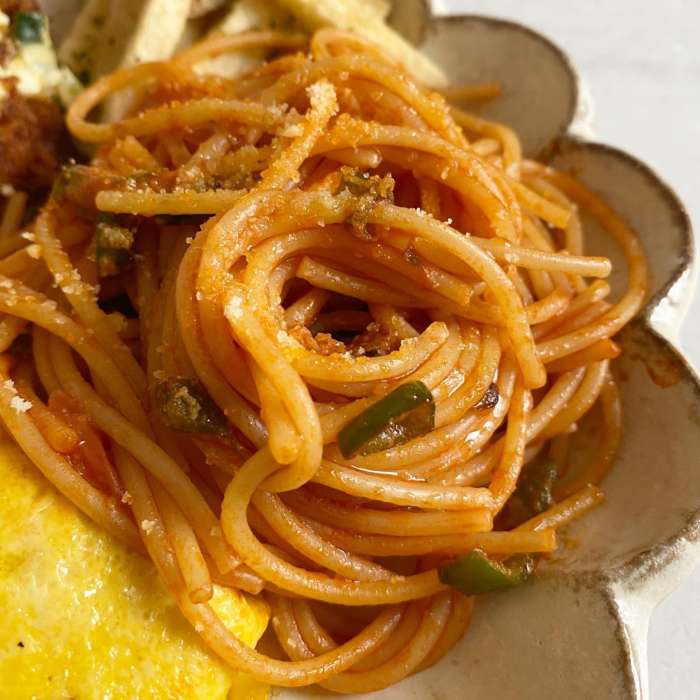
Napolitan (ナポリタン) [Recipe]
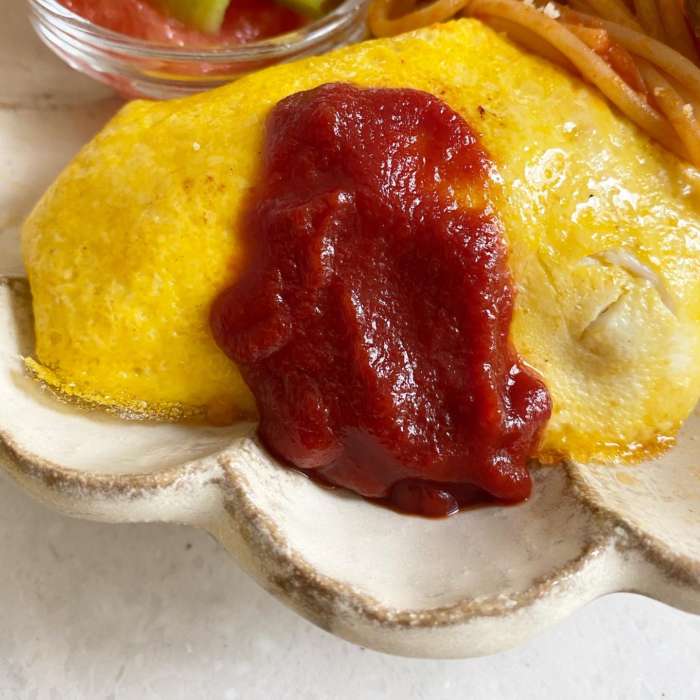
Omu-rice (オムライス)
Memo :
1. To make Japanese baby foods, please check recipe tutorials!
2. To know more about Japanese culture, please check Events & Food Culture.
3. Are you looking for baby food making items? Visit our shop!
Okosama Lunch Plate (Hayabusa) | ランチプレート (はやぶさ) ↓

 ←click
Okosama Lunch Plate (Dr.Yellow) | ランチプレート (ドクターイエロー) ↓
 ←click
Botamochi/Ohagi ぼたもち/おはぎ
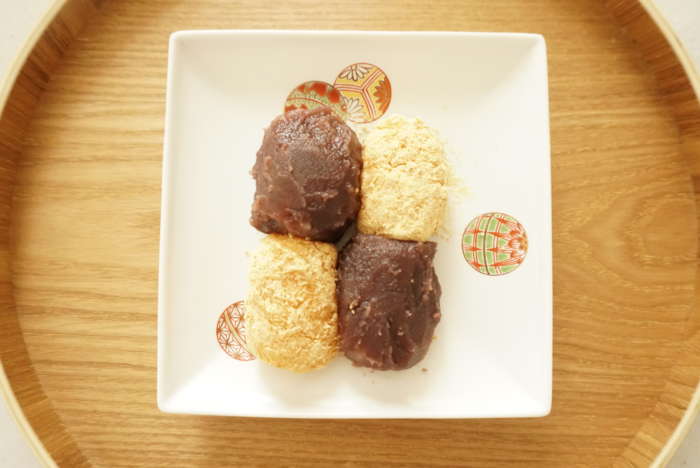
Botamochi/Ogahi is a popular Japanese sweets that is made of steamed glutinous rice wrapped with red bean paste.
Yellow one is dried soy bean powder called KINAKO. We don’t use dairy products and egg, so this is Japanese vegan sweets as well.
Traditionally, we eat this sweets twice a year in Japan. When we eat in Spring, this is called Botamochi. It is said that its name comes from the peony (Botan in Japanese) since the shape of red beans were used as a peony flower. We cover the rice with smooth red bean paste and the shape is oval.
In Autumn, this is called Ohagi. It is said that its name comes from the bush clover (Hagi in Japanese) since the shape of red beans were similar to bush clover. So, we use coarse bean paste and the shape is circle/round.
My family love this sweets snd it’s easy snack, so I make all year round!
Related Recipe :
– Ohagi
Gyoza (Pot Stickers) ギョーザ
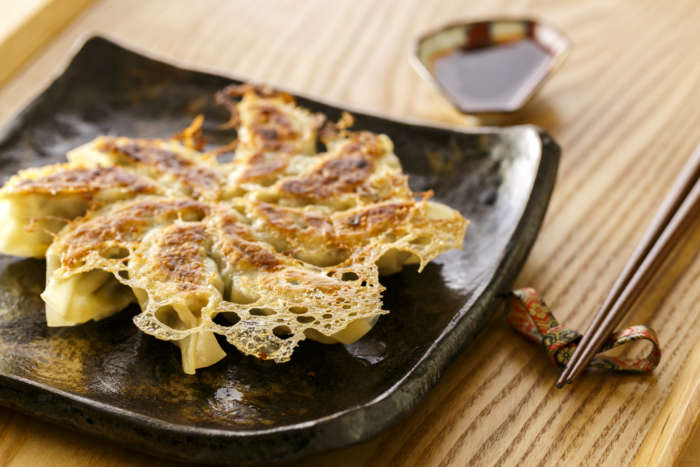
Gyoza (餃子, gyōza) are dumplings filled with ground meat and vegetables and wrapped in a thin dough. Gyoza are also known as pot stickers in English. Gyoza originated in China (where they are called jiaozi), but have become a very popular dish in Japan since most of Ramen shops also offer Gyoza on the menu. We usually use ground pork, nira chives, green onion, cabbage, ginger, garlic and sesame oil, but some gyoza specialty shops have also come up with a range of other fillings. Gyoza are found nationwide at ramen shops, Chinese restaurants, Izakaya restaurants and a small number of gyoza specialty shops.
There are mainly three types of Gyoza; Yaki gyoza(pan fried gyoza), Sui gyoza(boiled gyoza) and Age gyoza(deep fried gyoza). Yaki gyoza are most common in Japan. They are pan fried before a mixture of water and potato starch or cornstarch is poured in and everything is covered for a few minutes. Gyoza are usually eaten with a dipping sauce made of equal amounts of soy sauce and rice vinegar. If you like spicy, some drops of chili oil is also commonly added. Gyoza are particularly popular in the cities of Utsunomiya in Tochigi prefecture and Hamamatsu in Shizuoka prefecture.
Related article & video :
– Gyoza Town visit
– Japan Guide : Gyoza town
– Book : Complete Guide to Japanese Cuisine
Okonomiyaki (Japanese Savory Pancake) お好み焼き
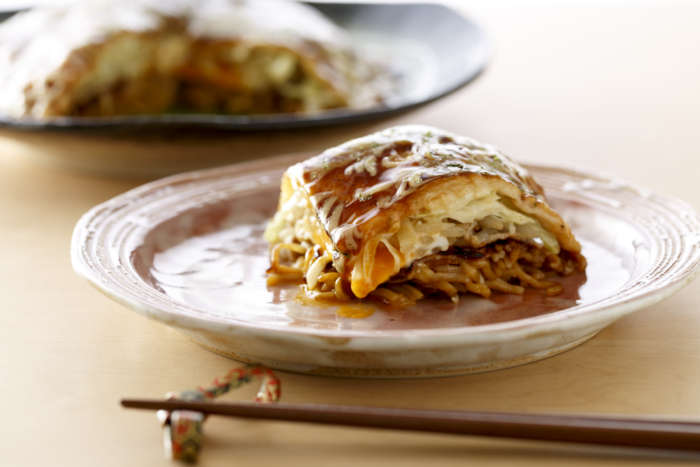
Okonomiyaki is a Japanese-style savory pancake cooked on a large hotplate. Okonomi means “As-you-like-it” and recipes differ depending on the region; traditionally Osaka and Hiroshima. Osaka-style Okonomiyaki is literally a pancake which contains flour, dashi, shredded cabbage, Japanese spring onion, meat/seafood and egg etc. Hiroshima-style Okonomiyaki has layers of those ingredients, plus egg noodles. It is flavored with a special Okonomiyaki sauce, Japanese mayonnaise and Aonori seaweed flakes. To make both Okonomiyaki, special spatula called “Okoshi-gane” is a must tool to flip the whole pancake.





 ←click