Japanese Home Cooking Class in Tokyo. YUCa's Food & Lifestyle Media from Japan

Trip adviser Google map instagran youtube

In-person Class Schedule

  • Yuka's Japanese Cooking
    2-34-8, Nishiogu116-0011
    Mar 25(Wed) 10:00-12:30

    Ramen & Gyoza

  • Yuka's Japanese Cooking
    2-34-8, Nishiogu116-0011
    Apr 2(Thu) 10:00-12:30

    Okonomiyaki & Gyoza

  • Yuka's Japanese Cooking
    2-34-8, Nishiogu116-0011
    Apr 8(Wed) 10:00-12:30

    Ramen & Gyoza

  • Yuka's Japanese Cooking
    2-34-8, Nishiogu116-0011
    Apr 9(Thu) 10:00-12:30

    Ramen & Gyoza

  • Yuka's Japanese Cooking
    2-34-8, Nishiogu116-0011
    Apr 10(Fri) 10:00-12:30

    Ramen & Gyoza

  • Yuka's Japanese Cooking
    2-34-8, Nishiogu116-0011
    Apr 12(Sun) 10:00-12:30

    Ramen & Gyoza

See all

Simmered Hijiki Seaweed

Categorised in: | Link of this article

Hijiki no nimono is an essential side dish for Japanese breakfast and bento box. A simple recipe is a combination of hijiki, carrots, and deep-fried tofu, but chikuwa, konnyaku, shiitake mushrooms, and edamame beans are sometimes added for volume. 

Hijiki is a healhty food rich in iron and calcium and is said to be effective for healthy hair and prevention of anemia. If you make a lot of it, you can freeze it, put it together with cooked rice or egg rolls, or use it as a garnish for fried rice.

Read More

Obi Iwai (Obi-Tying Ceremony)

Categorised in: | Link of this article

In Japan, when a woman reaches the fifth month of pregnancy, she wears an abdominal belt called an “Iwata Obi” (岩田帯) in hopes of an easy delivery.

It was worn every day until the day the baby was born, but these days few people actually wear one, even though some buy one for celebratory purposes.
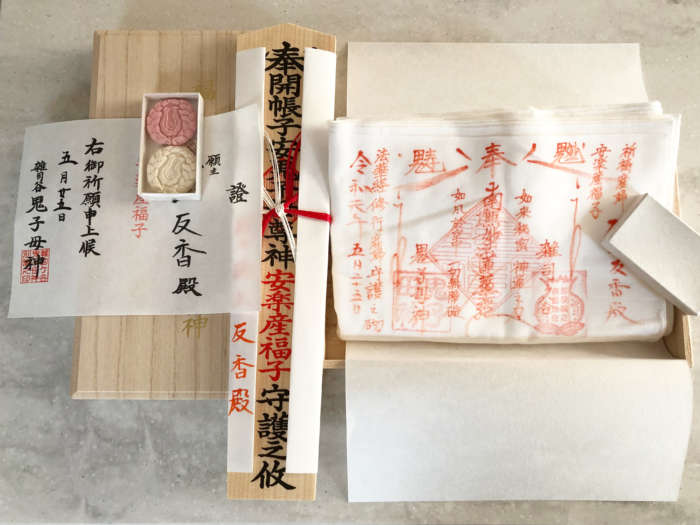
Nowadays, instead of belly bands, people wear girdles or belly wraps, which are convenient for taking off the belt.

And the first day to wrap the girdle is called the Obi Celebration, which is the day of the dog in the fifth month of pregnancy.

(In the lunar calendar, each of the twelve signs of the Chinese zodiac is distributed on a different day of the month, so there are two or three Dog Days in a month.)

Dogs are said to be fertile and to have an easy delivery, so the dog day is probably because of the desire to be named after them.

In the past, belly bands were usually sent with dried bonito flakes and sake from the family of the expectant mother, after prayers for safe delivery had been offered at a nearby shrine or temple.

It may also be given by a matchmaker or a close couple blessed with a child.
The gift varies from region to region, such as a bleached cotton with the words Kotobuki or Inu (dog) written in red, or a talisman tucked into the obi.

Since it is a lucky charm, it may be appropriated in the form of a token, which can then be purchased at shrines or department stores that offer prayers for easy childbirth.

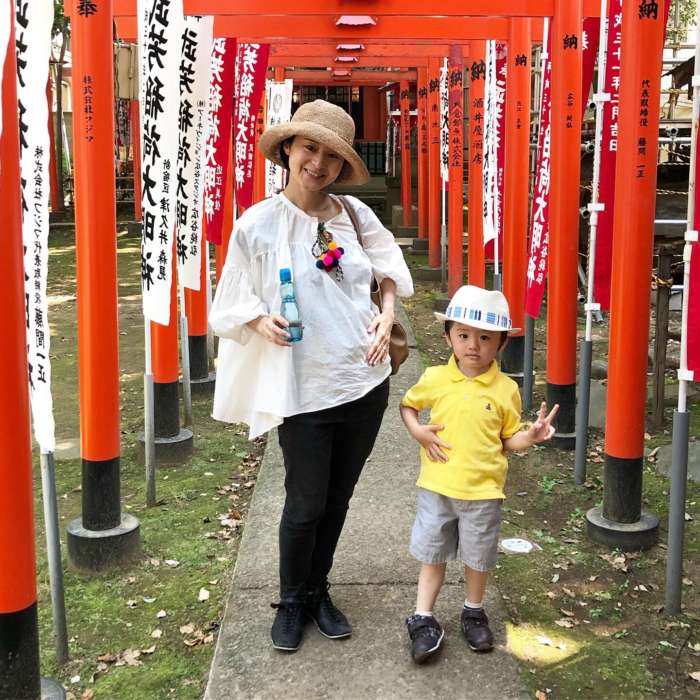
In my case, there is a famous shrine called Kishimojin in my neighborhood, so I went there to pray for a safe delivery. At that time, I bought a belly band.

During my pregnancy, I wore a girdle-style one, both with my first son and when I gave birth to my first daughter.

Memo :
1. Are you looking for baby food making items? Visit our shop!
2. To make Japanese baby foods, please check recipe tutorials!
3. To know more about Japanese culture, please check Events & Food Culture

Kissaten (Japanese Coffee Shop) 喫茶店

Categorised in: | Link of this article

Do you all like to spend time relaxing in a cafe?
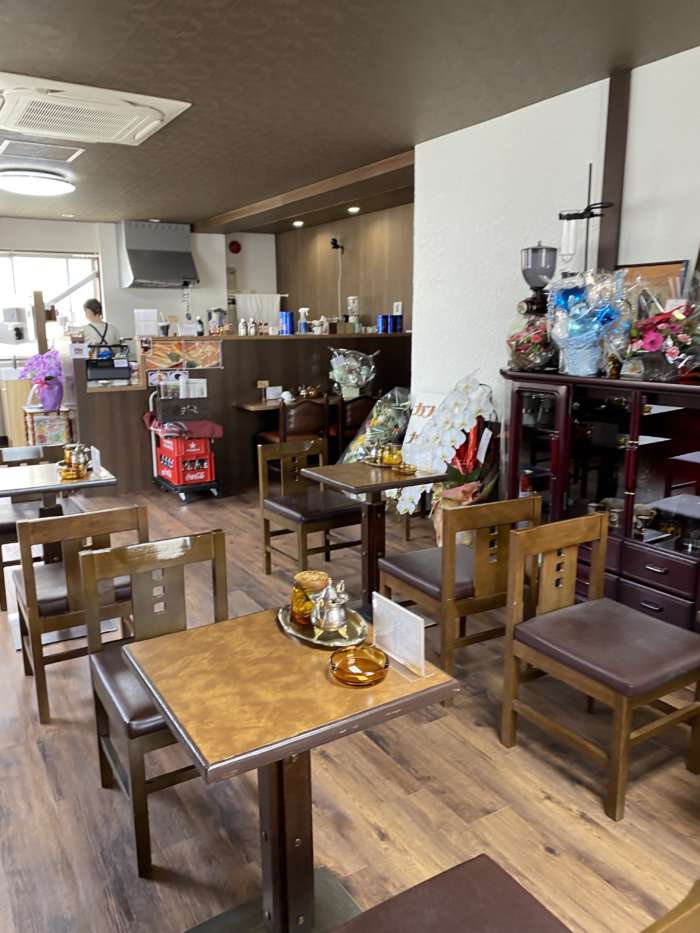
While there are many Western coffee chain stores in Japan, there are also traditional coffee shops called “Kissaten”(喫茶店). Kissaten is essentially a store that serves tea or coffee. However, Kissaten in Japan may be a little different.

First, Kissaten are places to relax and quietly enjoy drinks and food. Some Kissaten have newspapers or magazines as well as TVs in the store, which may serve as background music in the store.

And, as is increasingly the case with Western coffee chains these days, Kissaten brew coffee one cup at a time, so it takes a little longer to be served. Still, it is worth the wait as a quality drink is served.

Read More

How To Store Ginger

Categorised in: | Link of this article

The best way to store ginger is to wrap it in kitchen paper or newspaper and store it at room temperature in a cool, well-ventilated dark place. If it is kept refrigerated, it will be too cold and the surface will become slimy even if it is wrapped in paper. If stored at room temperature, the skin will remain shiny even after two weeks. Even if the outer skin is a little dry, the ginger itself is fine.

Kid-Friendly Japanese Food: vol.83

Categorised in: | Link of this article

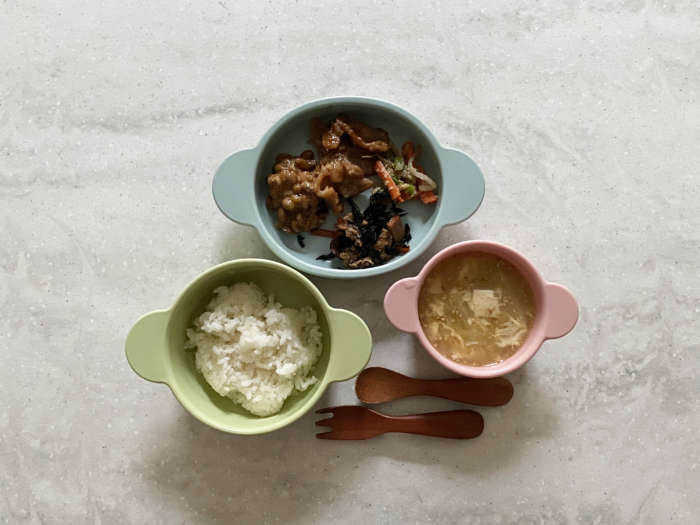
Menu:
– Japanese rice
– Egg soup with tofu and Chinese cabbage
– Simmered Hijiki seaweed
– Ginger pork
– Salad with bean sprouts, carrot and Chinese cabbage
– Natto

How To Keep Lettuce Fresh

Categorised in: | Link of this article

Lettuce is indispensable for salads. However, some of you have probably bought lettuce and put it straight into the refrigerator, where it quickly became damaged and ended up being thrown away without using it all. I’ll show you how to keep lettuce refrigerated for 2-3 weeks.

Kid-Friendly Japanese Food: vol.82

Categorised in: | Link of this article

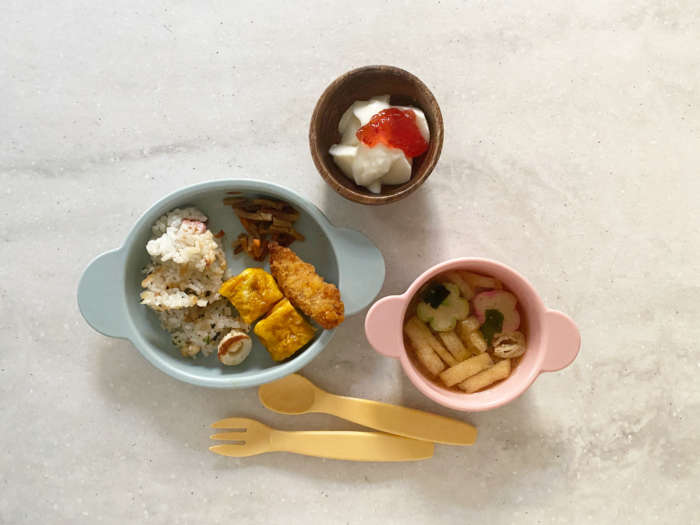
Menu:
– Oyaki (Rice chips) [Recipe]
– Miso soup with wheat gluten, tofu and wakame [Recipe]
– Japanese Omelette [Recipe]
– Karaage (Fried Chicken) [Recipe]
– Kimpira gobo [Recipe]
– Yogurt with strawberry jelly

Japanese Set Meal Idea : vol.263

Categorised in: | Link of this article

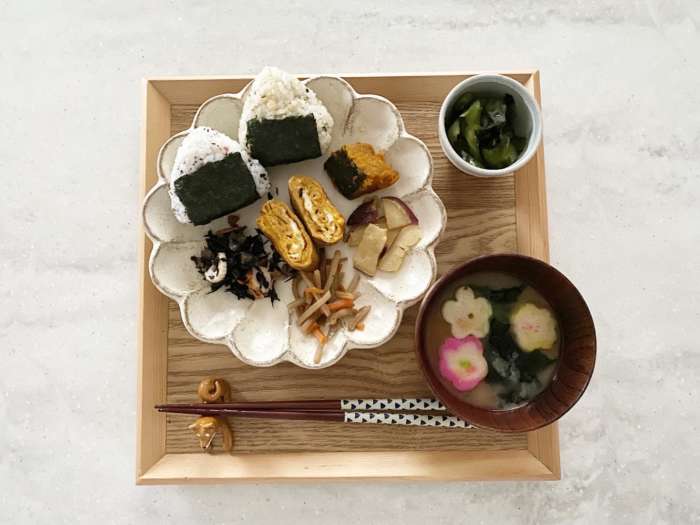
Menu:

– Onigiri [Recipe]
– Miso soup with Fu, fried tofu and wakame [Recipe]
– Kinpira gobo [Recipe]
– Simmered pumpkin [Recipe]
– Japanese Omelette [Recipe]
– Simmered sweet potato with lemon and honey
– Hijiki seaweed salad [Recipe]
– Cucumber and wakame pickles

Bonito Flakes (Katsuobushi) かつお節

Categorised in: | Link of this article

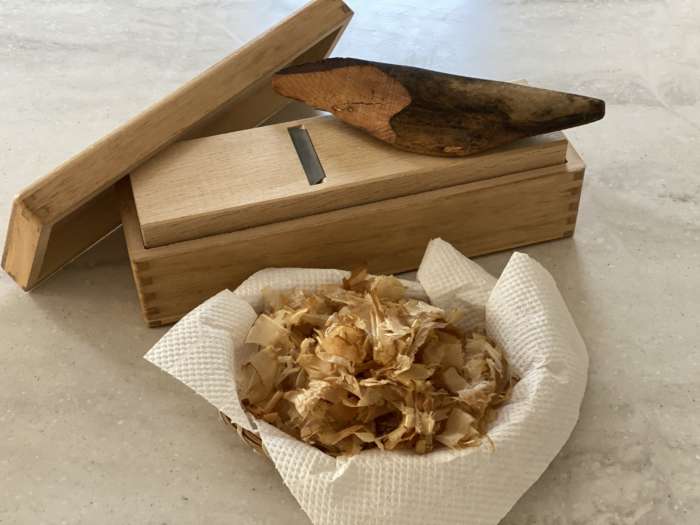
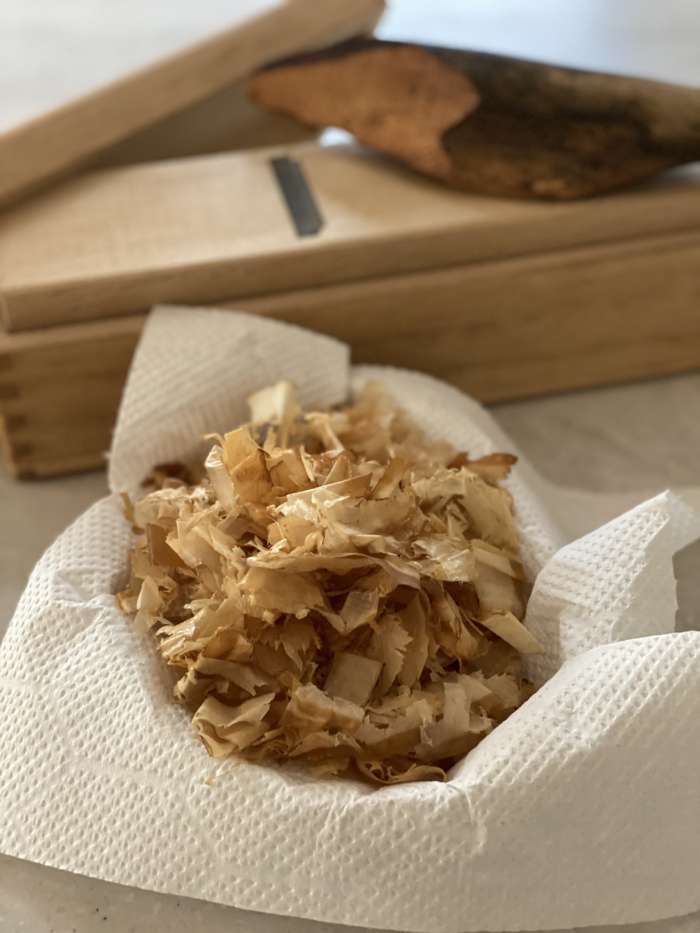
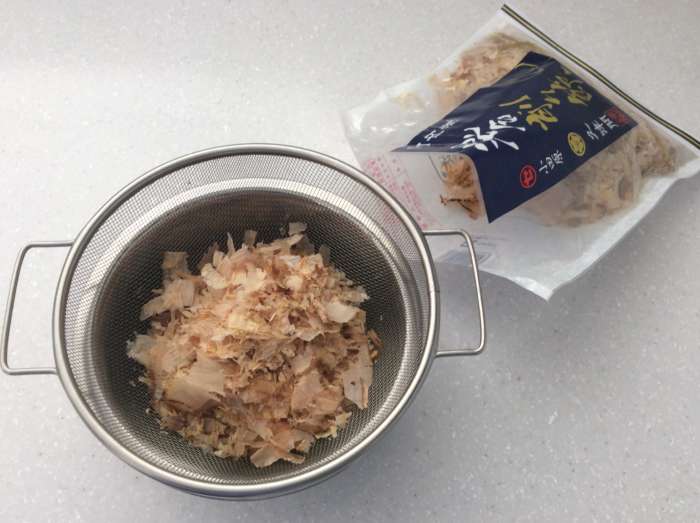
Katsuobushi (かつお節), dried and shaved bonito flakes, is a key ingredients in dash, brings a smoky richness to the broth. It can be made from a variety of fish including yellowfin tuna, mackerel, and anchovies – each, of course,  with its own flavor profile.

To make katsuobushi, the bonito is simmered and its bones are removed after which it is dried and smoked. Sometimes a mold that promotes fermentation is added to the bonito, other fish are processed in a similar fashion.

It is commonly used for dashi (Japanese soup stock), but it is also sometimes placed on top of okonomiyaki or ohitashi to be tasted with the dish.

After being roasted in vacuo and seasoned with soy sauce or other seasonings, it is called “okaka”, and is sometimes mixed with rice balls or rice to make yaki onigiri (grilled rice balls).

There are two major types of Katsuobushi:

Arabushi (荒節) : Light in flavor, this dried and smoked katsuobushi is the most popular type, especially in the Kyoto and Osaka region.
Karebushi (枯節) : A mold that promotes fermentation and imparts a stronger umami flavor is added to arabushi, resulting in this type of Katsuobushi, popular in the Tokyo region.

Different ways to shave fish flakes:

Atsu kezuri (厚削り)
 : Thick-cut shavings that make an intense dash, used in dishes that are simmered for a long time.
Hanakatsuo (花かつお) : Thinly shaved flakes used for making dash quickly
Hana kezuri (花削り) : Very thin shavings also used to make instant dashi
Ito kezuri (糸削り) : Thin strands often used as a garnish for tofu or vegetables

Recipes to use:

Dashi (Japanese Soup Stock)
Okaka onigiri
Bonito Flakes & Cheese Onigiri
and more!

Shop at YJC’s store on Amazon:

Bonito Flakes (Katsuobushi) 


* Reference of this article : Food Sake Tokyo (The Terroir Guides) 

Kid-Friendly Japanese Food: vol.81

Categorised in: | Link of this article

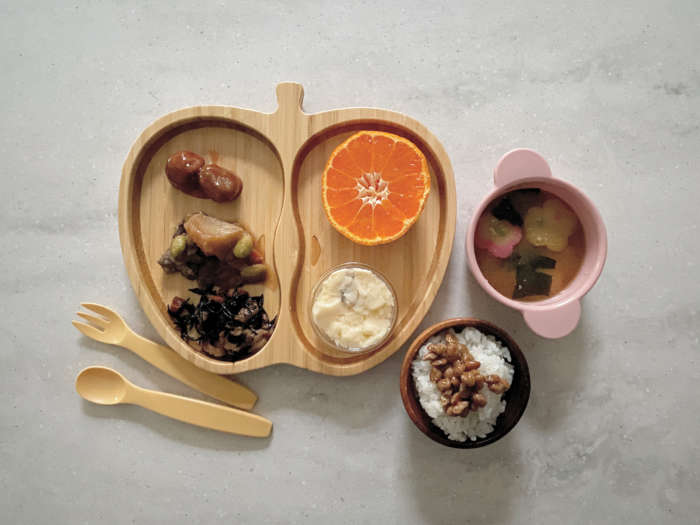
Menu:
– Rice topped with Natto
– Miso soup with wheat gluten, tofu and wakame [Recipe]
– Potato salad [Recipe]
– Meat balls
– Nikujaga
– Simmered Hijiki seaweed [Recipe]
– Mikan

Display mode

In-person Class Schedule

See all