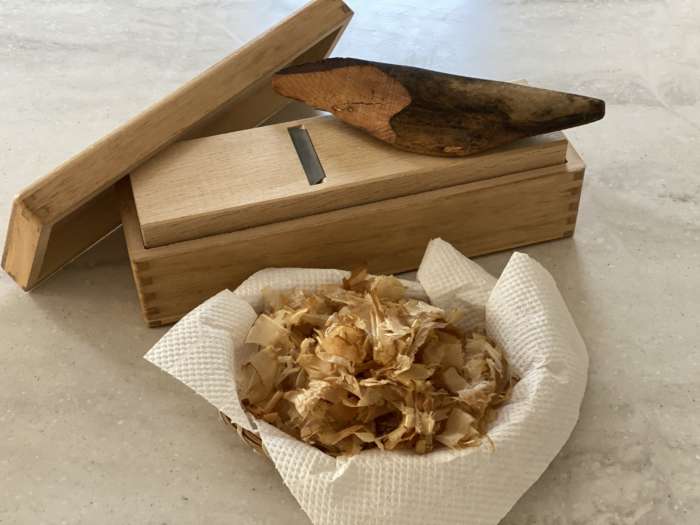
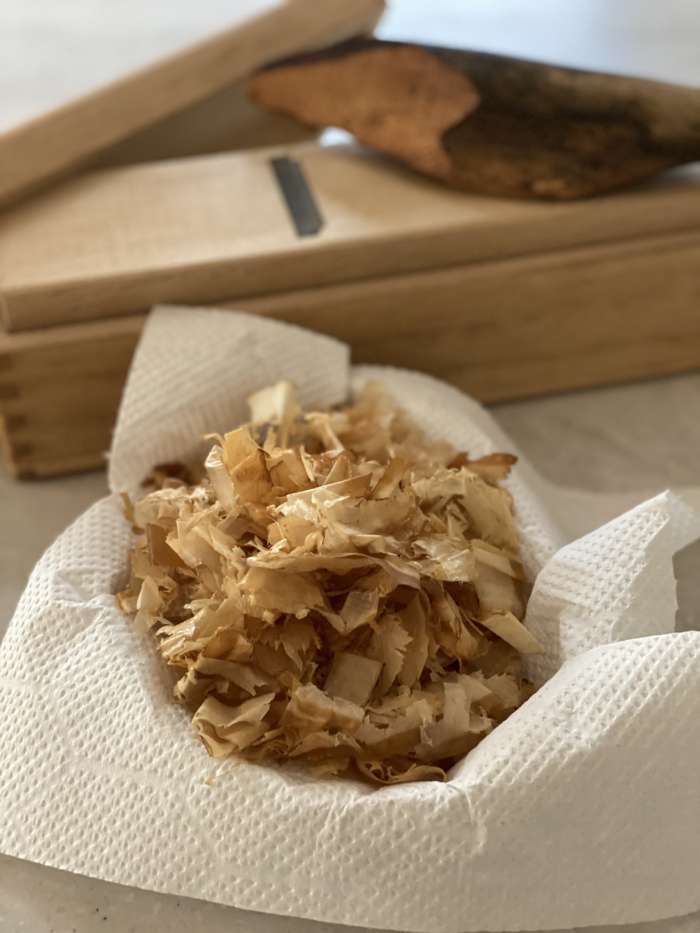
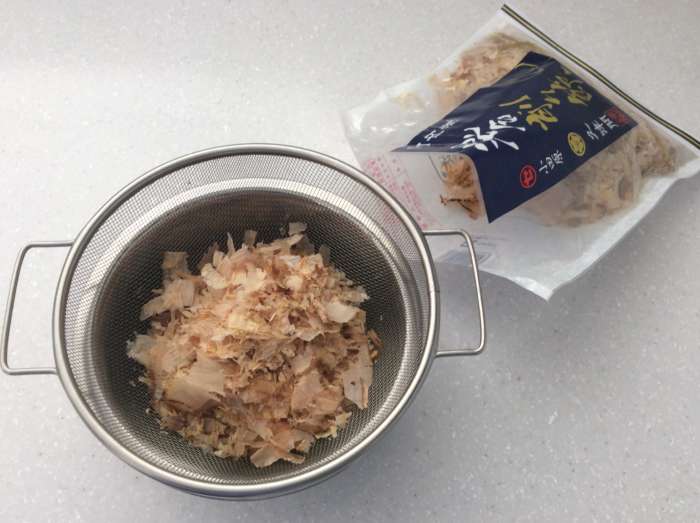
Katsuobushi (かつお節), dried and shaved bonito flakes, is a key ingredients in dash, brings a smoky richness to the broth. It can be made from a variety of fish including yellowfin tuna, mackerel, and anchovies – each, of course,with its own flavor profile.
To make katsuobushi, the bonito is simmered and its bones are removed after which it is dried and smoked. Sometimes a mold that promotes fermentation is added to the bonito, other fish are processed in a similar fashion.
It is commonly used for dashi (Japanese soup stock), but it is also sometimes placed on top of okonomiyaki or ohitashi to be tasted with the dish.
After being roasted in vacuo and seasoned with soy sauce or other seasonings, it is called “okaka”, and is sometimes mixed with rice balls or rice to make yaki onigiri (grilled rice balls).
There are two major types of Katsuobushi:
Arabushi (荒節) : Light in flavor, this dried and smoked katsuobushi is the most popular type, especially in the Kyoto and Osaka region. Karebushi (枯節) : A mold that promotes fermentation and imparts a stronger umami flavor is added to arabushi, resulting in this type of Katsuobushi, popular in the Tokyo region.
Different ways to shave fish flakes: Atsu kezuri (厚削り) : Thick-cut shavings that make an intense dash, used in dishes that are simmered for a long time. Hanakatsuo (花かつお) : Thinly shaved flakes used for making dash quickly Hana kezuri (花削り) : Very thin shavings also used to make instant dashi Ito kezuri (糸削り) : Thin strands often used as a garnish for tofu or vegetables
In this recipe video, I will introduce how to make Egg Noodles for Ramen. Egg noodles are important part for enjoying ramen. People usually buy the pre-made one but it’s easy and fun to cook at home!
Kelp (Kombu 昆布) is the king of sea vegetables. It is an essential component in Dashi, the broth used in many Japanese dishes. A natural source for glutamic acid, it is rich in umami. Kombu thrives in the cool, mineral-rich waters surrounding Hokkaido, Japan’s northernmost island.
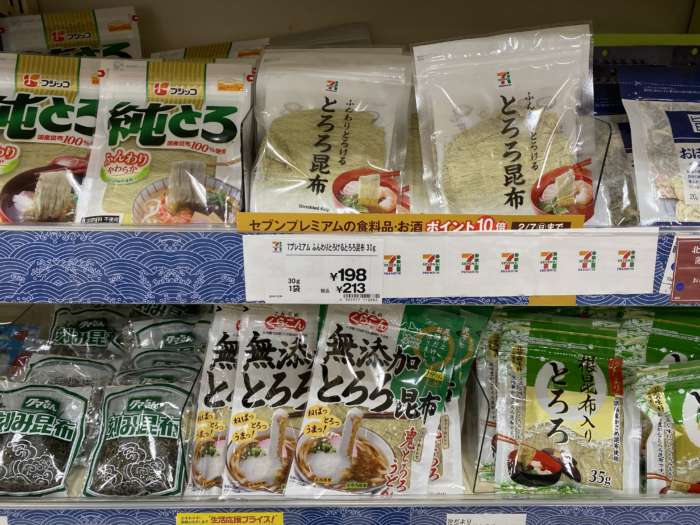
The cold, mineral-rich waters surrounding Hokkaido provide 99.5% of the country’s kombu. Most kombu is sold in long strips. But it is also available in shavings (tor0ro or boor) to add to soup or sprinkle over the rice. Kombu can also be wrapped around was fish in a process called kobujime, which changes the fish’s texture and adds umami.
There are more than forty types of child and farmed kombu. The name of a specific variety of kombu often reflects where it was harvested.
These are the five most popular:
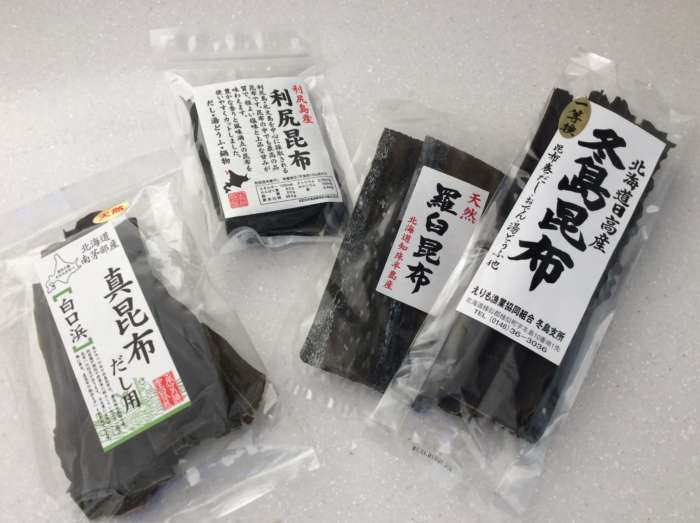
Rishiri kombu (利尻昆布) : Harvested near Rishiri Island, this is an aromatic kombu that makes a clear broth, popular with chefs in Kyoto. It is considered a high-quality kombu and is often used in top restaurants.
Rausu Kombu (羅臼昆布) : This thick kombu has a stickiness to it, and a deep. Rich flavor that is slightly sweet. Also a high-quality kombu, it is the kombu that is used to make other shaved kombu products such as tororo and oboro.
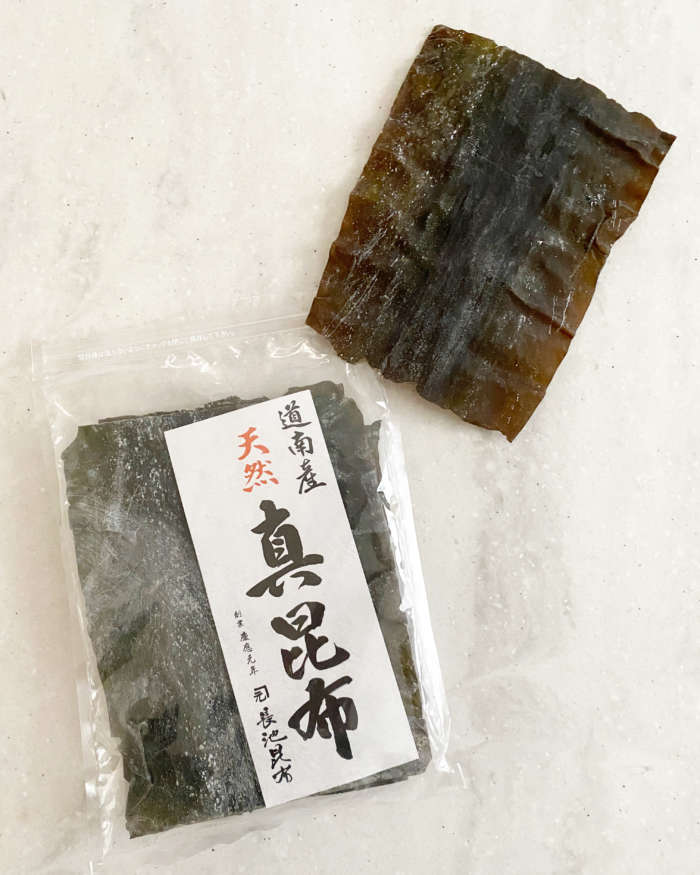
Ma Kombu (真昆布) : Thick and rich in umami, slightly sweet, with an elegant flavor, this is also considered a top kombu.
Hidaka Kombu (日高昆布) : From the Hidaka region, this kombu is a popular variety used by busy home cooks because it quickly imparts its flavor when simmered in water. It is also reasonably priced and can be used as an ingredients for fish cake stew (oden), sea vegetables and seafood simmered in soy (Tsukudani) and other kombu dishes.
Naga Komnbu (長昆布) : A very long kombu (more than ten meters long), naga kombu is also used in dishes such as oden and Tsukudani. It is found only in the wild – not farmed- and is reasonably priced.
Some Kombu products (not the Kombu used in dashi) include:
Komochi Kombu : Kombu layered with herring eggs.
Kombu cha : Kombu that has been dried and crushed into a powder; most often used for tea, soup stocks, or for thickening non-oil salad dressings.
Musubi Kombu : Knots of Kombu, often found in fish cake stew. (Oden)
Oboro : Shaved Kombu, used for soups
Tororo : Shaved Kombu, used in soups and wrapped around rice and other items.
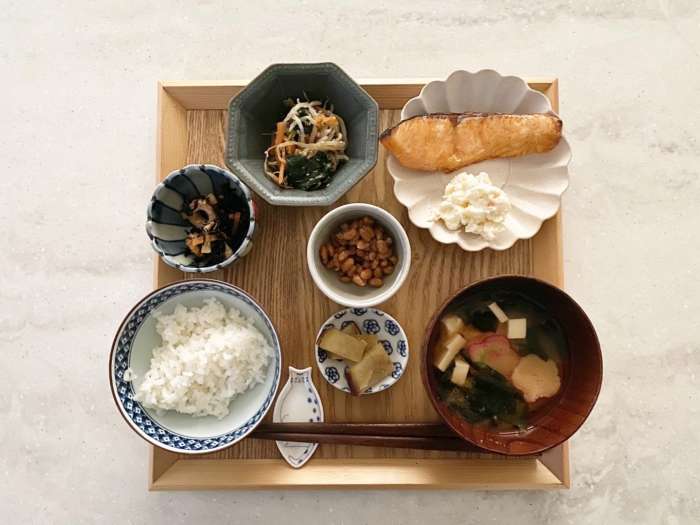
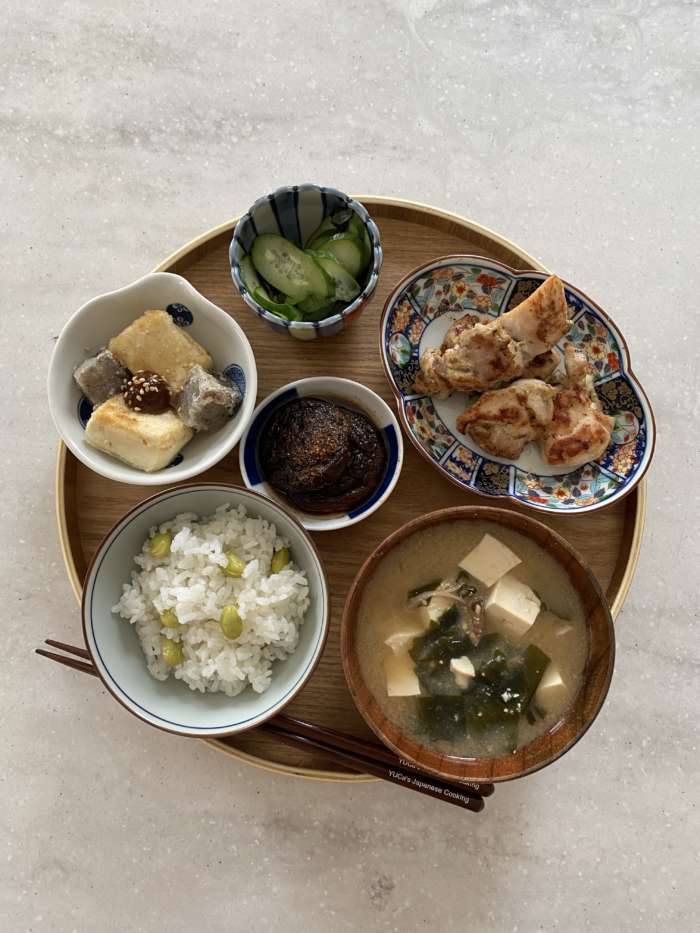
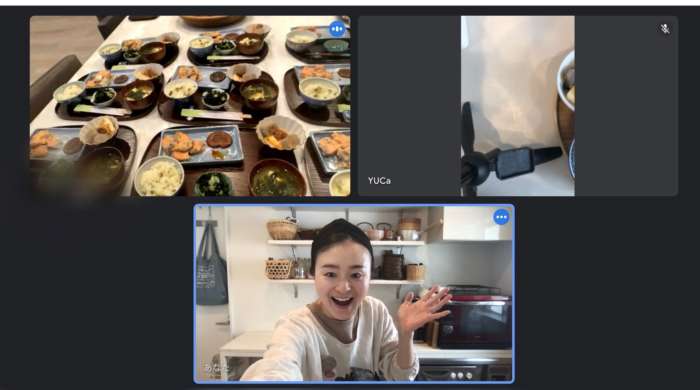
Collaboration class with Kokoro Cares is finished! Thank you for everyone at Kokoro Cares and for all the guests who joined this special Japanese set meal cooking lesson.
Although we had a limited amount of time to conduct the event, it was a valuable opportunity for me to efficiently prepare a set menu while talking with familiar guests and guests meeting for the first time through the screen. I found that as long as I was prepared, I could prepare so many menus even in the limited time of one hour.
If you are interested in making this kind of Japanese-style set meals, please join my “Healthy Japanese Meals” class (online) or Home Meals class (in-person).
In this recipe video, I will introduce how to make Grilled Vegetable Curry. This is a Japanese curry with grilled various vegetables is usually served on top of rice. The harmony of the thick Japanese curry roux and the crispy grilled veggies is exquisite. This time, I use homemade curry roux that I filmed the other day. If you’re interested, by all means, go ahead and make it from scratch.
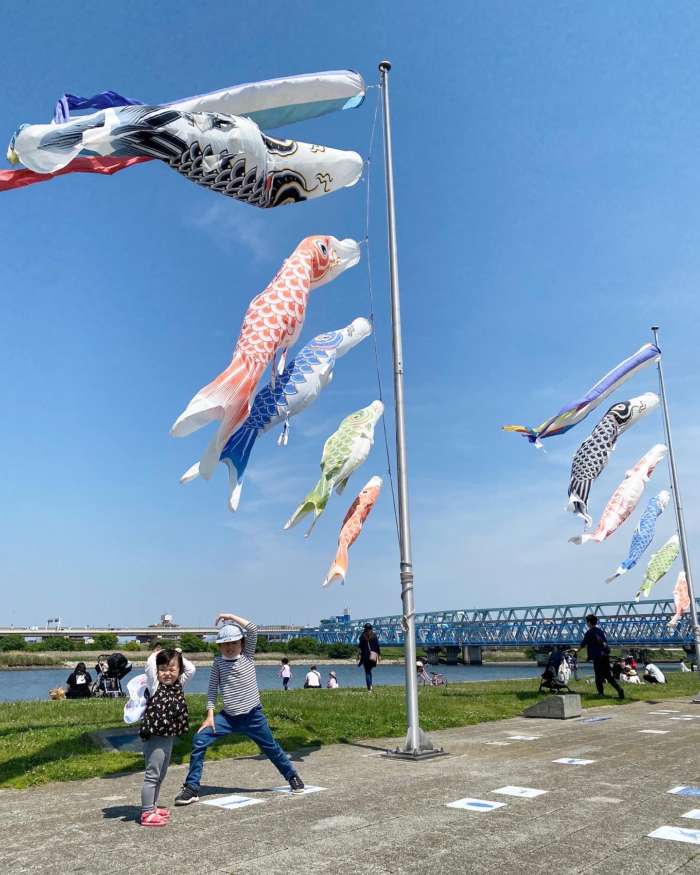
Children’s Day is a Japanese national holiday which takes place annually on May 5th, and it is part of Golden Week Holidays. The day was originally called “Tango no Sekku”, or Boy’s Festival, was celebrated in order to wish the healthy growth of the boys in the family.
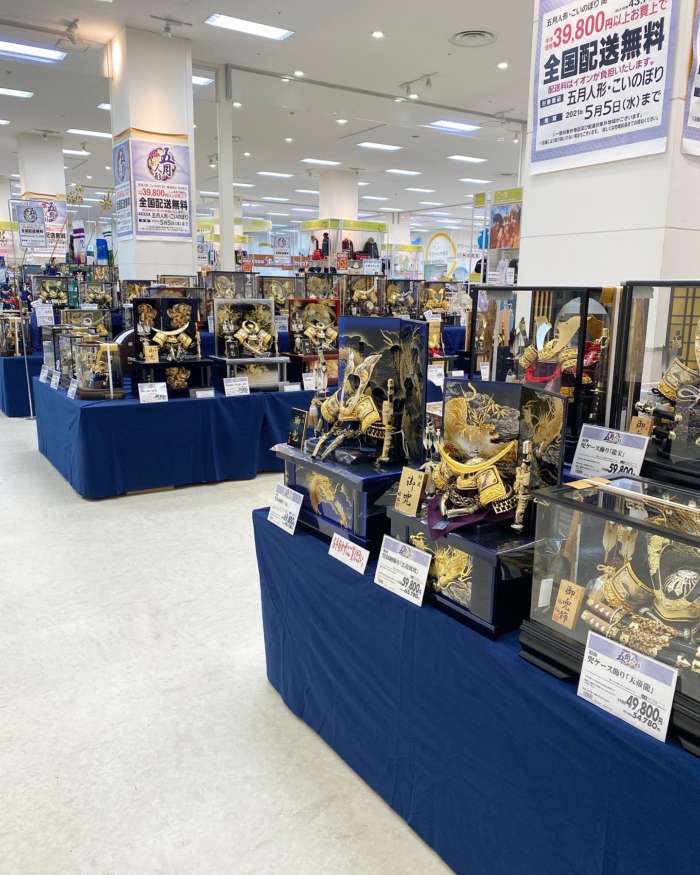
Outside of their houses, families with boys fly large carp streamers called “Koinobori”. Inside they display various kinds of warrior dolls or ornamental helmets called Kabuto because they are believed to be symbols of strength and vitality. At night, people put iris leaves and roots in the bath. It is believed that it will purge noxious vapor.
In 1948, this day was designated a national holiday and renamed “Children Day”. It is now a day for boys and girls to celebrate together.
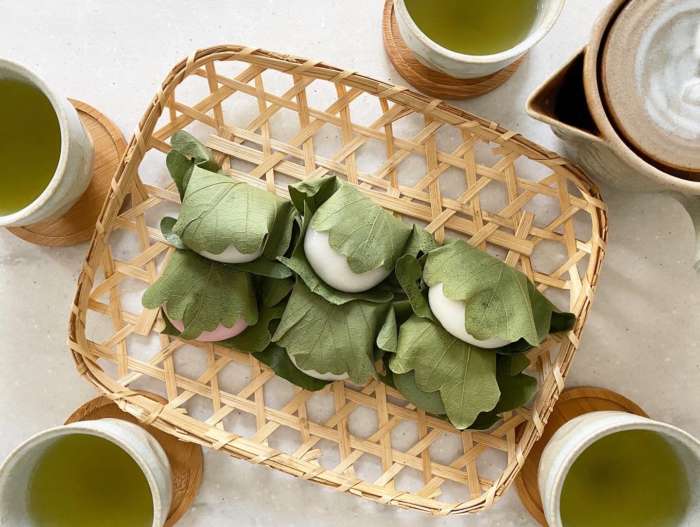
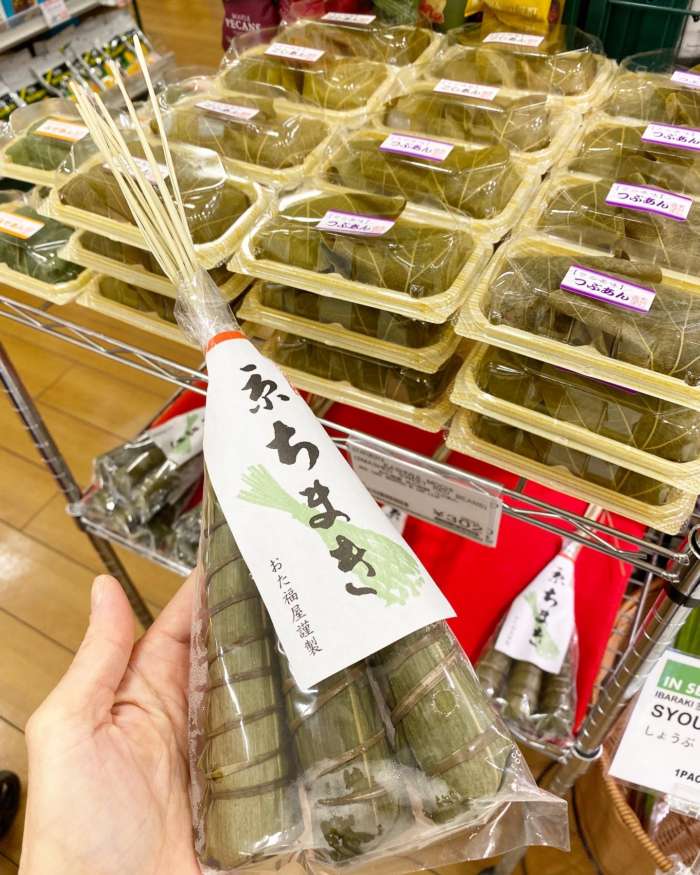
Traditional foods such as “kashiwa-mochi” and “chimaki” are eaten on that day. Kashiwamochi is steamed dumplings filled with sweet red bean paste and wrapped in oak leaves. Oak trees don’t drop their leaves until new shoots have begun to appear. The leaved represents the wish for continuation of the family line and are thus an auspicious part of these traditional sweets.
Chimaki is also dumplings made of glutinous rice, wrapped in bamboo leaves and tied with a piece of rush. This type of sweets came from China and is seen in various forms around Japan.
Iris leaves and roots are also used in baths. It is believed that putting iris leaves and roots in the bath can ward off evil spirits.
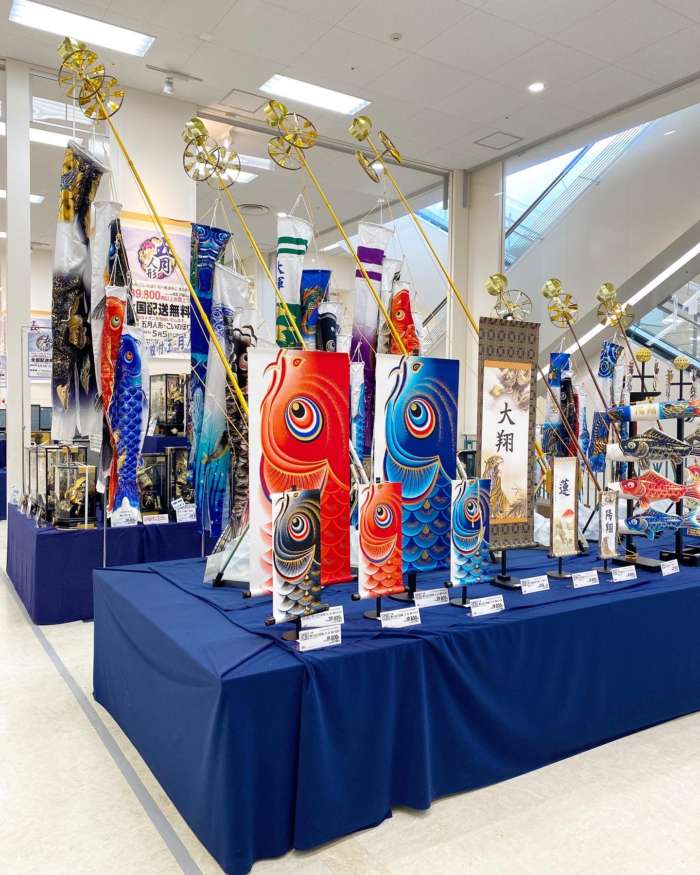
Koinobori (Carp Streamers, こいのぼり) sold at the store. During the Edo period, common people began to make banners in the shape of carp because according to an old Chinese legend, there was a carp which swam upstream all the way to heaven and turned into a dragon. Parents who want their sons to grow up strong and brave so to this day, in the month of May people have continued the practice of flying koinobori. They are usually seen with the streamers on top and the black, red and blue carps below.
During this season in very olden times, from about the 7th century, people observed customs which had come from China. May was thought to be an unlucky month so in order to drive away evil spirits, ordinary working people picked certain plants which were valued for their medicinal powers and made potions or decorative dolls to hand in the doorways.
In later years, from the Edo period, they began to display warrior dolls, helmets and banners which symbolized people’s hopes that their sons would grow up into strong and brave young men.
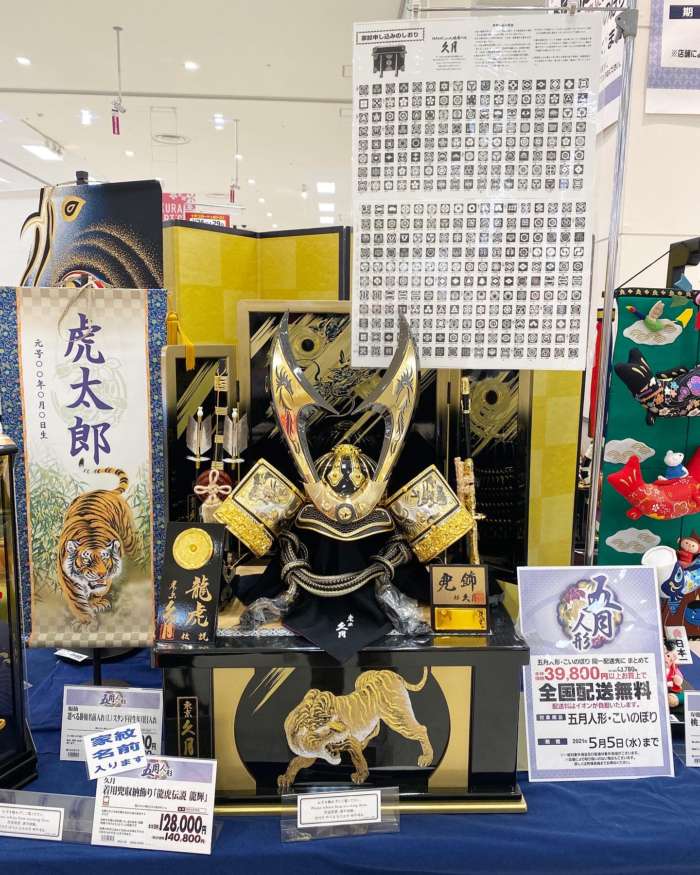
This was the most expensive warrior doll set in this shop!
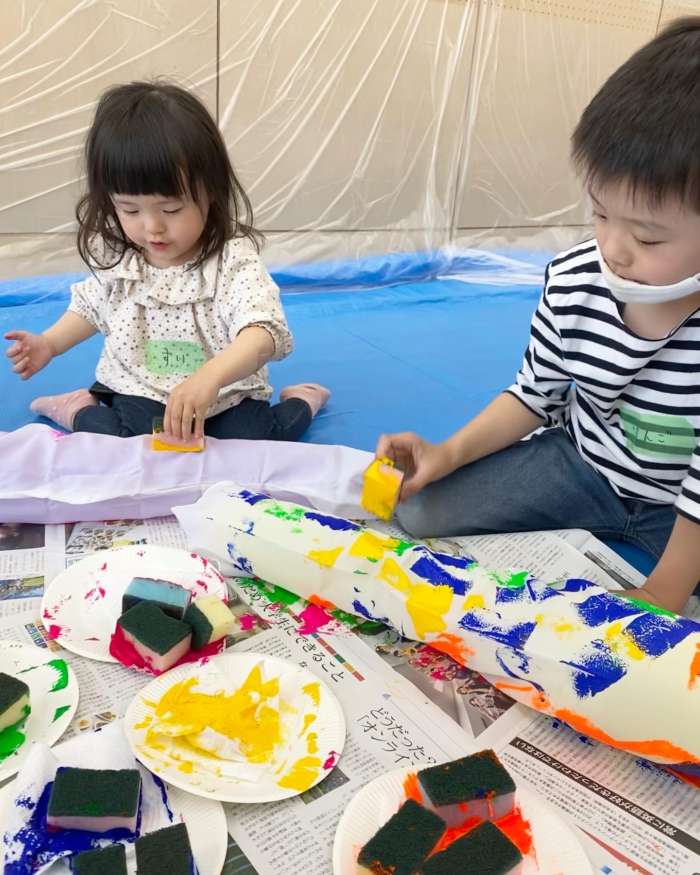
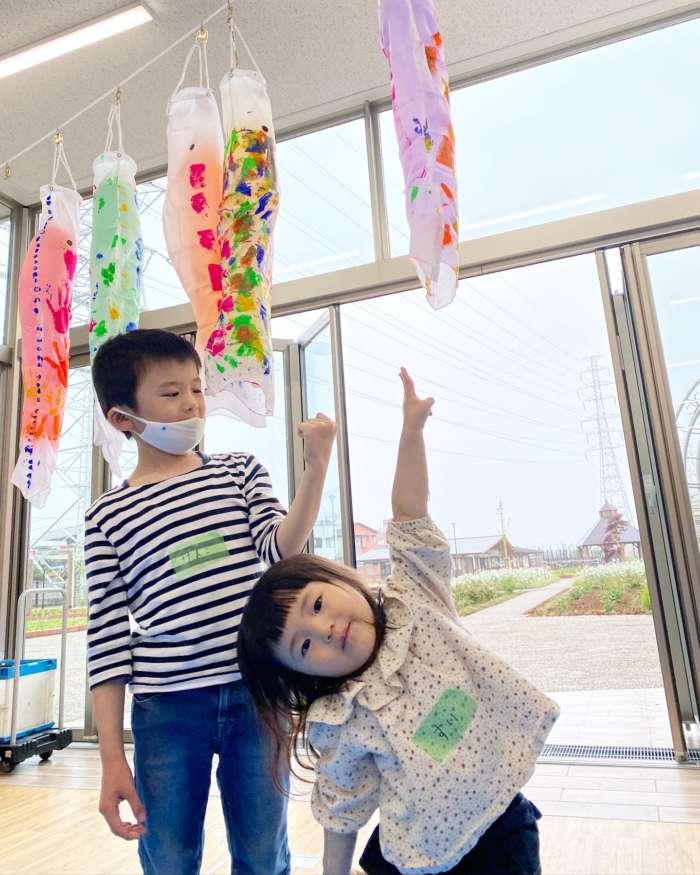
This year, Kengo and Sui took part in the workshop to make koinobori. Their koinobori was so colorful and we all loved it 😍!!!
Memo: Are you interested in more about Japanese culture & events? Check here!