Sweet Potato
In this recipe video, I will introduce how to make Sweet Potato Cake (called Sweet Potato in Japanese). Sweet potato is a popular sweets you can find at supermarkets and convenience stores etc.

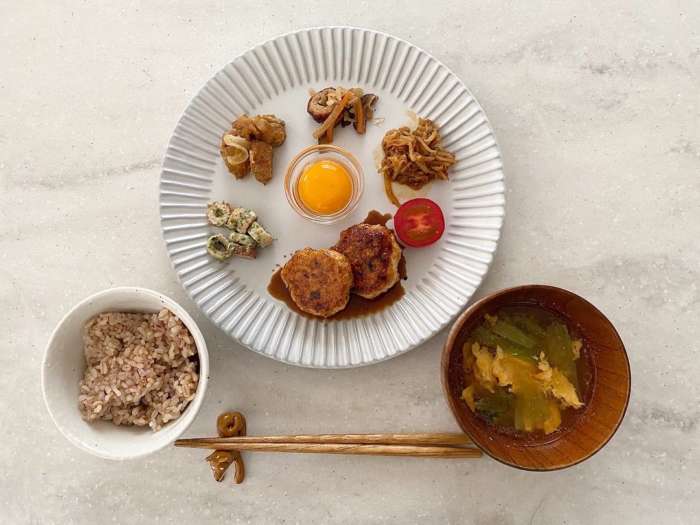
Menu:
– Japanese rice
– Clear soup with pork, mizuna and Chinese cabbage
– Simmered pumpkin
– Tofu hamburg steak
– Stir-fry eggplant and pork
– Simmered Chinese cabbage and tuna salad
– Nori seaweed and Chinese cabbage salad
Item :
– Hibino Ecume Mino Ware Round Plate 9.6in
– Ihoshiro Kiln Animal Series Mino Ware Chopstick Rest
(*If you purchase the product from this link, you can get 5% off. Please take this opportunity!)

Menu:
– Rice topped with Natto
– Grilled horse mackerel
– Sautéed eggplant with sweet sour sauce
– Sesame salad with cabbage [Recipe]
– Pumpkin salad with bacon
– Cucumber and nori seaweed salad
– Miso soup with fried tofu and spinach [Recipe]

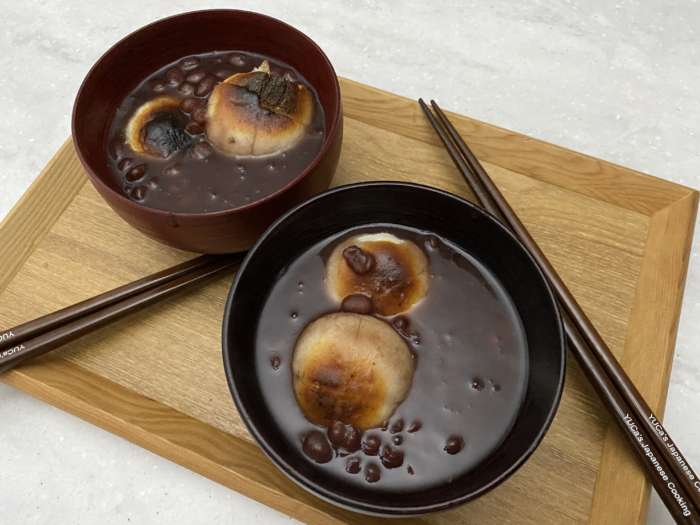
It’s getting so cold in the morning and evening that I can almost feel my white breath coming out. Winter is coming little by little. At this time of year, Adzuki red beans are especially delicious. The other day, I made a pudding with soy milk and leftover sweetened Adzuki red bean paste called Anko. (I used agar-agar, so the texture may be more of a jelly than a pudding.)
It’s very easy to make! Put the 1 cup of soy milk and a half cup of grainy Anko in a small saucepan and heat it up a little, then add the 1g of agar-agar powder (or 10g of Gelatin powder, if you prefer) and let it dissolve. Be careful not to overheat at this point! Turn off the heat, transfer to a container, wait until it comes to room temperature, and then put it in the refrigerator. Spoon as much as you like, place on your favorite dish, top with Kuromitsu (or molasses) and Kinako soybean powder.
Item:
– Harekutani Cat Chopstick Rest Set
(*If you purchase the product from this link, you can get 10% off. Please take this opportunity!)
In this recipe video, I will introduce how to make Vegan Corn Soup with using soy milk. This is a recipe for a soup without oil or dairy products, using the macrobiotic method of frying the onions in water.

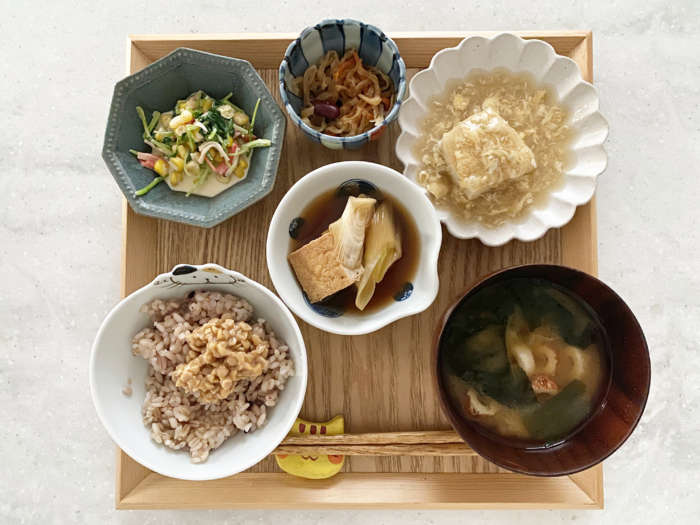
Menu:
– Fried rice with Natto [Recipe]
– Miso soup with eggplant, onion and tofu [Recipe]
– Sautéed sweet potato and fried tofu
– Kiriboshi daikon (Simmered daikon stripes and carrot) [Recipe]
– Stir-fry eggplant and ground pork
– Orange
Item:
– Apple-shape Wooden Tray (agney*)
In today’s Japan, where many different food cultures come and go, wagashi is not in the spotlight as much as it used to be, but it still has a different appeal than western confectionaries that have been introduced from overseas.
Origin of Japanese sweets
There are some major events in the history of Wagashi. First, tea was introduced to Japan from China in the early 12th century, and wagashi became a part of tea ceremony over time.
In the 16th century, the Portuguese sugary sweets inspired the production of wagashi made with added sugar. During the Edo period, wagashi became more widely available to the public due to the increase of sugar imports. Until the Portuguese arrived in Japan, wagashi were naturally sweetened without sugar.
Difference from Yogashi (Western Sweets)
Unlike yogashi animal-based ingredients like dairy and eggs are not used to make wagashi. As a result, wagashi tends to be less fatty. On the other hand, wagashi often contains a lot of sugar. Also, wagashi is made by a variety of cooking methods beyond baking, such as steaming, kneading and molding.
Reflection of seasons
Wagashi is highly seasonal. Although many types of wagashi are available throughout the year, you can find unique wagashi items for each season. For example, pink colored wagashi is common in spring to represent the cherry blossom season. Wagashi with the shape and colors of autumn leaves are another popular item.
Varieties of Wagashi
References:
– A complete Guide to Japanese Cuisine

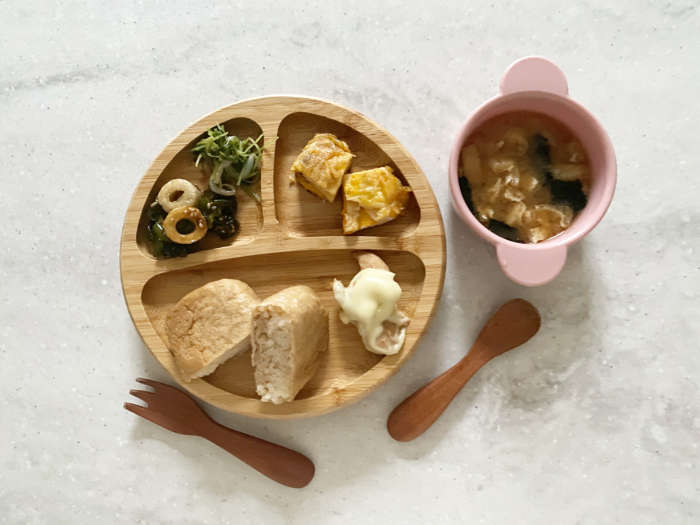
Menu:
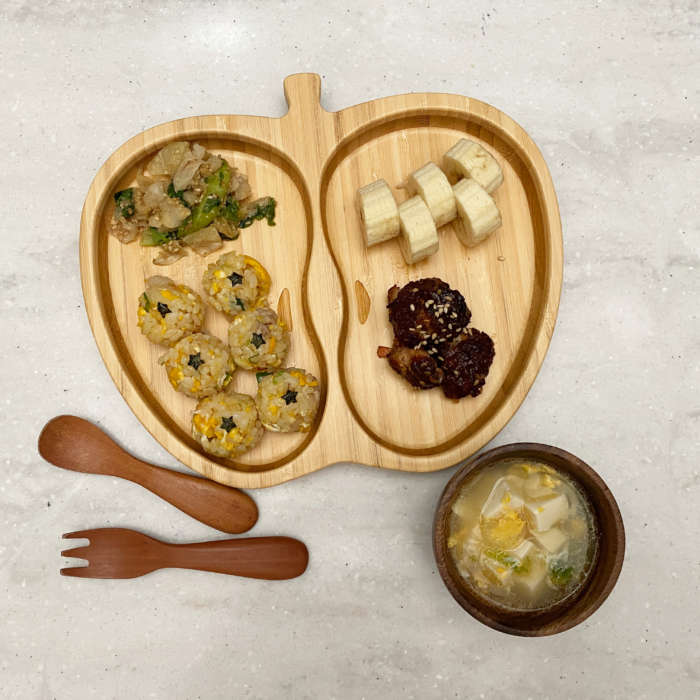
– Miso pork roll onigiri [Recipe]
– Miso soup with broccoli and cabbage
– Kimpira gobo (stir-fry burdock) [Recipe]
– Sesame salad with various veggies
– Yogurt with strawberry jam and kinako
Item:
– Baby Food Plates (Combi)

Menu:
– 3 types Ume onigiri (Pickled plum rice balls) [Recipe]
– Tonjiru (Miso soup with veggies and pork)
– Simmered pumpkin
– Kiriboshi daikon (Simmered daikon stripes and carrot) [Recipe]
– Simmered eggplant and sweet potato

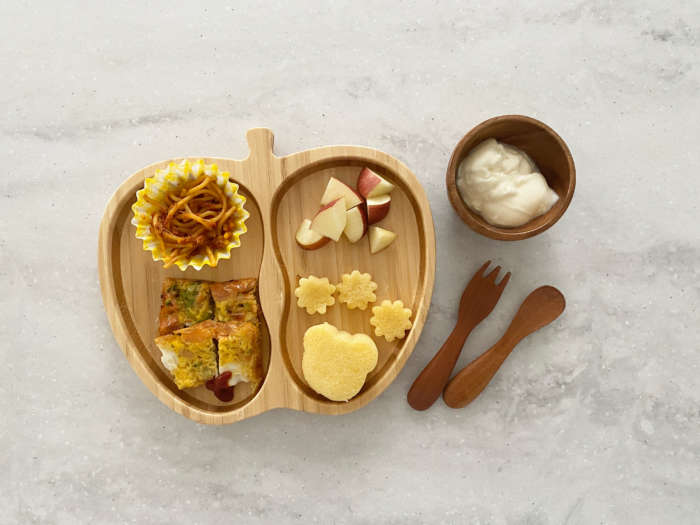
Menu:
– Japanese rice [Recipe]
– Simmered Hijiki seaweed [Recipe]
– Spring roll with ham and cheese
– Salad with Chikuwa, bean sprouts and pea sprouts
– Tonjiru
– Orange juice
Item:
– Apple-shape Wooden Tray (agney*)
– Baby Food Plates (Combi)