Japanese Home Meals : 4

Menu:
– Miso soup with wakame, fried tofu, silken tofu and eggplant [Recipe]
– Japanese rice with homemade furikake [Recipe]
– Grilled cod fish with butter and soy sauce [Recipe]
– Goma-ae with broccoli [Recipe]
– Natto
Paired tea:
– YUCa’s Tea : Chiran Cha
Recipe : Grilled cod fish with butter and soy sauce

When you feel like eating fish but don’t know how to cook it, this is an easy recipe for you! You can try Teriyaki sauce that I introduced in my previous recipe, but this sauce is much easier. Yes, it’s just butter and soy sauce. This is one of the easiest, most simple and yummy sauces that I recommend.
Read More
Japanese Food for Kids : 4

Menu:
– Tamago sandwich [Recipe]
– Karaage fried chicken [Recipe]
– Japanese egg drop soup [Recipe]
– Tuna salad with spinach and carrot
– Banana
– Yogurt with blueberry
Behind the scenes:
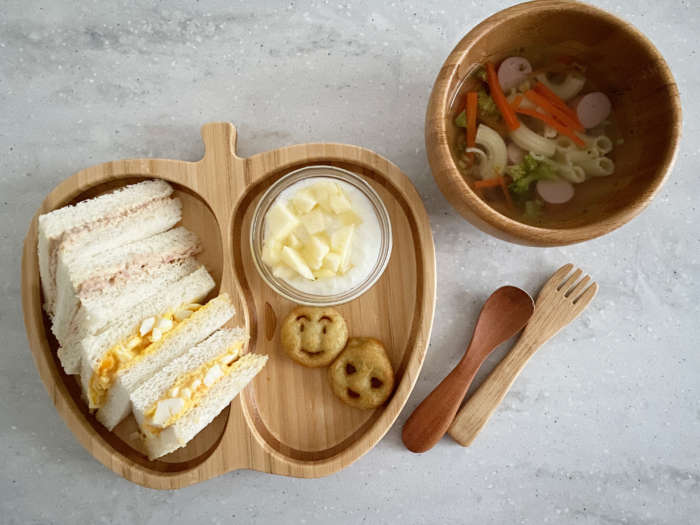
This time, I created a menu focused on protein. The main dish is a sandwich filled with plenty of eggs, commonly known as a tamago sandwich. Since I thought the main dish alone might not be filling enough, I added a banana on the side. For the soup, I made a Japanese-style egg drop soup by adding beaten eggs to a vegetable-based broth.
The main protein dish is karaage—bite-sized pieces of chicken thigh, deep-fried to perfection. As a side dish, I included a tuna salad, which is another great source of protein from fish. For dessert, I chose yogurt topped with blueberry jam to provide some vitamins as well. Enjoy the meal!
Note : This recipe was first submitted on January 5, 2021, and resubmitted on April 17, 2025, to reflect additional information.
Japanese Home Meals : 3

Menu:
– Miso soup with silken tofu, rapeseed flower and eggplant [Recipe]
– Japanese rice with BarleyMax barley [Recipe]
– Chikuzen-ni (Simmered chicken and vegetables) [Recipe]
– Harusame salad (Glass noodle salad) [Recipe]
– Cucumber and bean sprout salad with yukari (dried red shiso)
Paired tea:
– YUCa’s Tea : Chiran Cha
Recipe : Chikuzen-ni

Chikuzen-ni (筑前煮) is a traditional Japanese simmered dish that originated in Fukuoka Prefecture, formerly known as Chikuzen Province. Chikuzen-ni is made by simmering chicken and root vegetables—mainly burdock root, lotus root, carrot, shiitake mushrooms, and konnyaku—in a sweet and savory broth seasoned with soy sauce, mirin, sake, and sugar. The dish is known for its well-absorbed flavor and gentle, comforting taste that pairs perfectly with rice.
Read More
Japanese Food for Kids : 3

Menu:
– Rice and nori chips [Recipe]
– Teriyaki salmon [Recipe]
– Sesame salad with cabbage and cucumber [Recipe]
– Miso soup with tofu and komatsuna [Recipe]
– Cheese
– Orange
Behind the scenes:
This time as well, I created a menu themed around a traditional Japanese breakfast. For the soup, I chose miso soup packed with leafy greens and protein. The rice dish is a chip-style rice ball, made by sandwiching rice between sheets of nori and cutting it into bite-sized pieces so it’s easier for children to eat. For the main dish, I prepared the classic grilled salmon. As a side dish, I included a salad with vegetables that children often tend to avoid, dressed in a sesame sauce to make them more appealing. Additionally, I included processed cheese to help with calcium intake, and for dessert, an orange to provide a boost of vitamins.
Note : This recipe was first submitted on December 14, 2020, and resubmitted on April 10, 2025, to reflect additional information.
Candy Apple
A candy apple is a sweet treat made by coating an apple with a layer of sugar or syrup. In Japan, it is a classic festival snack, often seen at food stalls during traditional events and fairs.

Characteristics of Candy Apples
1.Crunchy Candy Coating
When the sugar hardens, it creates a crispy texture, contrasting beautifully with the apple’s natural crunch.
2.Sweet and Tangy Apple Flavor
The sweetness of the candy coating balances perfectly with the apple’s natural tartness, offering a refreshing aftertaste.
3.Glossy and Eye-Catching Appearance
The shiny, red coating gives candy apples a vibrant and attractive look. Recently, variations with colorful coatings or decorative patterns have also emerged.
Read More
3 : What time do people eat dinner in Japan?

In this series, I’ll be sharing questions that our customers have asked!
Q. What time do you eat dinner in Japan?
A. In Japan, the typical dinner time generally falls between 6:00 p.m. and 8:00 p.m., though this can vary depending on individual household routines and work or school schedules.
For families with young children, dinner is often served earlier, around 6:00 or 6:30 p.m., to accommodate children’s earlier bedtimes. In contrast, in households where adults have longer working hours or commutes—particularly in urban areas—dinner may be served later, around 8:00 or even 9:00 p.m.
Despite these variations, many Japanese families place importance on having dinner together when possible, as it serves as a valuable time for communication and family bonding at the end of the day.
Japanese Home Meals : 2

Menu:
– Miso soup with wakame, fried-tofu, eggplant and silken tofu [Recipe]
– Japanese rice [Recipe]
– Grilled salmon
– Japanese omelette [Recipe]
– Natto *fermented soybeans
– Sweetened black beans
Paired tea:
– YUCa’s Tea : Chiran Cha
Japanese Food for Kids : 2

Menu:
– Tuna Mayo Onigiri/Roll [Recipe]
– Veggie miso soup with cabbage, tofu and wakame
– Cucumber and bean sprouts salad with yukari
– Japanese omelette [Recipe]
– Kimpira gobo [Recipe]
– Yogurt with marmalade and blueberry jam
Behind the scenes:
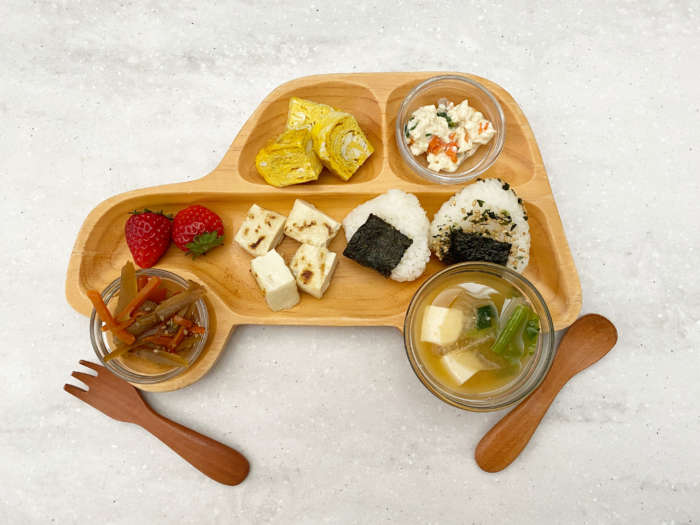
This time, I created a menu themed around a traditional Japanese breakfast. For the soup, I chose miso soup, which provides plenty of dietary fiber and protein. By scooping the top layer, it helps reduce the salt content. For the rice dish, I made tuna mayo seaweed rolls and cut them into bite-sized pieces for easier eating by children. The side dishes include a protein-rich tamagoyaki (Japanese omelette), a yukari seasoning mix with bean sprouts and cucumber to help them gradually get accustomed to new ingredients and textures, and the classic kinpira gobo (sautéed burdock root and carrots). For dessert, I focused on providing calcium and vitamins with yogurt, topped with colorful apricot and blueberry fruit jam for added flavor and appeal.
Note : This recipe was first submitted on February 9, 2021, and resubmitted on April 3, 2025, to reflect additional information.