Kid-Friendly Japanese Food: vol.86

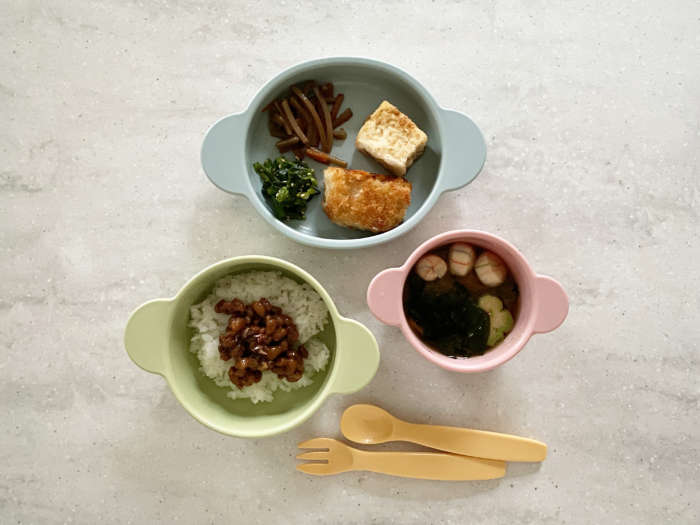 Menu:
Menu:
– Rice topped with Natto
– Miso soup with wakame and ofu [Recipe]
– Tofu steak [Recipe]
– Fried cod fish
– Sesame salad with spinach [Recipe]
– Kimpira gobo [Recipe]



Menu:
– Rice topped with Natto
– Miso soup with wakame and ofu [Recipe]
– Tofu steak [Recipe]
– Fried cod fish
– Sesame salad with spinach [Recipe]
– Kimpira gobo [Recipe]
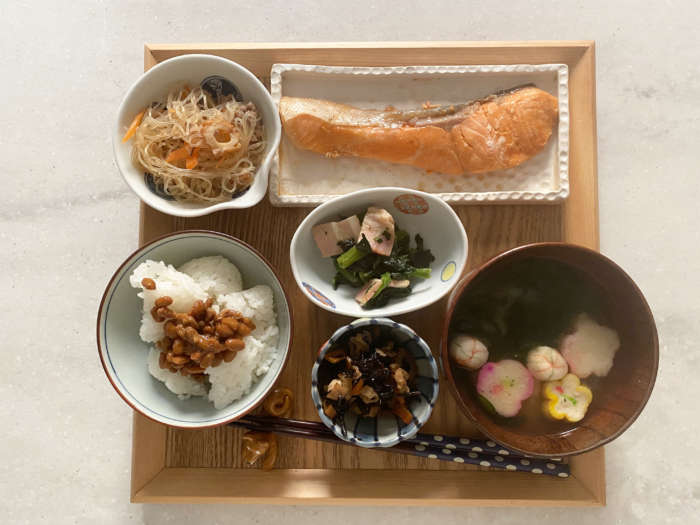
Menu:
– Japanese rice topped with Natto [Recipe]
– Miso soup with wakame and ofu [Recipe]
– Grilled salmon
– Stir-fry spinach and bacon
– Simmered Hijiki seaweed [Recipe]
– Glass noodle salad
Umami is the fifth category of taste and is not as commonly known as the other four (sweet, salty, sour and bitter).
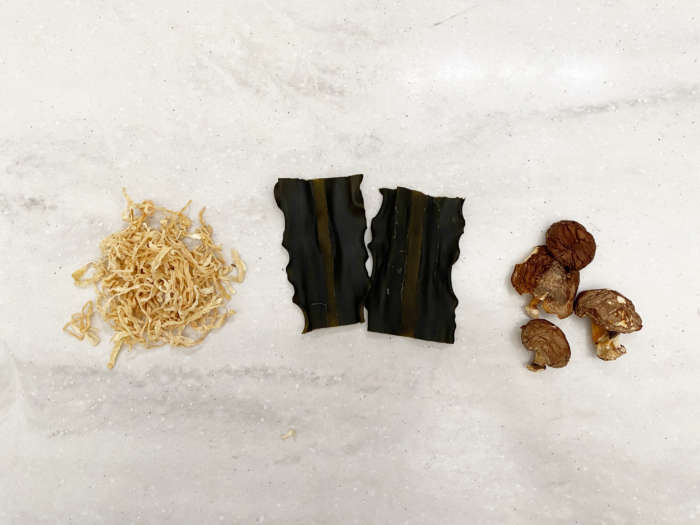
Umami is a concept with which all Japanese people are familiar – the Japanese palate easily recognizes its rich mouth-feel. The Kanji characters for umami translate as “delicious flavor” (旨味). When something taste good, it is often said to be Oishii (美味しい), but it can also be called Umai (旨い), and shares the Japanese character for umami.
Umami can be described as savory; it is full, rich, and round on the palate. It naturally exists in many foods including Parmesan cheese, meat, mushrooms, seaweed and tomatoes.
In 1908, Professor Kikunae Ikeda identified umami while sampling his wife’s is tofu simmered in a kelp broth and later isolated glutamate, inosinate, and guanylate, the naturally occurring amino acids and nucleotides that are the common components in umami-rich foods. Professor Ikeda also developed the flavor enhancer monosodium glutamate.
Many Japanese ingredients are rich in natural umami, including some of the main players in the Japanese pantry; soy sauce, mirin, miso and sake. Food is richer in Umami when fried that when fresh: shiitake, scallops, and daikon, for example.
* Reference of this article : Food Sake Tokyo (The Terroir Guides)
Chives are an effective vegetable for nourishing and relieving fatigue. It also contains vitamin E, which helps prevent lifestyle-related diseases and antioxidants, so it is an ingredient that should be included in your daily diet as much as possible. Because of its unique flavor, it is best to use it up quickly, but if you cannot use it up, it is recommended to wash it well before refrigerating or freezing it.
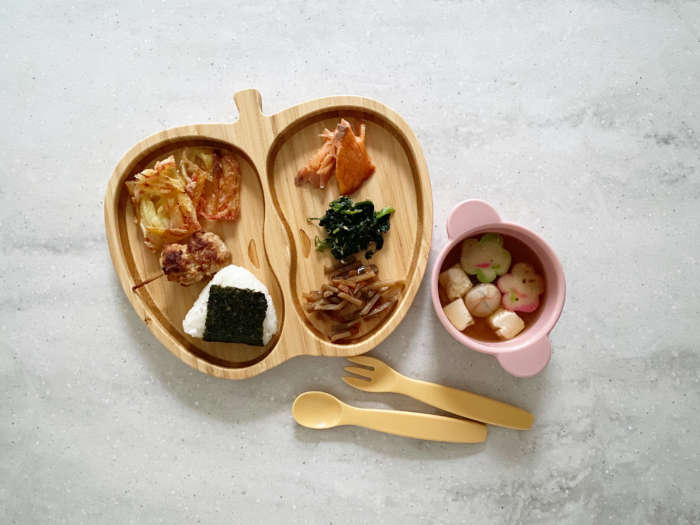
Menu:
– Salted onigiri [Recipe]
– Miso soup with ofu and tofu [Recipe]
– Chicken meat ball
– Kinpira gobo [Recipe]
– Sesame salad with spinach [Recipe]
– Grilled salmon
– Fried potato and fake crab meat
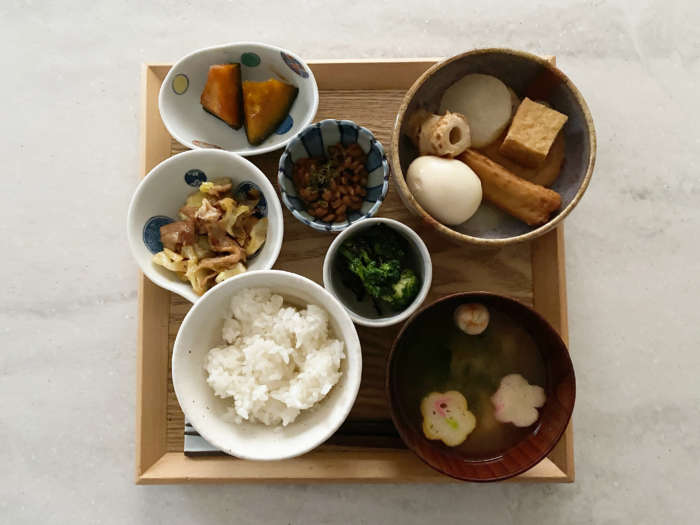
Menu:
– Japanese rice [Recipe]
– Miso soup with Fu, tofu and wakame [Recipe]
– Oden
– Simmered pumpkin [Recipe]
– Spinach ohitashi
– Miso stir-fry with pork and cabbage
– Natto
In the past, it was common for respected people or relatives with longevity to be godparents, or for fathers and grandfathers to name their babies, but these days, with the trend toward nuclear families, parents are more likely to name their babies.
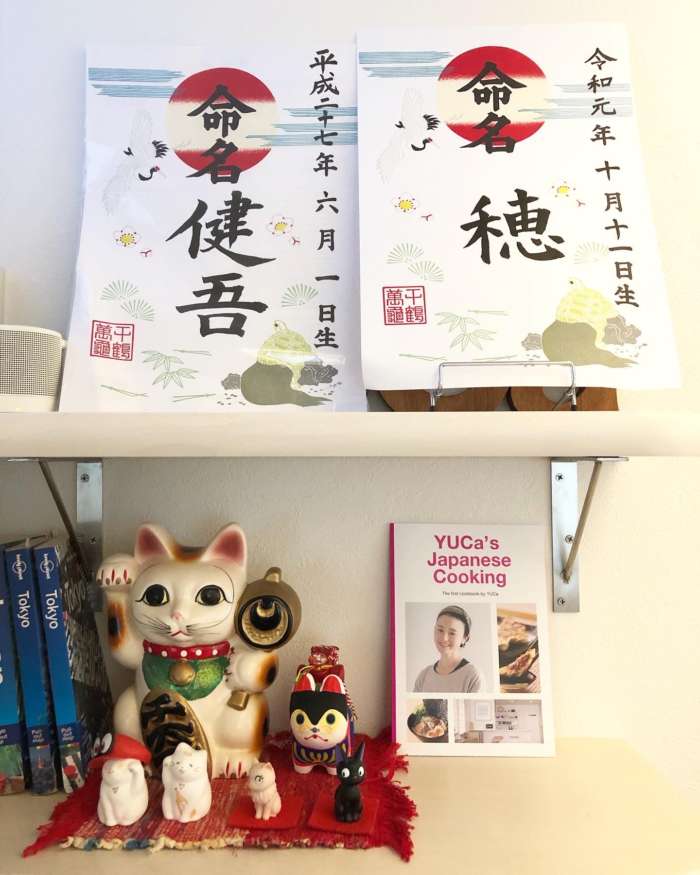
How Parents Decide The Name?
In the past, people often used the family name as a reference for naming their children, but nowadays people tend to focus more on the ease of calling (sound) and the image of the Chinese characters.
However, there are cases where grandparents or relatives place great importance on the family name judgment and cannot be ignored. Since surname and name determination is based on the balance of characters with the family name, the range of names is limited. (My mother, for example, bought books and did careful research.)
Once a potential name is chosen, the parents check the name from various angles for any flaws. It is important to note that some kanji cannot be used for names. The only kanji that can be used are the Joyo Kanji and Kanji for personal names. Since the reading is free, some parents give a reading that is somewhat close in sound and meaning to the kanji.
Recent Name Trends
The most popular names in 2021 were “蓮”(REN) for a boy and “陽葵”(HIMARI) for a girl. REN was the 1st for 4 consecutive years and HIMARI was 1st for 6 consecutive years!!!
As the effects of the COVID situation continue to be felt, there seems to be a growing trend among both men and women to choose names that are more solid and reassuring than those that are varied and novel.
Another name, “AOI,” ranked first in the common reading for both boy and girl, is a popular gender-free name.
Meimei Shiki (Naming Ceremony)
Parents usually decide their newborn’s name until the 7th day after the birth. This is because they used to invite their family and relatives and hold special dinner gathering/party. At this event, parents announce their baby’s name for the first time and put the paper with their baby’s name on the wall to show everyone.
Nowadays, parents and their family (including relatives) live apart because of lifestyle and also for work situation. So, it’s not so easy to coordinate this gathering after the child birth. Modern parents usually celebrate this event only for themselves these days. Same as this situation, my husband and I had casual lunch with my parents on the day I came back home from hospital. (After lunch, I went asleep to get recovered…zzz)
Read More
In spring, edible wild plants called “Sansai” (山菜) appear in supermarkets. Sansai are considered very precious because they can be picked in mountains or fields for a short period of time, only a few weeks.
It is said that there are more than 200 varieties of Sansai, including sprouts, greens, and small, tender young grasses.
Although some Sansai have a bitter taste, they are used in a variety of dishes such as soba noodles, cooked rice, branched vegetables, and salads.
Tempura is a must for those who enjoy the taste of Sansai. When I was a child, my grandparents who lived in the countryside would send us wild vegetables from the mountains when it was time to harvest them. I still remember how my father used to happily eat them as tempura on the same day they were sent to us. (And I used to pick them up and eat them!) At the time, I ate them without really understanding how delicious they were, but now I realize that it was a luxurious time.
Some popular Sansai include:
Asatsuki (あさつき) : Chives
Fuki (ふき) : Japanese butterbur
Fuki no to (ふきのとう) : Unopened bud of Japanese butterbur
Katakuri (かたくり) : Dog’s-tooth violet
Nobiru (のびる) : Red garlic
Seri (せり) : Water dropwort
Tara no me (たらのめ) : Shoot of the Angelica tree
Tsukushi (つくし) : Field horsetail shoot
Udo (うど) : Japanese spikenard
Warabi (わらび) : Bracken
Yomogi (よもぎ) : Mugwort
Zenmai (ぜんまい) : Royal fern
* Reference of this article : Food Sake Tokyo (The Terroir Guides)
It is the season for fresh onions. Because of their high water content, they are crispy and have a nice texture when cut into thin slices and eaten in salads. Fresh onions are easily damaged, and if stored at room temperature, their skins will soon become slimy. To prevent moisture damage, it is recommended to wrap them in newspaper or kitchen paper, place them in a plastic bag, and keep them refrigerated.They will still be crisp after a week.
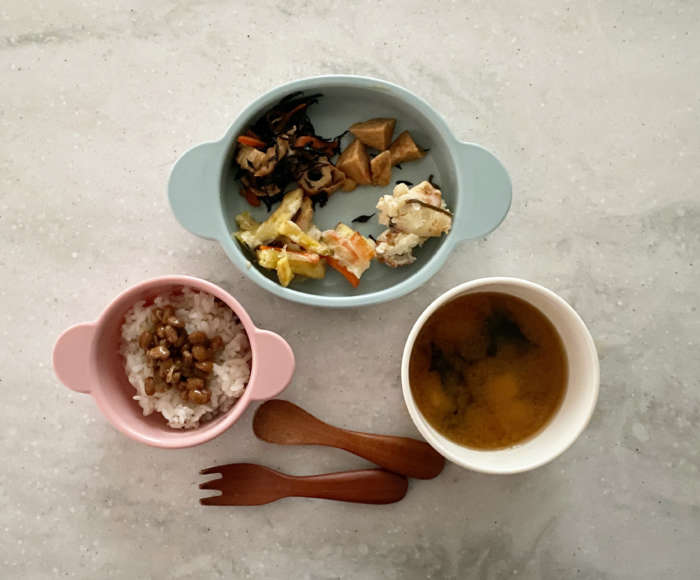
Menu:
– Japanese rice with Natto
– Miso soup with wakame and tofu
– Hijiki seaweed salad [Recipe]
– Kakiage tempura
– Potato salad [Recipe]
– Simmered taro