Japanese Home Cooking Class in Tokyo. YUCa's Food & Lifestyle Media from Japan

Trip adviser Google map instagran youtube

In-person Class Schedule

  • Yuka's Japanese Cooking
    2-34-8, Nishiogu116-0011
    Mar 5(Thu) 10:00-12:30

    Japanese Sweets & Tea

  • Yuka's Japanese Cooking
    2-34-8, Nishiogu116-0011
    Mar 9(Mon) 10:00-12:30

    Ramen & Gyoza

  • Yuka's Japanese Cooking
    2-34-8, Nishiogu116-0011
    Mar 24(Tue) 10:00-12:30

    Ramen & Gyoza

  • Yuka's Japanese Cooking
    2-34-8, Nishiogu116-0011
    Mar 25(Wed) 10:00-12:30

    Ramen & Gyoza

  • Yuka's Japanese Cooking
    2-34-8, Nishiogu116-0011
    Mar 26(Thu) 10:00-12:30

    Ramen & Gyoza

  • Yuka's Japanese Cooking
    2-34-8, Nishiogu116-0011
    Mar 27(Fri) 10:00-12:30

    Ramen & Gyoza

See all

Nanakusa-gayu (Seven herb rice porridge)

Categorised in: | Link of this article

The evening of January 6 through 7 has the special name of “Seventh-day New Year”. All over Japan people take down heir New Year’s decorations and enjoy various events.
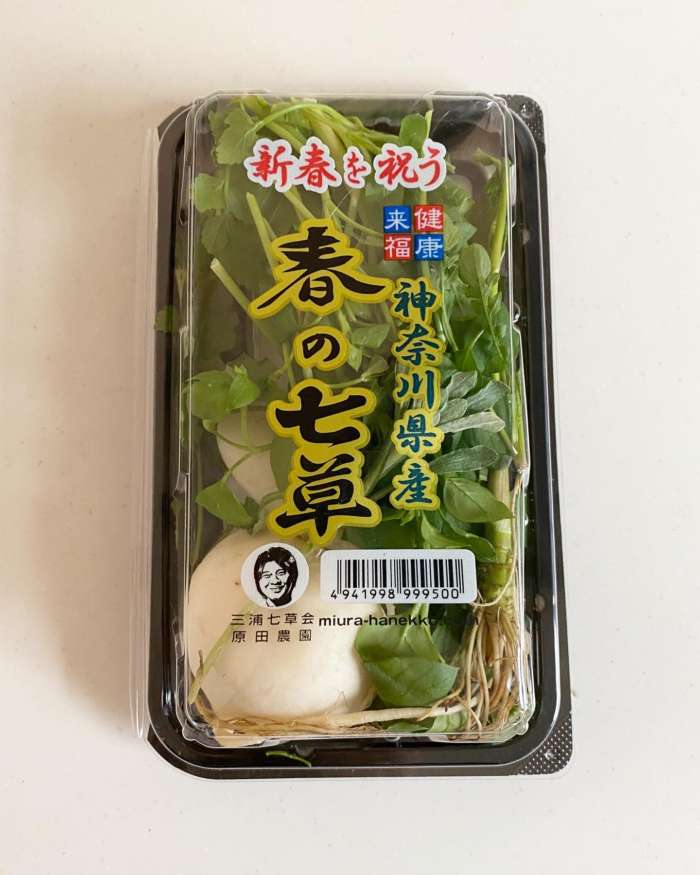
On January 7 in ancient China, people customarily made soup with seven kinds of vegetables as a symbol of their wishes for good health. This custom was introduced to Japan where people already had the custom of eating rice porridge cooked with seven grains on January 15.

These two customs merged and Japanese people started adding seven kinds of spring herbs to make this seven-herb porridge called “Nanakusa-gayu” (七草粥). The original intention is to protect oneself against evils and invite good luck. And to pray for the longevity by eating the seven herbs that endure throughout the winter.
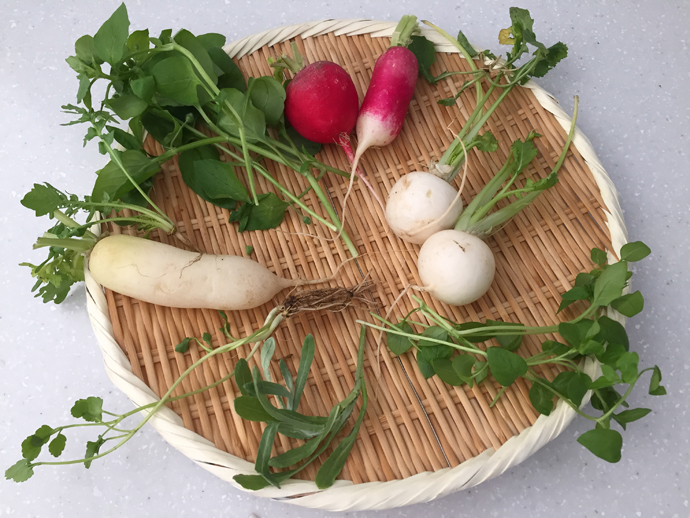

What are the “Seven Spring Herbs” and its meaning?

1. Seri (Japanese parsley) せり: To win the competition
2. Nazuna (Shepherd’s purse) なずな : To cleanse the dirty thing
3. Gogyo (Cottonweed) ごぎょう: Reflects the body of god
4. Hakobera (Chickweed) はこべら : To spread the prosperity
5. Hotokenoza (Henbit) ほとけのざ : Similar shape of lotus position
6. Suzuna (Turnip) すずな : Similar shape of bell that brings god
7. Suzushiro (Japanese radish Daikon) すずしろ : Reflects the purity
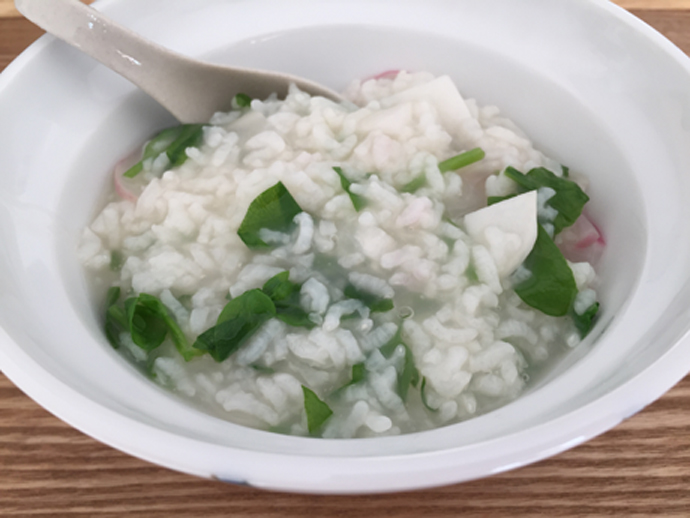

How to make Nanakusa-gayu (Seven Herb Rice Porridge)

Ingredients (4 servings) :

1 Seven herbs kit
1/2 Cup (80g) Japanese rice
2 Cup (400ml) Water

Directions: 

1. Peel the turnips and daikon radish and cut into bite-size pieces.
2. Wash other herbs and cut into small pieces.
3. Put rice and water in a pot, cover the lid and heat with high heat.
4. When it starts to boil, turn low heat and add seven herbs.
5. Steam for 10 minutes. Then, turn off the heat.
6. Enjoy with sprinkle of salt, if needed.
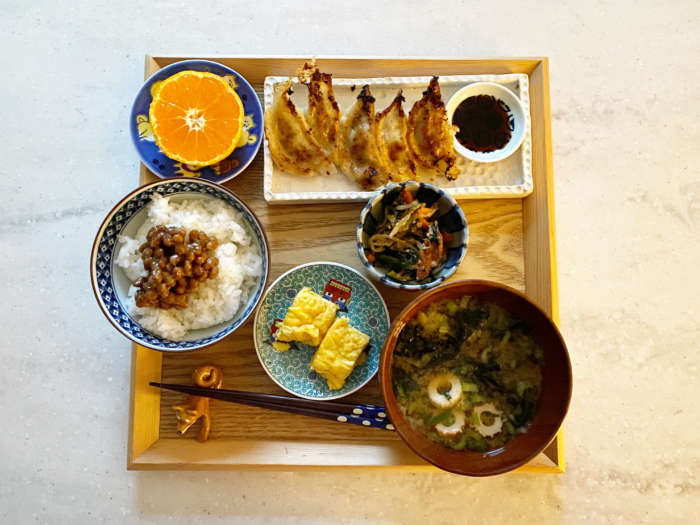
Japanese Set Meal Idea : vol.243

Categorised in: | Link of this article


Menu:
– Rice with Natto
– Miso soup with chikuwa, wakame and spring onion [Recipe]
– Gyoza *Gyoza pastry [Recipe]
– Japanese omelette [Recipe]
– Sesame salad with spinach, carrot and bean sprouts [Recipe]
– Mikan

Item :
– Seikou Kiln Shiba Inu Kutani Sauce Plate
Seikou Kiln Shishi Kutani Sauce Plate
– Ihoshiro Kiln Animal Series Mino Ware Chopstick Rest

Osechi (New Year’s Dish)

Categorised in: | Link of this article

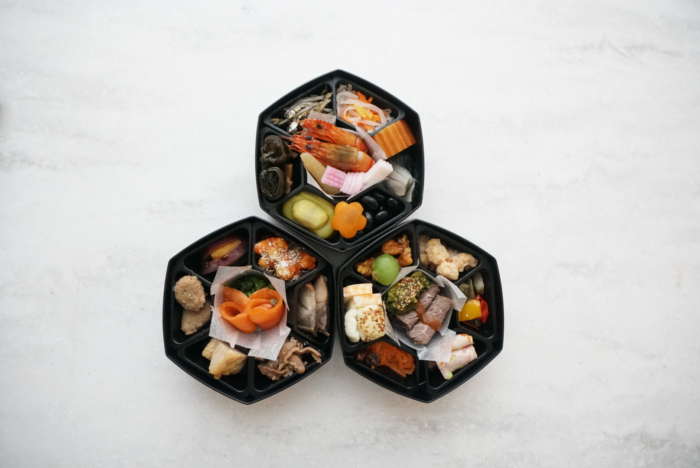
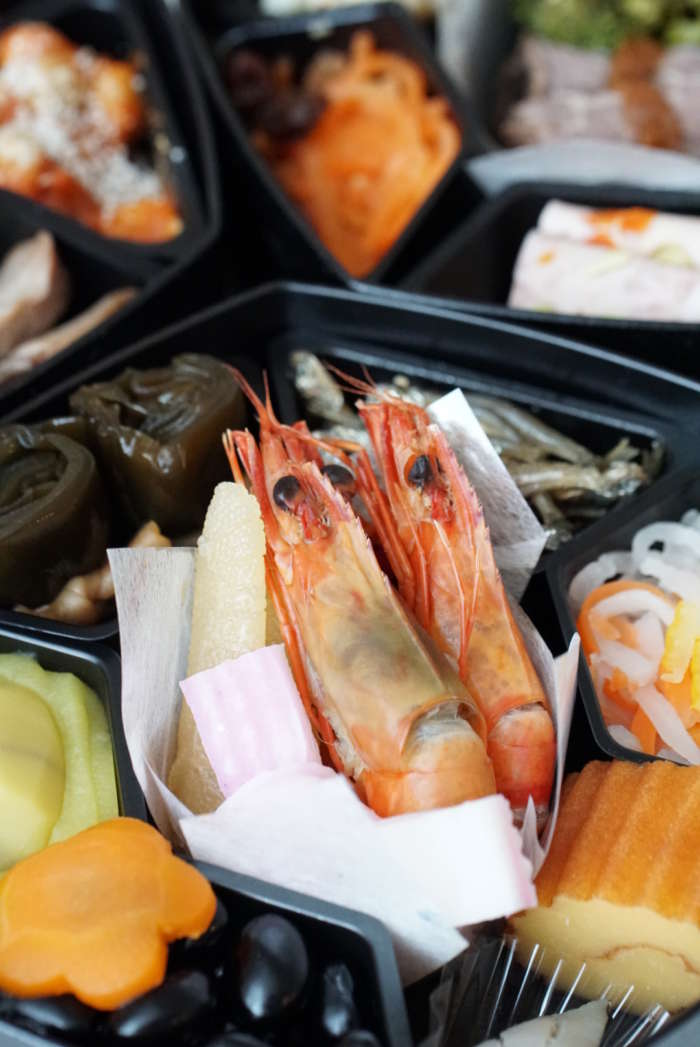
Osechi (おせち), the abbriviation of O-sechi-ryori, is a traditional New Year’s Dish which is severed in multi-tiered lacquered boxes called “ju-bako”(重箱). 

Many years ago, Japanese people offered special food to the gods on the occasion of five different “sekku” (big festivals). These five were Nanakura, Hina Matsuri, Children’s Day, Tanabata and Chrysanthemum Festival. After the food was presented to the gods it was then enjoyed by the family. It was called “O-sechi (節)-ryori” because it referred to meals eatedn on “sekku” (節句).

Today, it has the specific meaning of festive food enjoyed at New Year’s. In samurai times the food was very spartan but nowadays it is quite elaborate and varies from region to region and family to family.

Osechi is intended to save Japanese housewives the trouble of cooking during the busy New Year’s holidays, so that they can take a break even for a few days, and it is also characterized by its strong overall flavor so that it can be preserved.

Osechi is also stuffed with dishes that bring good luck. For example, boiled shrimp (Ebi no Onigara-yaki) symbolize longevity because they are bent like an old person.

Read More

Fukubukuro (Lucky Bag)

Categorised in: | Link of this article

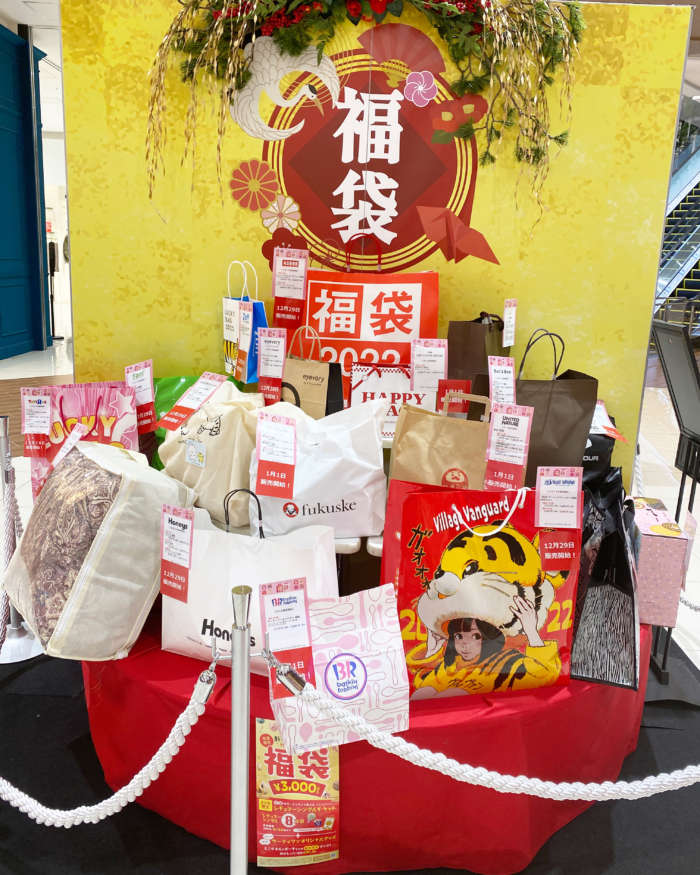
Fukubukuro is a Japanese New Year’s tradition in which a fukubukuro is made, the contents of which are unknown, and sold at a substantial discount of 50% or more of the list price. They are usually sold at a discount of 50% or more of the list price.

The word “fukubukuro” is composed of the words “Fuku” and “sack”. Fuku comes from the proverb, “There is good fortune in what remains.”

Popular stores usually have long lines of eager customers waiting for their fukubukuro bags a few hours before they open on New Year’s Day. Foreign brands are also aggressively selling fukubukuro.

Baby Food In Japan (5-8 Months) : Veggie Based Smoothie

Categorised in: | Link of this article

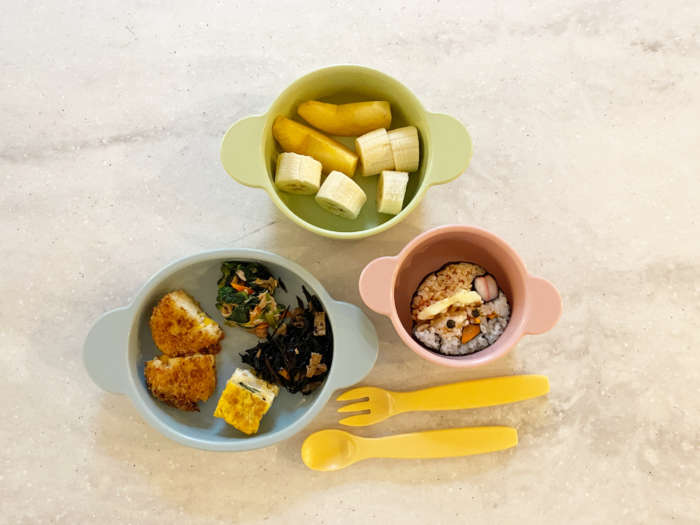
In this recipe video, I will introduce how to make Japanese baby foods for 5 to 8 months old. This time, I introduce veggie based smoothies so that babies and parents can share. We will use some veggies and even tofu! 

Read More

Toshikoshi Soba

Categorised in: | Link of this article

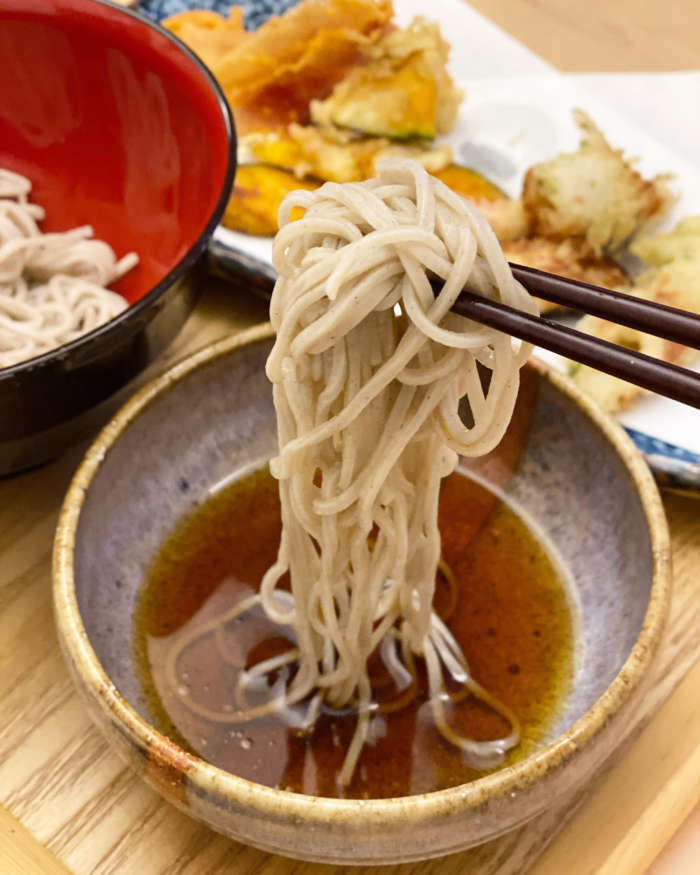
Toshikoshi Soba, or year-end buckwheat noodles, is a dish eaten annually on New Year’s Eve in Japan. This tasty tradition carries great significance and symbolizes the crossing over from one year to the next.

The custom of eating soba on New Year’s Eve is said to have started in the Edo Period (1603-1868). There are many theories behind the origins of this custom. One suggests that since buckwheat noodles are easier to cut than thicker varieties, it represents the cutting away of any bad luck built up over the course of the year.

Other beliefs point out how soba is healthy, so eating it is a great way to wish for good health in the new year. Since soba noodles are also long and thin, the noodles symbolize long life. Thus, it’s customary to eat them with the hope for longevity.

This time, I made a tempura soba. Since my kids are not a fan of fried shrimp at the moment, so I fried chikuwa (fish cake), Kanikama (fake crab meat), pumpkin aside with spring roll with ham and cheese. My family ate all of it. Yummy!

My family love dipping style soba. How about you?

Shime-kazari (Special decoration for Japanese New Year’s)

Categorised in: | Link of this article


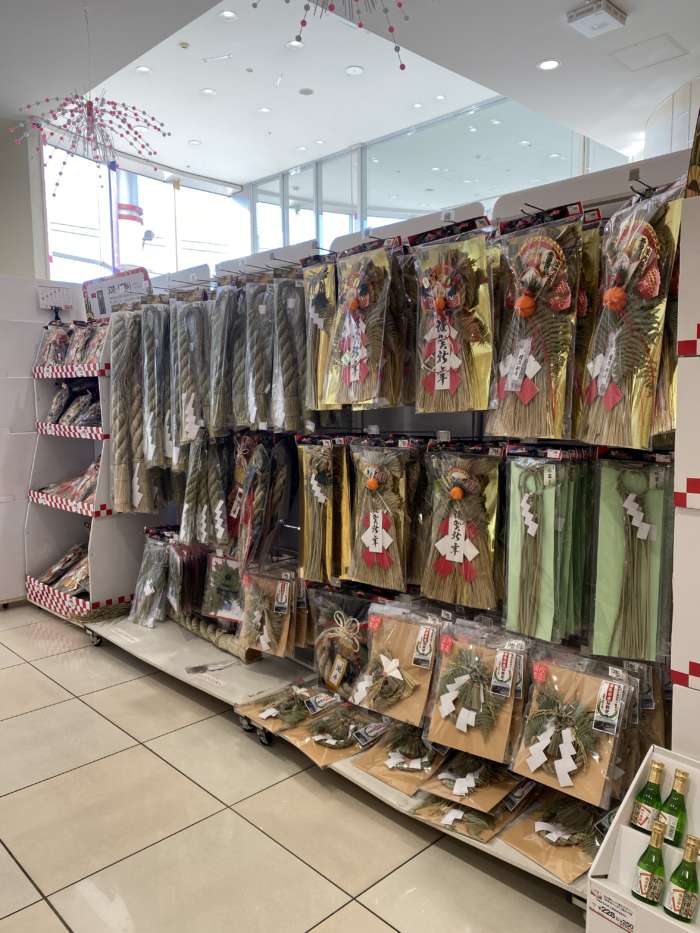
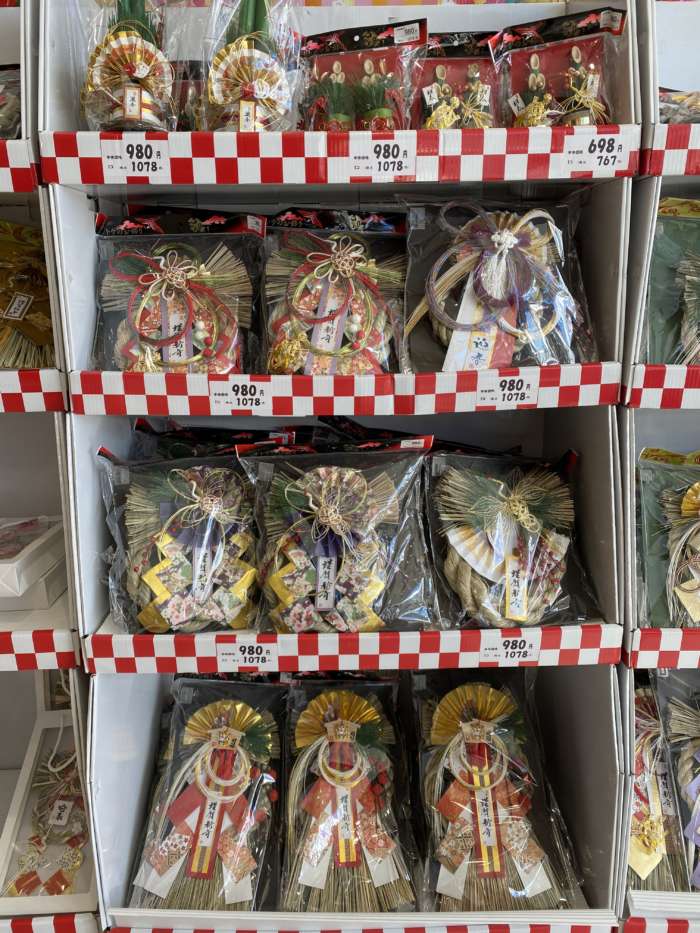
A shimenawa is a rope used to mark the boundary between this world and the next at shrines and other sacred places where gods are worshipped.

A shimenawa with lucky charms and other decorations attached to it is called a shime-Kazari. This is also a part of the Shogatsu event, which means that the house with the shime-kazari is ready to welcome the god of the year and is a sacred place.


The presence of the shimekazari makes the place safe and pure for the gods of the year to come down with peace of mind.

Originally, shime-kazari was usually made of rice straw to wish for a good harvest, but recently, more and more traditional shime-kazari are being arranged.

Japanese Set Meal Idea : vol.242

Categorised in: | Link of this article


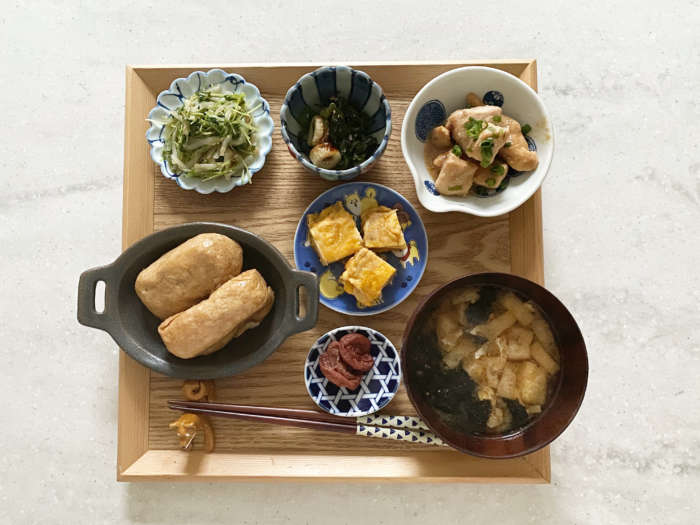
Menu:
– Inarizushi (Inari Sushi) [Recipe]
– Miso soup with fried tofu and Nori seaweed [Recipe]
– Grilled chicken with miso sauce
– Japanese omelette [Recipe]
– Stir-fry young bean sprouts and bean sprouts
– Simmered chikuwa and green pepper
– Pickled plum

Item :
– Seikou Kiln Shiba Inu Kutani Sauce Plate
– Ihoshiro Kiln Animal Series Mino Ware Chopstick Rest

Display mode

In-person Class Schedule

See all