In this recipe video, I will introduce how to make Japanese baby foods for 9 to 12 months old. This time, I introduce pumpkin soup, which babies and parents can share. For adult (parents) version, add olive oil and pink salt to be more flavorful.
In Japan, the time between January 1 and 7 is called “Big Shogatu” and the several days around the 15th are called “Small Shogatsu”. Shogatsu traditions are still continuing here in Japan and my family and I had a lot of mochi and red beans this week.
On January 11th, people take down the kagami-mochi which had been offered to the god of the New Year during Shogatsu. This Japanese seasonal event is called “Kagami-biraki” (鏡開き, Opening the Rice-Cake Offerings). People smash the hardened mochi into pieces with heir hands or small mallet because using a knife or saying the word “break” wold displease the god. This explains the reason this event is called “Opening the Kagami-mochi”. The pieces of hardened mochi are grilled and one or two are put into Zenzai or Oshiruko which is a kind of sweet soup made of simmered red azuki beans, sugar and water. In this way, everyone receives a portion of the god’s blessing to live happily throughout the whole year. If you are interested in Oshiruko recipe tutorial, please check here!
In very ancient times the period between the full moons was considered one month, so the 15th marked the beginning of a new month. Even after Japan began using the solar calendar people continued to celebrate the “Full-Moon New Year” on January 15 and enjoy many special events.
It was the custom to enjoy azuki porridge during “Ko-shogatsu” (Small shogatsu) and pray for good health. In addition, people believed they could predict the abundance of the harvest by how the porridge was cooked and the way it turned out.
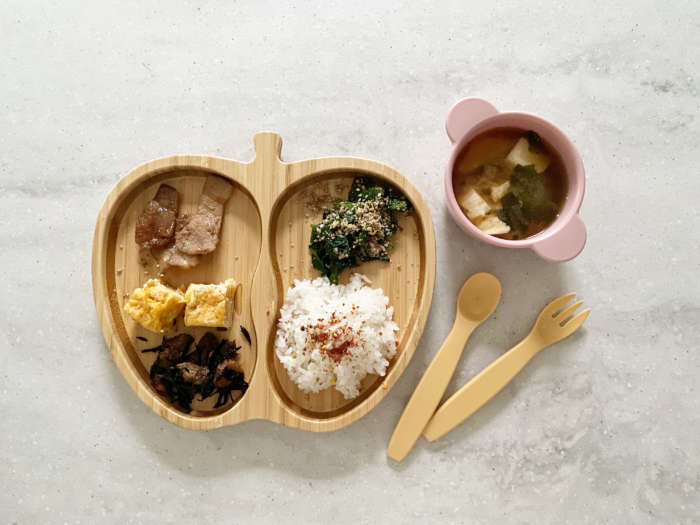
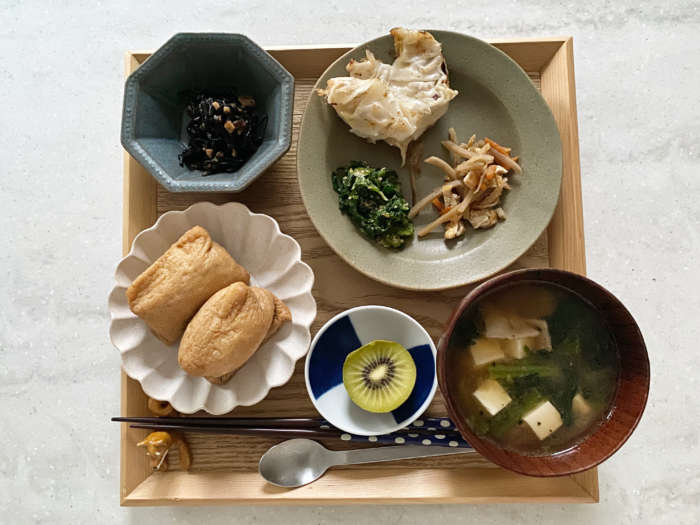
Menu: – Onigiri with wakame seaweed – Onigiri with salt – Miso soup with tofu, wakame and fried tofu [Recipe] – Simmered swordfish with teriyaki sauce – Salad with bean sprouts, ham and cucumber – Japanese omelette [Recipe] – Sesame salad with spinach [Recipe] – Simmered Hijiki Seaweed [Recipe]
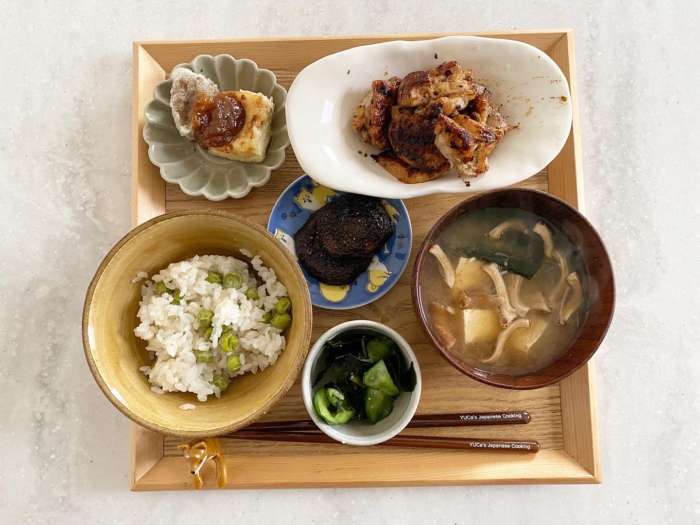
Gohei-mochi is a local dish from the mountainous areas of the Chubu region (Kiso and Ina regions of Nagano Prefecture, Tono and Hida regions of Gifu Prefecture, southern Toyama Prefecture, Okumikawa region of Aichi Prefecture, and Hokuto and Suruga regions of Shizuoka Prefecture). It is made by dipping half-mushed non-glutinous rice with a sweet walnut miso sauce and roasting it on a skewer.
The evening of January 6 through 7 has the special name of “Seventh-day New Year”. All over Japan people take down heir New Year’s decorations and enjoy various events.
On January 7 in ancient China, people customarily made soup with seven kinds of vegetables as a symbol of their wishes for good health. This custom was introduced to Japan where people already had the custom of eating rice porridge cooked with seven grains on January 15.
These two customs merged and Japanese people started adding seven kinds of spring herbs to make this seven-herb porridge called “Nanakusa-gayu” (七草粥). The original intention is to protect oneself against evils and invite good luck. And to pray for the longevity by eating the seven herbs that endure throughout the winter.
What are the “Seven Spring Herbs” and its meaning?
1. Seri (Japanese parsley) せり: To win the competition 2. Nazuna (Shepherd’s purse) なずな : To cleanse the dirty thing 3. Gogyo (Cottonweed) ごぎょう: Reflects the body of god 4. Hakobera (Chickweed) はこべら : To spread the prosperity 5. Hotokenoza (Henbit) ほとけのざ : Similar shape of lotus position 6. Suzuna (Turnip) すずな : Similar shape of bell that brings god 7. Suzushiro (Japanese radish Daikon) すずしろ : Reflects the purity
How to make Nanakusa-gayu (Seven Herb Rice Porridge)
Ingredients (4 servings) :
1 Seven herbs kit 1/2 Cup (80g) Japanese rice 2 Cup (400ml) Water
Directions:
1. Peel the turnips and daikon radish and cut into bite-size pieces. 2. Wash other herbs and cut into small pieces. 3. Put rice and water in a pot, cover the lid and heat with high heat. 4. When it starts to boil, turn low heat and add seven herbs. 5. Steam for 10 minutes. Then, turn off the heat. 6. Enjoy with sprinkle of salt, if needed.
Osechi (おせち), the abbriviation of O-sechi-ryori, is a traditional New Year’s Dish which is severed in multi-tiered lacquered boxes called “ju-bako”(重箱).
Many years ago, Japanese people offered special food to the gods on the occasion of five different “sekku” (big festivals). These five were Nanakura, Hina Matsuri, Children’s Day, Tanabata and Chrysanthemum Festival. After the food was presented to the gods it was then enjoyed by the family. It was called “O-sechi (節)-ryori” because it referred to meals eatedn on “sekku” (節句).
Today, it has the specific meaning of festive food enjoyed at New Year’s. In samurai times the food was very spartan but nowadays it is quite elaborate and varies from region to region and family to family.
Osechi is intended to save Japanese housewives the trouble of cooking during the busy New Year’s holidays, so that they can take a break even for a few days, and it is also characterized by its strong overall flavor so that it can be preserved.
Osechi is also stuffed with dishes that bring good luck. For example, boiled shrimp (Ebi no Onigara-yaki) symbolize longevity because they are bent like an old person.