Ozoni (Japanese New Year’s Soup with Mochi)
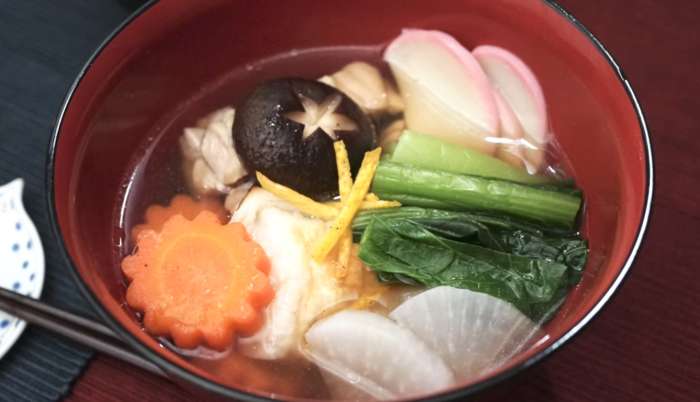
Ozoni (お雑煮) is a Japanese New Year’s Soup with Mochi. In Japan, people enjoy this seasonal soup on New Year’s time. There are 2 types; Kanto-style (Tokyo area) and Kansai-style (Kyoto area). Tokyo style has soy sauce based soup with chicken and mochi, mainly. Kyoto style has white miso based soup with yam and mochi. This time, we will make Tokyo style.
Read More
Oshiruko (Red bean soup with mochi)
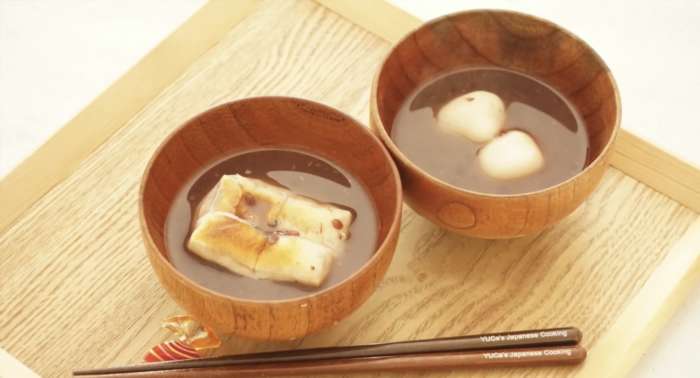
Oshiruko (おしるこ、お汁粉) is a sweet red bean soup with mochi or shiratama dumplings in it. This is one of the traditional soup sweets in Japan. A dish similar to oshiruko is called zenzai (ぜんざい). In the Kanto region, zenzai is rice cake poured with red bean paste. You can taste this hidden sweets at traditional Japanese sweets shop called Kanmi-dokoro (甘味処). If you order oshiruko at a shop, you may find it comes with oshinko (お新香). The salty oshinko enhances the sweetness of oshiruko.
In this recipe, you will see two types of Oshiruko; one with the block type pre-made mochi and the one with shiratama dumplings made of glutinous rice flour.
Read More
Kumade (熊手) & Tori-no-ichi (酉の市)
We bought a “Kumade(熊手)” at the Torinoichi (酉の市) market held in Asakusa! Torinoichi(酉の市) is an event held at temples and shrines associated with eagles and birds, such as Tori-no-temples, which are numerous in the Kanto region.
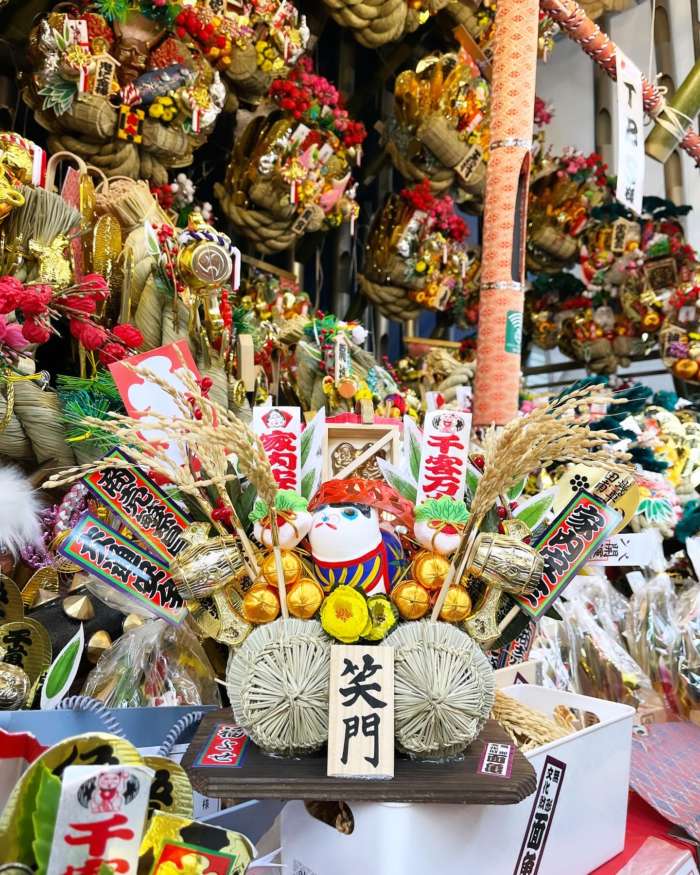
Held every year on the “day of the Tori”(酉の日) in November, visitors purchase lucky charms such as “Kumade”to report their good fortune for the year and wish for good fortune in the following.
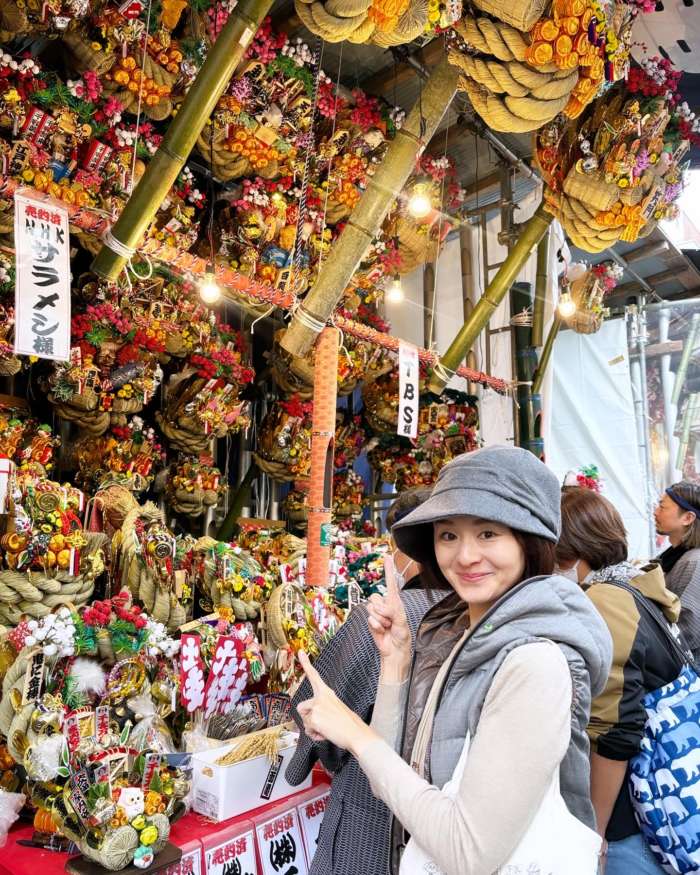
The Kumade, used as a tool for raking up fallen leaves and other debris, is said to be “a tool for raking up luck” or “a tool for raking up gold and silver” because of its shape and function, and has come to be treated as a lucky charm that brings luck, fortune, and prosperity to business.
Read More
“School Revolution” by NTV (Japan)
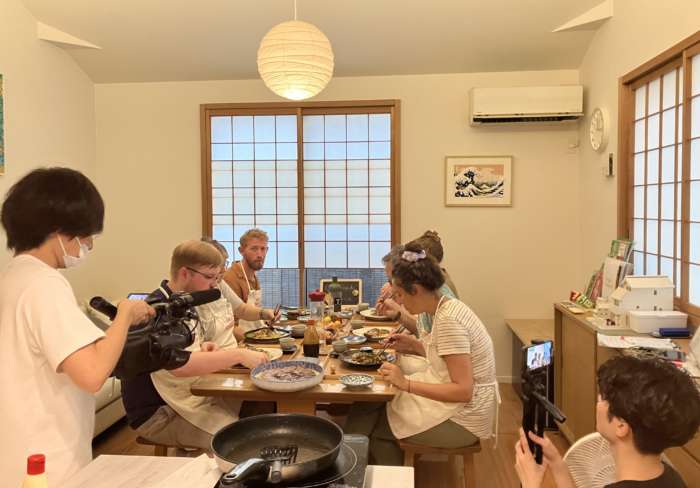
YJC was featured on Japanese TV program. 📺✨
It was a quiz show where the casts would guess what we were making in the class!
To watch this show, click here for special limited edition broadcasts.
Read More
Tokyo Guide : Azabu Juban

Azabu Juban (麻布十番) is a district of Minato (Minato-ward) in Tokyo. Nestled between Roppongi and Tokyo Tower, Azabu Juban is a surprisingly laid-back neighborhood considering its central location. The convenience of several supermarkets in a central location and the proximity of Hiroo and Roppongi make it one of the more trendy and sought after residential areas of Tokyo. With an old-school atmosphere that retains its Edo period roots, this upscale residential area boasts some of the highest rents in the city.
Azabu Juban is also home to several embassies, making it a popular place of residence for diplomats and globally-minded people. This synergy between traditional and metropolitan gives the neighborhood a truly one-of-a-kind feel.
Read More
Recipe : Salmon Nanbanzuke
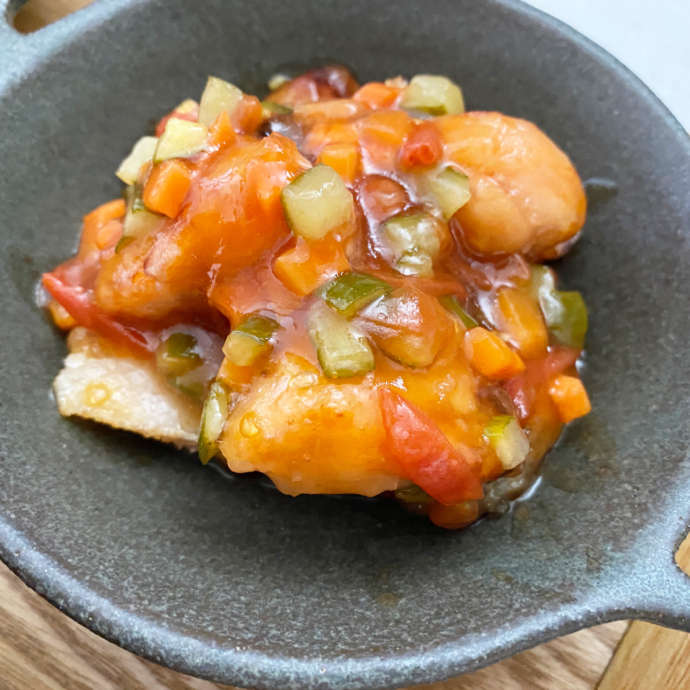
Nanbanzuke (南蛮漬け) is a dish in which fish or meat is deep fried and then marinated in sweet vinegar and aromatic vegetables such as red pepper and leeks. The term “Nanban” comes from the “Nanban trade (南蛮貿易)” that began around the 16th to 17th century, and refers to the people and products of Spain and Portugal, who were the trading partners at that time.
It is said that the escabeche and its unique cooking method introduced from these countries gave rise to the term “Nanbanzuke”.
Nanban-zu(南蛮酢), made by adding soy sauce, sugar, and other seasonings to vinegar, has a familiar sweet and sour taste. It is delicious hot or cold, and the flavor changes depending on how long the fish has been marinated. This time, we will introduce Nanbanzuke using salmon.
Read More
Spicy Salmon Onigiri
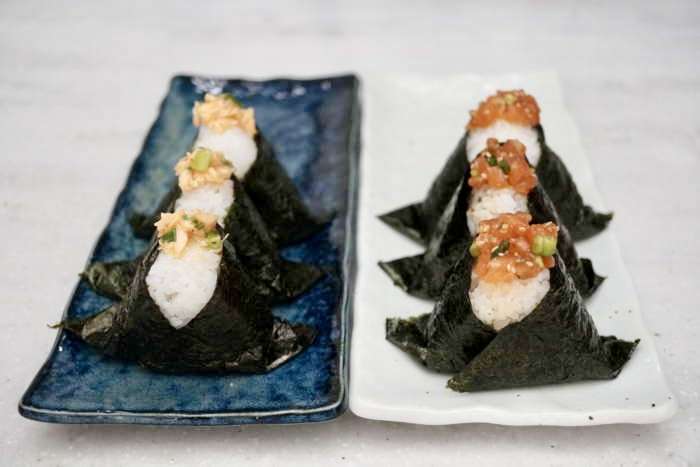
Do you like spicy food and salmon? If so, this recipe may be just right for you! It’s hard to find spicy food in Japan, but this recipe uses Ichimi Togarashi and raayu (Chinese red chili oil) to give it a spicy flavor. Also, for those who don’t like raw fish, we present two versions of onigiri: a raw salmon version and a grilled salmon version.
Read More
Recipe : Miso Butter Salmon
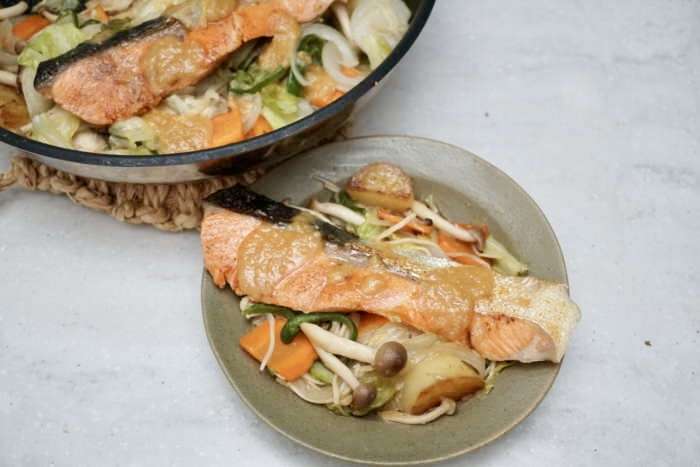
Miso Butter Salmon is known as “Chanchan-yaki,” a local dish of Hokkaido, which is originally a fisherman’s dish in Hokkaido, a region famous for its salmon catches. The “chanchan” in “chanchan-yaki” refers to the sound made during cooking. This dish of salmon and vegetables topped with a sauce rich in miso and butter is hearty and pleasing to the eye.
Read More
Japan Guide : The Railway Museum in Saitama (埼玉県)
Have you ever ridden on a train in Japan? In Japan, there are various railroads running in the east, west, south, and north except for Okinawa.

The place I would like to introduce to you is the “Railway Museum” in Omiya City, Saitama Prefecture. This year marks the 150th anniversary of the opening of Japan’s first railroad between Shimbashi and Yokohama on October 14, 1872 (Meiji 5).
At the Railway Museum, visitors can learn about the role of railroads in Japan, changes in railroad technology, and their impact on society, based on the concepts of “railroads,” “history,” and “education.
Read More
Recipe : Okonomiyaki Sauce
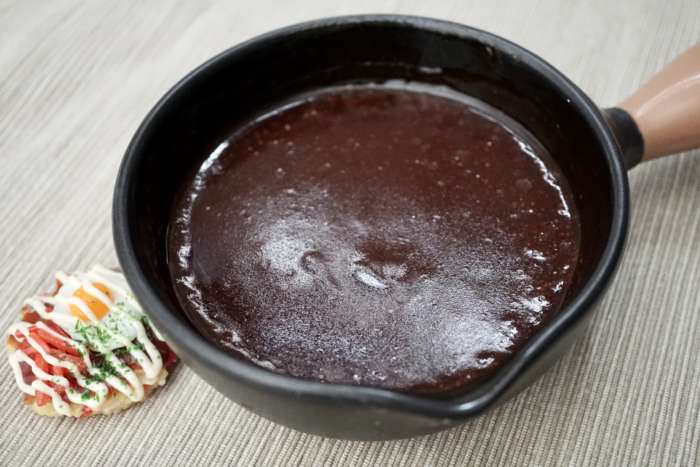
The sauce determines the flavor of okonomiyaki. To make this recipe as close as possible to a commercial okonomiyaki sauce, we use Dashi, an essential ingredient in Japanese cooking, and dates in paste form. We also introduced oyster sauce and potato starch to thicken and intensify the flavor. You can buy commercially available okonomiyaki sauce, but why not try making your own from scratch using seasonings you already have at home? It will surely become a special okonomiyaki!
Read More