Eggplant is a vegetable that can be liked or disliked if not cooked well. Nasunin, the pigment in the skin, is a type of polyphenol that has antioxidant properties and helps prevent lifestyle-related diseases. To freeze, fry well and place in a freezer bag. It can be stored in the freezer for about 1 month. When you use them, we recommend using them straight into miso soup or stir-fry!
Eggplant is a vegetable that can be liked or disliked if not cooked well. Nasunin, the pigment in the skin, is a type of polyphenol that has antioxidant properties and helps prevent lifestyle-related diseases. It absorbs oil well, so it is effective to soak it in salt water or sprinkle salt on the cut end after cutting.
November 15 is Shichi-go-san (7-5-3). It is a day to give thanks for health and pray for guardian gods for the future happiness of three and five-year-old boys, and three and seven-year old girls.
In the old days, the mortality rates of young children being so high, children were thought to belong to the gods until the age of seven. A child younger than seven years old was not considered a full-fledged member of society. They were not punished for their sins and did not have to mourn. The Shichi-go-san festival was an important event to mark turning points during infancy, and to show one had become a member of society.
Some of you might knew from YJC’s IG story but I visited NYC and filmed for TV program in mid October. And the filming in New York will be broadcasted in Japan soon! If you live in the Kansai area, please watch the program and tell me how you liked it.
Date and time: November 4 (Fri.) 25:34~26:34 TV Channel: 6 (ABC TV) Name of the show : “Discover JAPAN in your Fridge” * This program will be aired in Japanese but I might be speaking English there. I hope they have added subtitles during the show. 😉
Special THANKS to talented chef Mr.Yoshi & Fun and amazing crews from ABC TV!
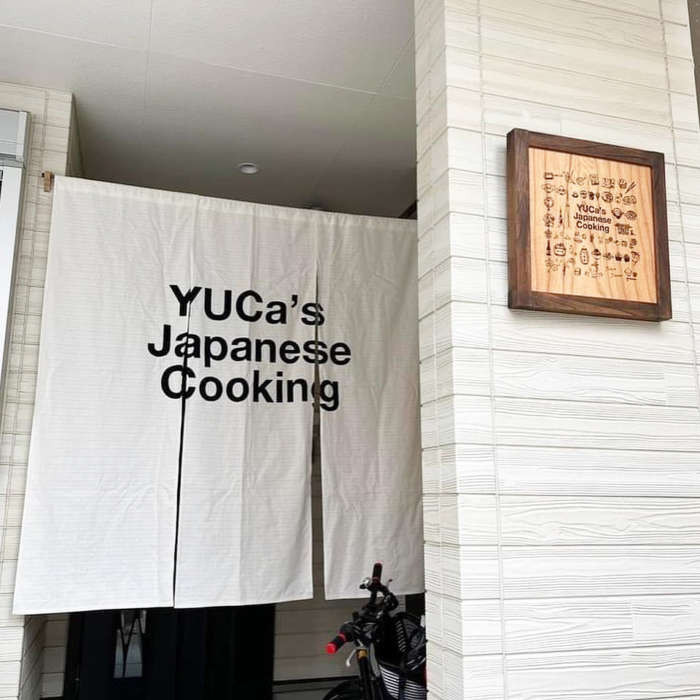
YJC’s shop curtain called “Noren” and signboard, under my husband’s direction, are now complete!
The Noren is hung in front of the cooking class and removed when the class is over. In the past, customers often got lost in the neighborhood, but thanks to this Noren, they don’t get lost at all. The signboard is displayed 24 hours a day, 365 days a year, so it has become a bit more noticeable in the neighborhood. LOL. We are very happy that more and more people are complimenting us on the YJC logo. Please come and see the new YJC’s entrance!
When it comes to soup dishes in Japan, miso soup is the first thing that comes to mind. In addition to miso soup, many other soups are popular in Japan. In this video, I introduce the BEST 5 popular soups in Japan in a ranking format.
I recently had the opportunity to work on a TV program and went to New York for the filming.
Since I started teaching cooking classes, it has been one of my dreams to visit homes overseas to teach cooking, so when I was offered the opportunity, I wondered if it would really happen, but as the day of my trip to the United States approached, I gradually realized that this is a reality.
One of the most delicious summer foods is shaved ice with shaved ice shavings. In Japan this year, shaved ice coated with fresh cream and topped with fruit to resemble shortcake is very popular. Shaved ice stores offering shaved ice made with natural ice to make it fluffy have long lines of customers every day. This shaved ice machine is convenient for those who want to eat it at home. Since it is an automatic type, shaved ice can be made simply by pulling the lever on the right side toward you.